AUTHOR | SPEAKER | PHILOSOPHER | DESIGNER

May 2026
date:
5/1/2026
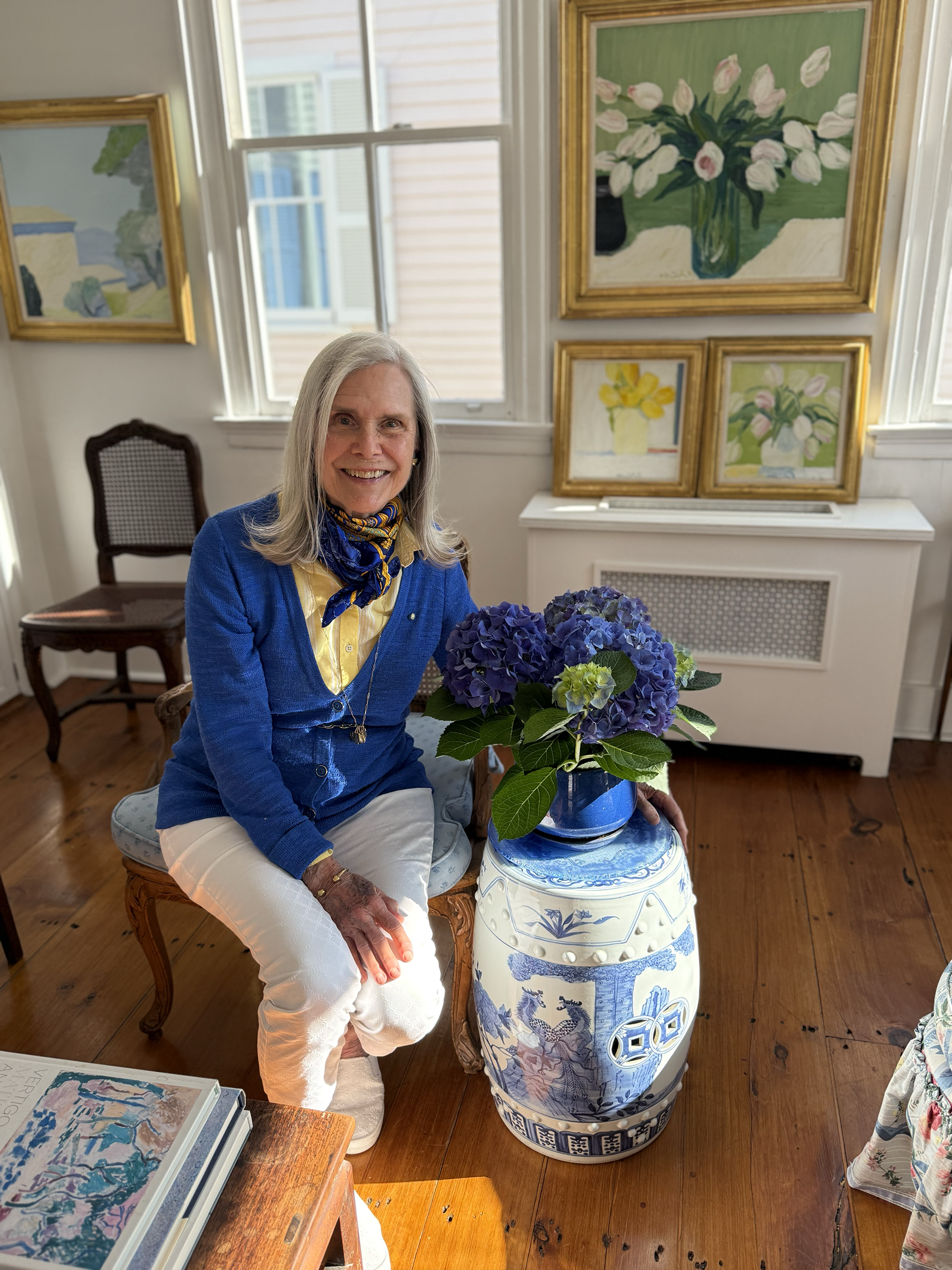
Photo by Kerri
My inside hydrangeas are making me even more excited for hydrangea in my garden!
Dear Friends,
I love you! Happy merry month of May! Our gardens are proving that April showers do bring May flowers. The lilies of the valley are popping up all around the small brick floor in the garden with the table and chairs. When Peter and I were married on May 18, 1974, Alexandra, Brooke and I carried lily of the valley. They will be in full bloom when I celebrate our anniversary. In front of the house, the mantle of purplish-blue ground cover is so pretty surrounding the white picket fence.
Thank you for all your lovely responses to my April newsletter and all your beautiful correspondence and gifts. I continue to be deeply grateful to you for your continued support and kindness.
Don’t be shocked, but I’m writing about AI this month. You know that I’ve never touched my fingers to a computer. How can I write about something I’ve never used? I’ve read deeply. I’ve researched. And even though I don’t use a computer, I still have been personally affected, because my words and my writing have been used to train AI without my consent.
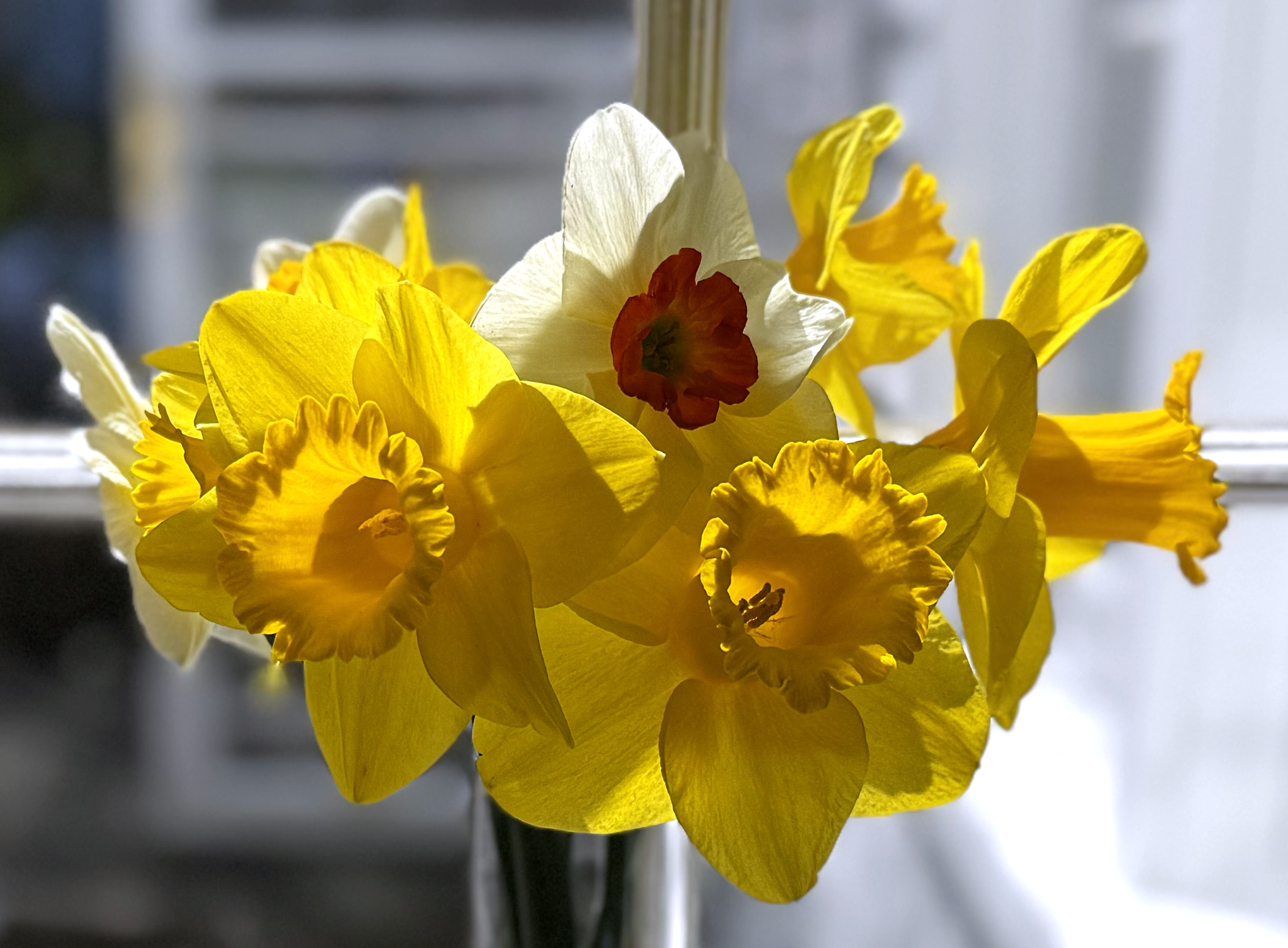
Photo by Elissa
Daffodils enjoying the morning sunlight.
AI has now developed superhuman powers. When used responsibility and in the right hands, it is lifesaving. When used inappropriately, it is life threatening and exceedingly dangerous.
You likely already know where you stand with AI. Many of my good friends embrace it. Many of my good friends are also on red alert to how dangerous it can be. I’m only writing about AI because we can’t afford to be in denial about its power and lack of guardrails.
Please understand that I am well aware of all the good. We also have to understand its potential harm to humans’ health and happiness and our home on earth.
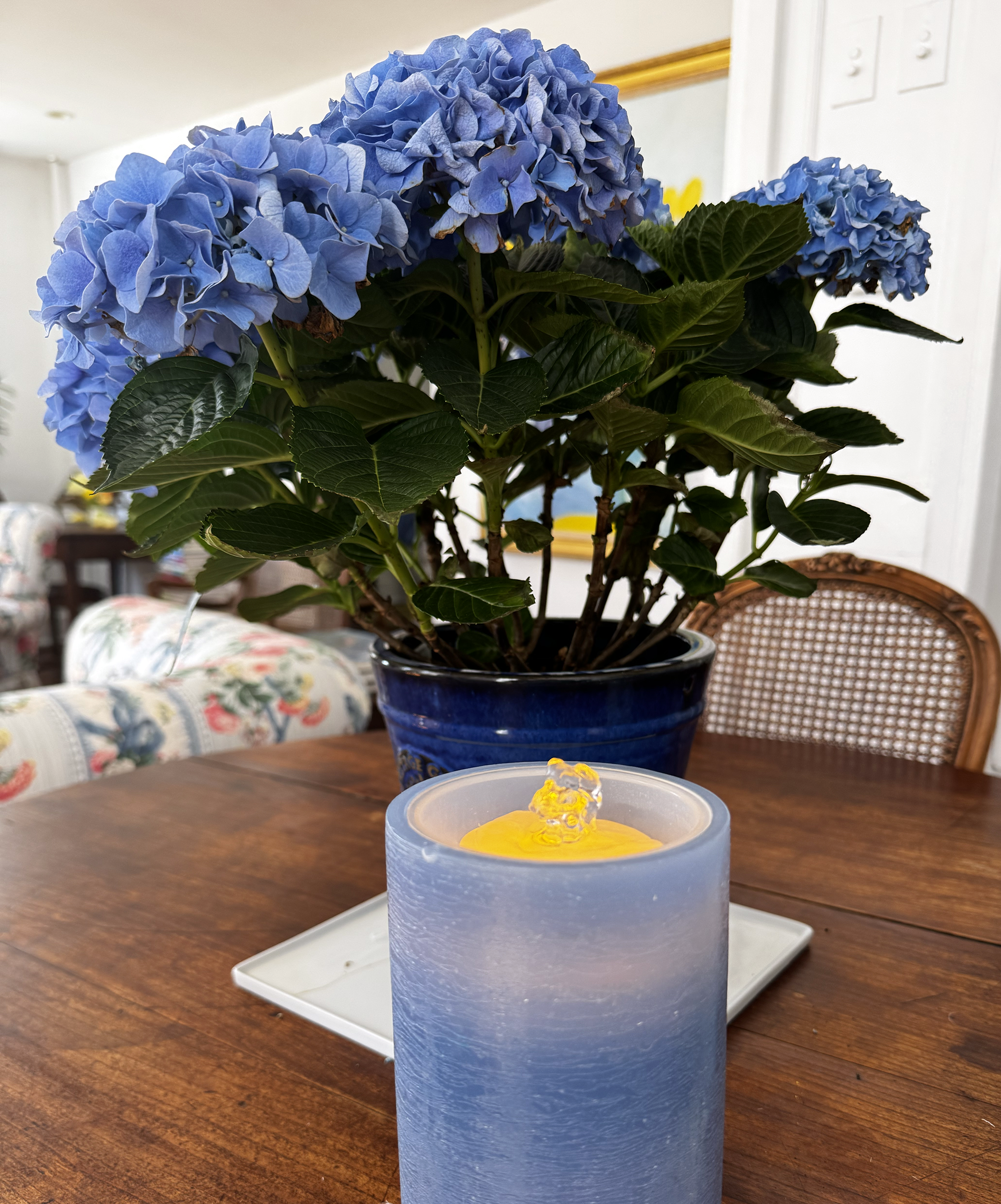
Photo by Elissa
Alexandra gave me this lovely little water fountain.
“Just Because You Can Doesn’t Mean You Should”
Or Should You? You’re Free to Decide.
AI = Artificial Intelligence.
The American Heritage Dictionary’s definition of artificial is “Made by human beings rather than occurring in nature. Made in imitation of something natural. Not genuine.” Their definition of artificial intelligence is “The ability of a computer to perform activities normally thought to require intelligence.”
Pause with me as I take a calm, deep, thoughtful breath. I understand that I am way over my head when I write about generative artificial intelligence. But I’m not out of my mind. I hand-write letters, books and all other forms of writing with a fountain pen. None of my 28 published books were ever aided by AI, and yet at least three of those books — Happiness for Two, Open Your Eyes and The Shared Wisdom of Mothers and Daughters — are confirmed to have been stolen to train generative AI systems, according to a database published by The Atlantic. It’s strange to think that my voice, my mind and my style of communicating can now be replicated by an inhuman machine.
We live in a strange new world. Publishers have been fooled by authors. Readers have been fooled by AI. No fooling matter. No one likes to be deceived. Few people feel good about lying.
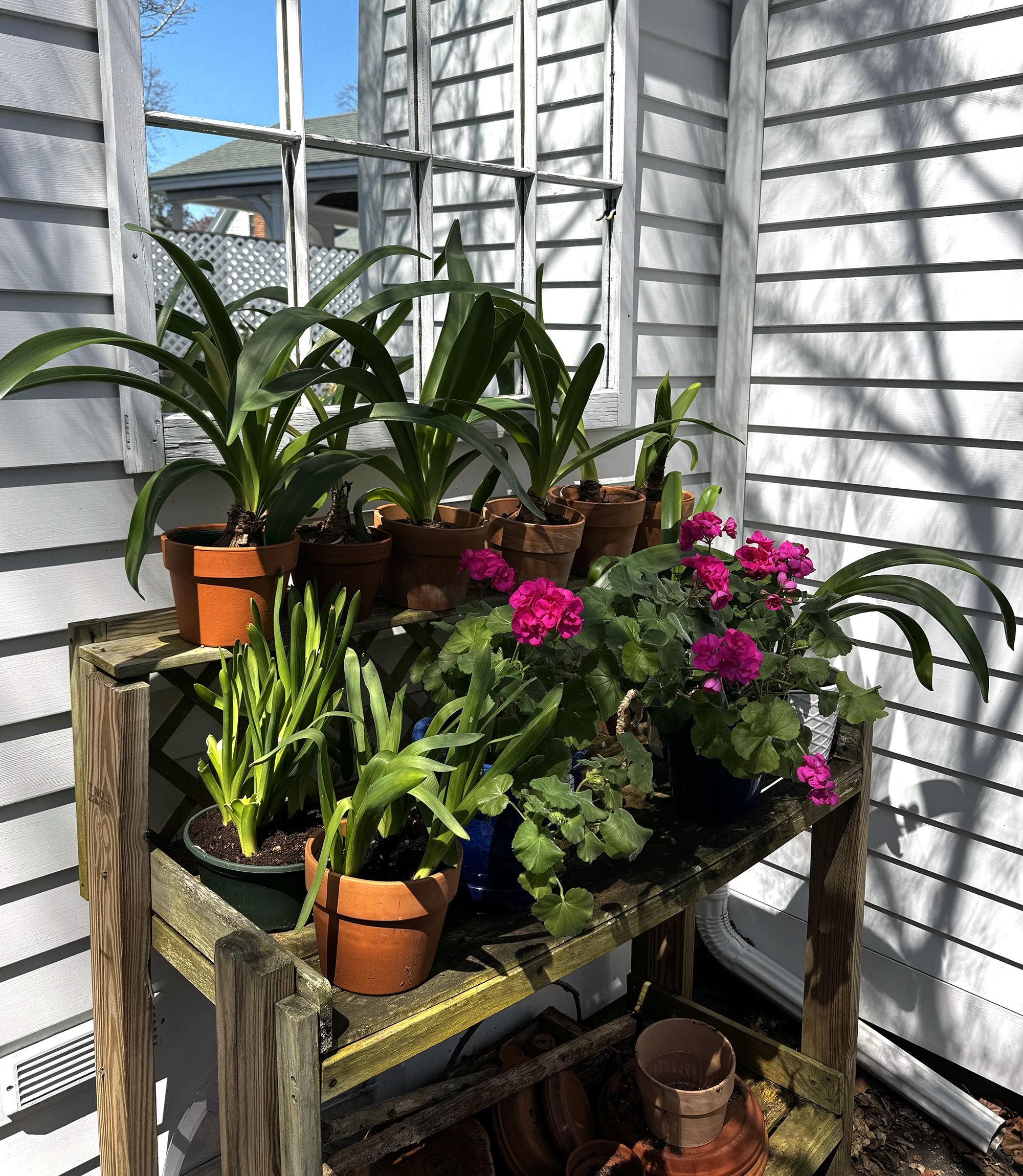
Photo by Elissa
My plants love soaking up the sun outdoors!
A buzzy horror novel, Shy Girl, was written “with the help of artificial intelligence.” This book was self-published in February 2025. Then the major publisher Hachette Book Group released it in Britian last fall. Hachette had planned to publish it this spring in the United States. However, upon thorough investigation, they canceled the contract, stating that the publisher “values human creativity and requires authors to attest that their work is original. Hachette also asks its authors to disclose to the company whether they are using AI.”
Shockingly, an AI detective program indicated that the book was 78 percent AI generated! The New York Times discovered illogical gaps as well as recurring patterns that are characteristic of text that is AI generated. One well-known publisher said, “It’s like plagiarism — you’re at the mercy of the author. We have to have confidence in our partners.” Dr. Samuel Johnson believed that plagiarism is a sin. Is the use of AI sinful for a creative writer, an artist? Mia Ballard, the book’s author, claims she didn’t personally use AI but that “it must have been in the editing process.”
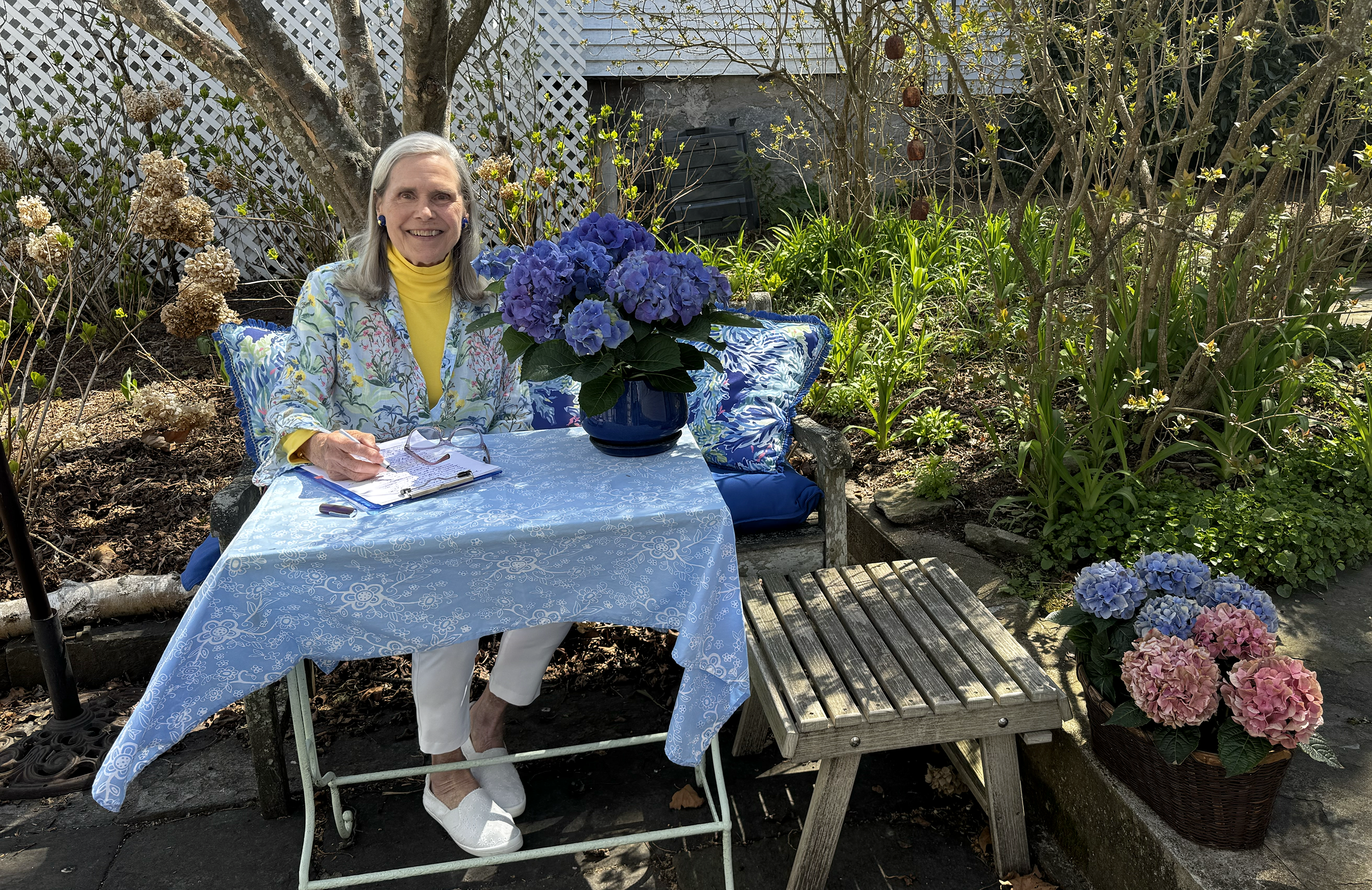
Photo by Elissa
It’s finally warm enough to sit in the garden and write in my summer writing area.
Hachette states that it is “committed to protecting original creative expression and storytelling.” Now, however, Hachette is planning to integrate AI software, editorial correction tools, in their “production process.”
There seems to be a gray, fuzzy line between human, creative, original content and efficient machine tools. A book that takes thousands of hours to write can be gobbled up by AI in a few minutes. Is this fair?
Many, but not all, publishers are now using AI-powered tools and technologies in the course of copyediting, fact checking and translation. AI produces speed. Who benefits from the rush? How soon will the dedicated, experienced, thoughtful, intelligent copyeditors, fact checkers and translators lose their jobs? The sales pitch of AI researchers is speed and eliminating what’s “boring” about the writing process.
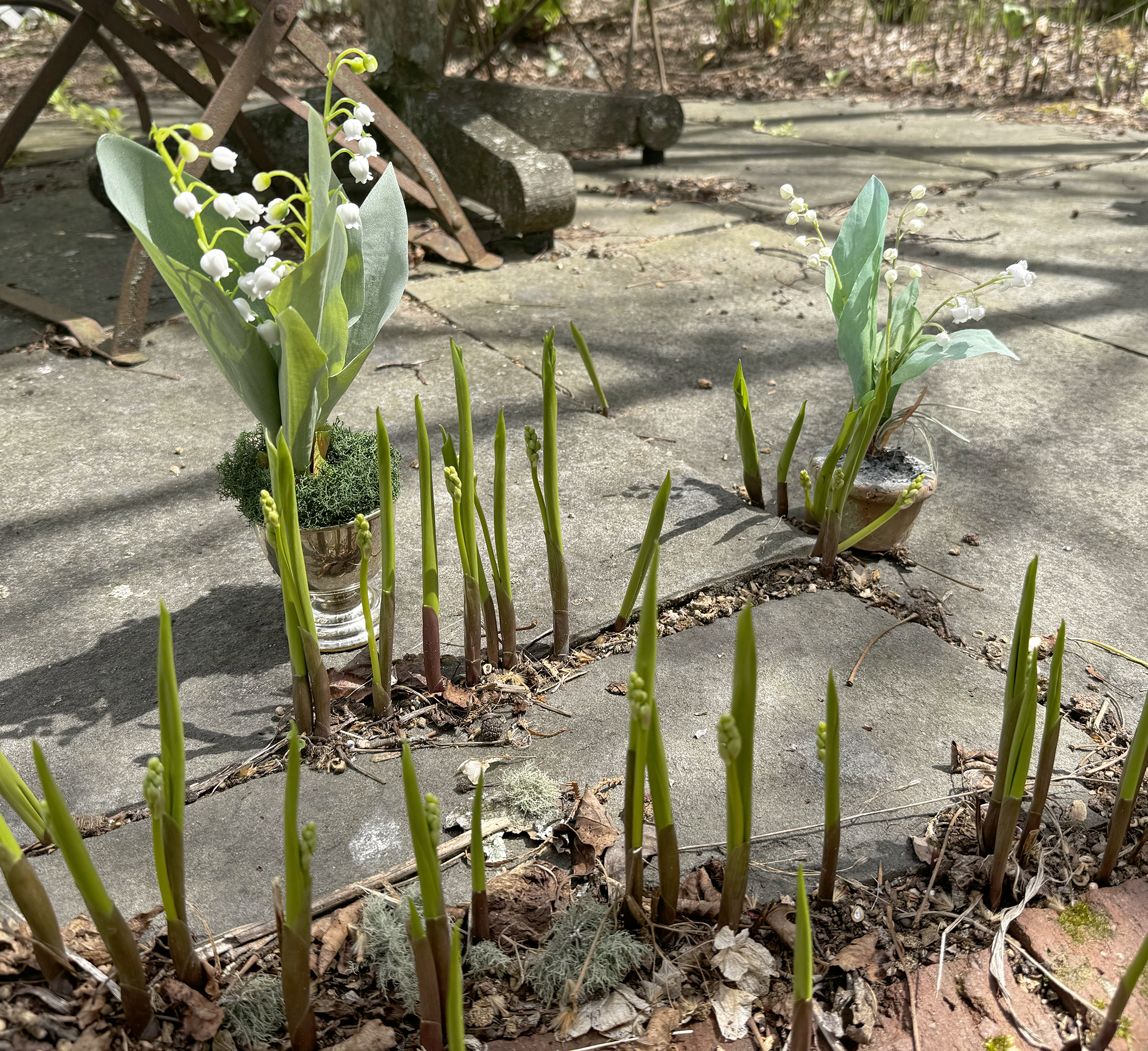
Photo by Elissa
My faux lilies of the valley, a gift from Karen and Charlie, next to the real ones about to bloom.
Boring? There’s nothing dull or tedious about a transition from working in solitude, from a first draft of a manuscript to eventually sending your ship out to sail. A writer lets go, and his or her literary agent gets the first read. As the process unfolds, a collaboration begins. The agent chooses a publisher and often a preferred editor who will get excited about the book. I only speak from my own experience with publishing, but I formed rich, meaningful, lasting relationships with all my editors, my copyeditors and the whole production team. I was fortunate to have bright, good people working together to do their best to support the success of the final product. I ended up meeting one of my translators, who lived in Taiwan, when she came to America to visit a relative. We bonded as old friends!
Thinking takes time. The process is the reality. Please hear me out as I share with you my point of view about the creative powers of writing. I’m not judging; I’m merely letting you know how I feel.
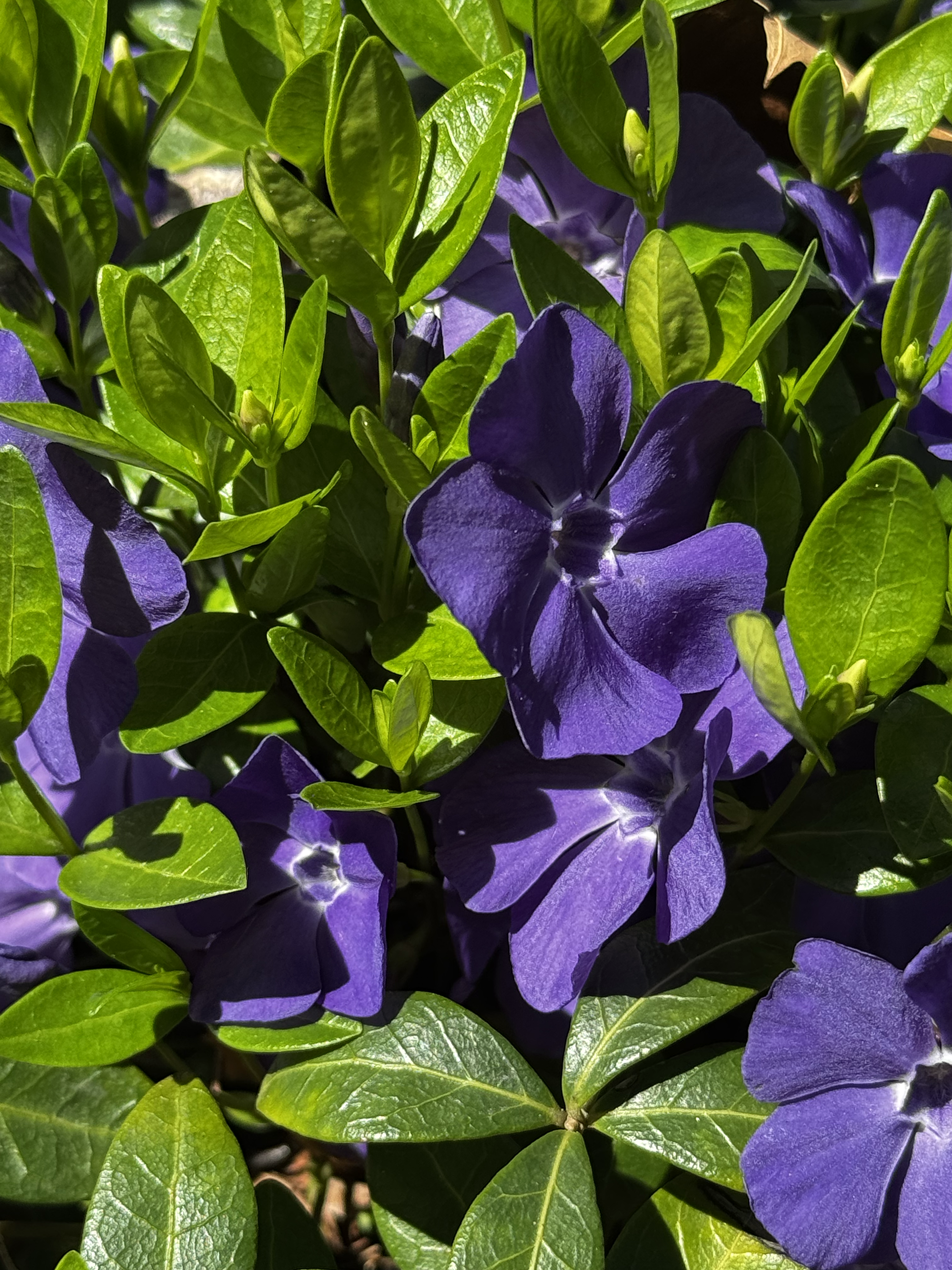
Photo by Elissa
The beautiful myrtle growing by the fence.
From first thinking of a point of view for a book to settling on a title to the long, solitary, quiet hours of musing, noodling, writing, rewriting and hard work, your efforts eventually produce an original human creation.
Your work becomes your voice, and all the talented professionals that support your work are part of a creative literary team that is synergistic. The continued effort is far greater than working entirely alone. Emerson understood that “all are needed by each one: nothing is fair or good alone.”
Time is never wasted when we’re creating something as unique as an expression of our inner thoughts and feelings. No one else can think our original thoughts. We alone create them.
The author Colson Whitehead wrote an article in the Opinion section of the New York Times called “Use A.I. However You Want, Except for Your Art.” He loves AI. He wrote about his uncle using AI to be informed when the grocery store won’t be crowded so he can go and buy onions without waiting.
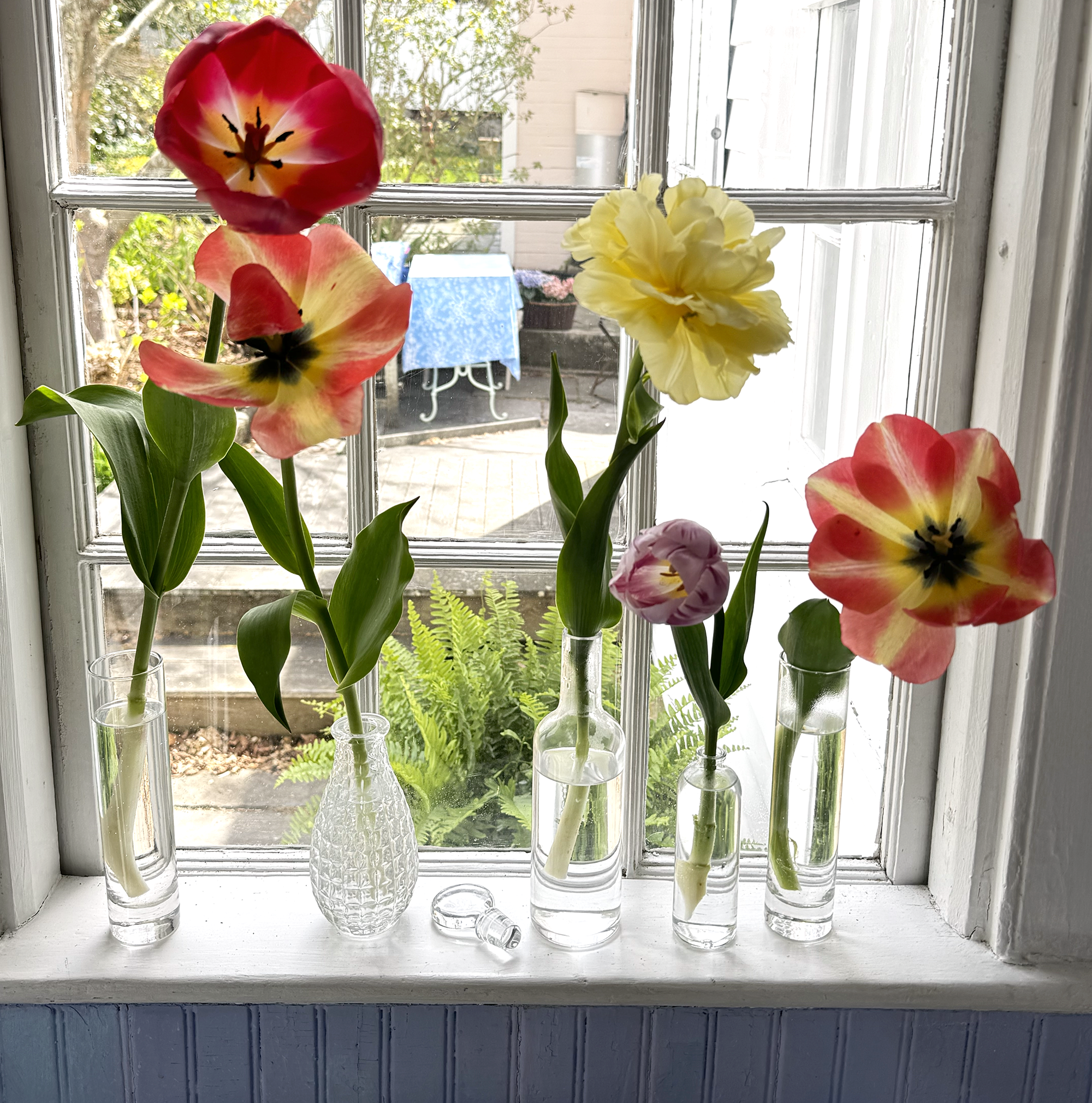
Photo by Elissa
Tulips bursting with color on the windowsill.
“If you use it for your art,” he writes, “you’re a freakin’ hack.” Later, he adds: “You’d hope that an artist would have more self-respect.”
According to Whitehead, this applies even if you just use AI to brainstorm ideas. “If you don’t know what to paint or compose or write, you’re in the wrong job. Art is the business of making up stuff — go make up some stuff.”
He concludes:
I believe in an old-fashioned virtue called Doing the Freakin’ Work.
Read the book, not the summary.
Write the piece, not the prompt.
Suffer like the artist you are. It ain’t easy, but if it were easy, it wouldn’t be worth doing.
To a serious writer, a copyright is a sacred privilege of authentic originality. When AI-generated wording is used in a manuscript, it can’t be protected by a copyright. Whether you choose to use AI or not, they are using your (and my) original materials for their machines to steal our originality for their financial gain.
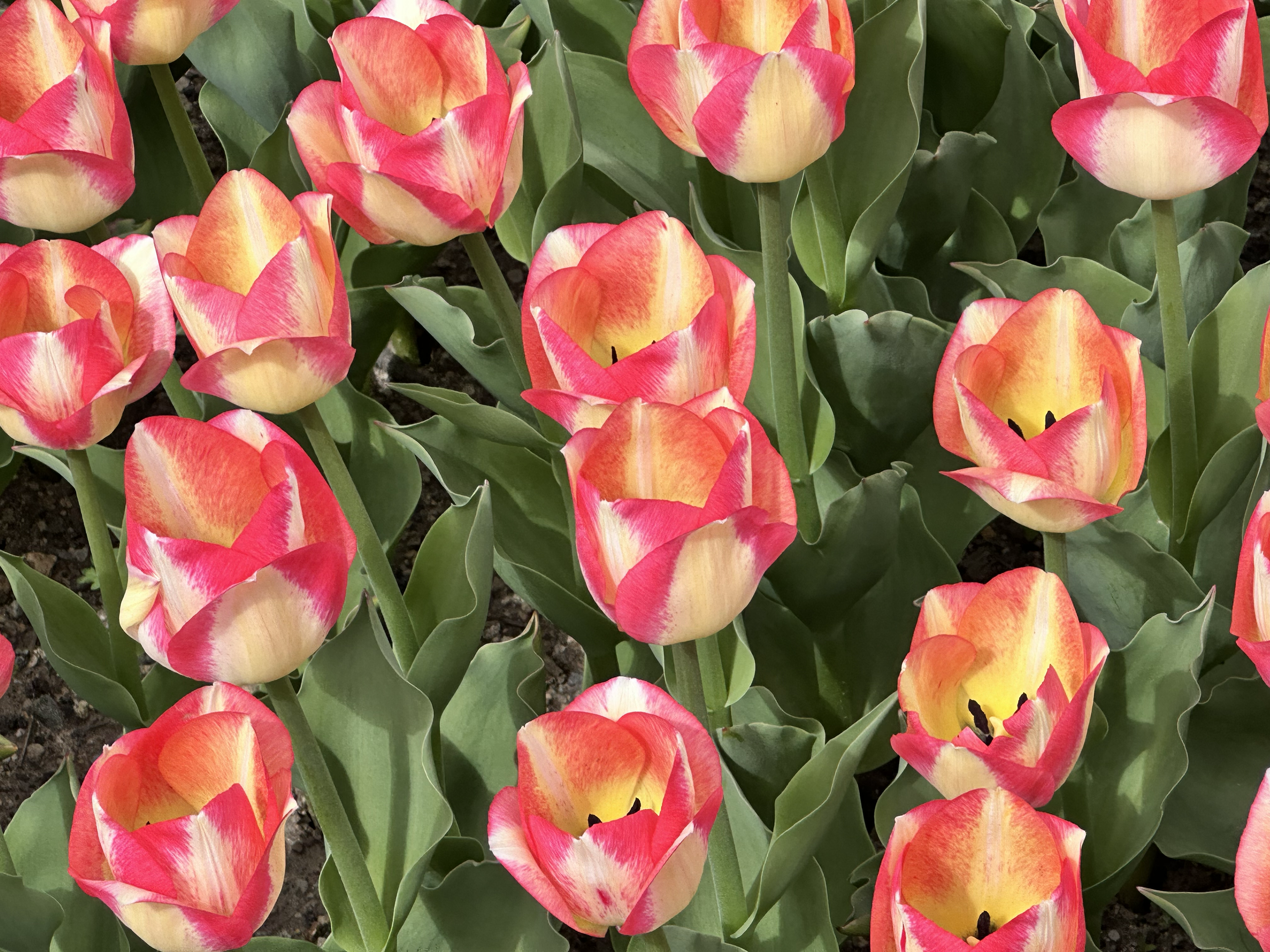
Photo by Brooke
A lovely variety of variegated tulip.
Intellectually minded, curious learners will continue to spend their leisure time studying, contemplating, creating. When we reflect on the disciplines of philosophy and art, the humanities and liberal arts for our own cultural edification, our love of wisdom, truth and beauty, our inner world will be illuminated. We’ll be in the higher frequency of realms of our human consciousness, more enlightened and more delighted. We’ll feel whole, complete and appreciative of our inner glow. The late mythologist Joseph Campbell, as I mentioned last month, understood this to be bliss. Whenever we cultivate our inner garden, in whatever ways, we will feel the rhapsody of being human and alive.
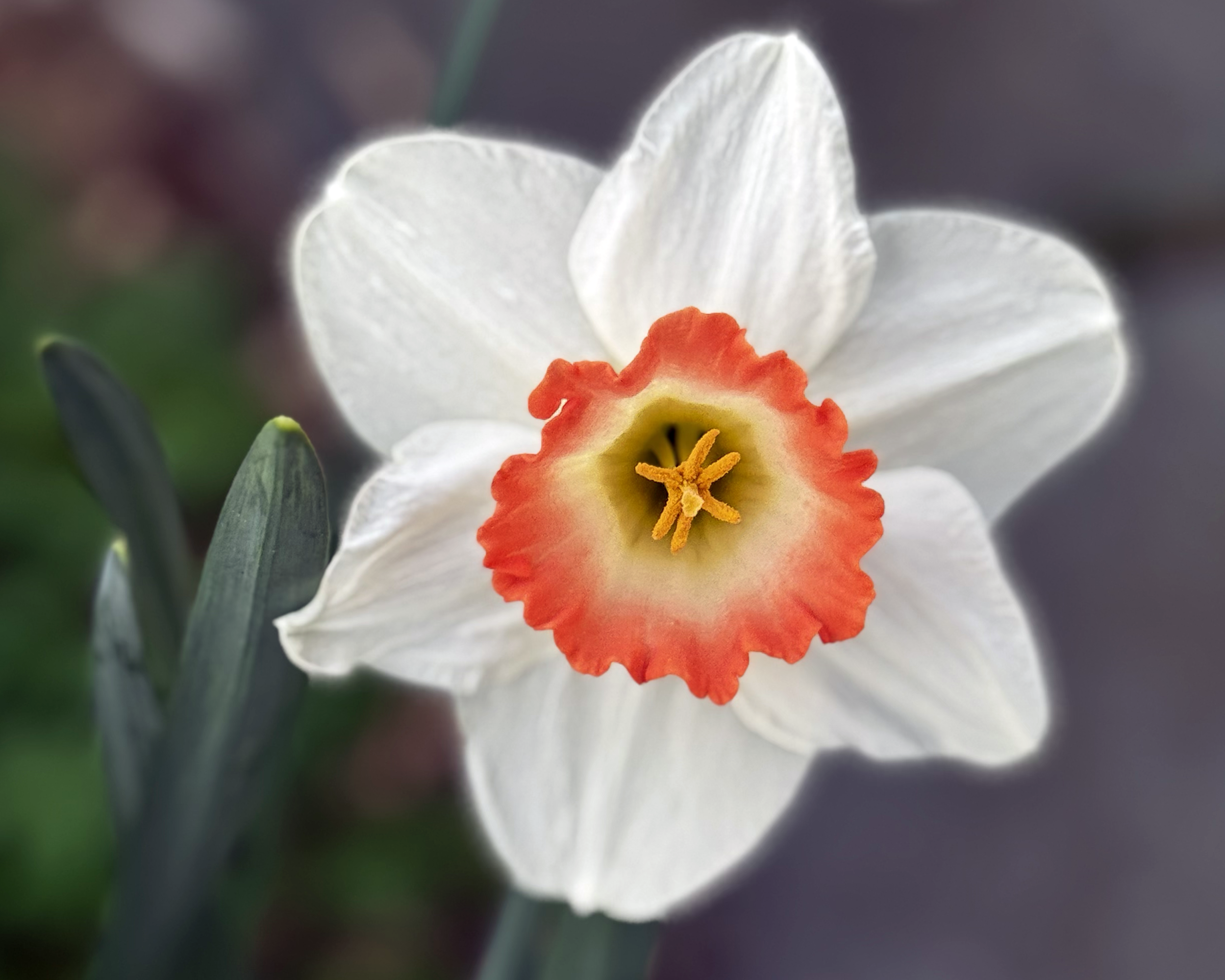
Photo by Elissa
A sweet daffodil in the garden.
When we continue to value improving our intellect, morality and spirituality, we will be happy. Our human lifespan is so fleeting. Because our allotment of time and space on earth is so impermanent, choose wisely in how you spend your most sacred gifts while you are still thriving!
When you study the greatest thinkers, their timeless wisdom becomes part of your DNA. Think of the countless teachers, writers, poets, artists and musicians who have helped shape your personality, your way of life. Aristotle suggests that it is our responsibility to become excellent at being human. With this in our hearts and minds, we can celebrate together our shared humanity.
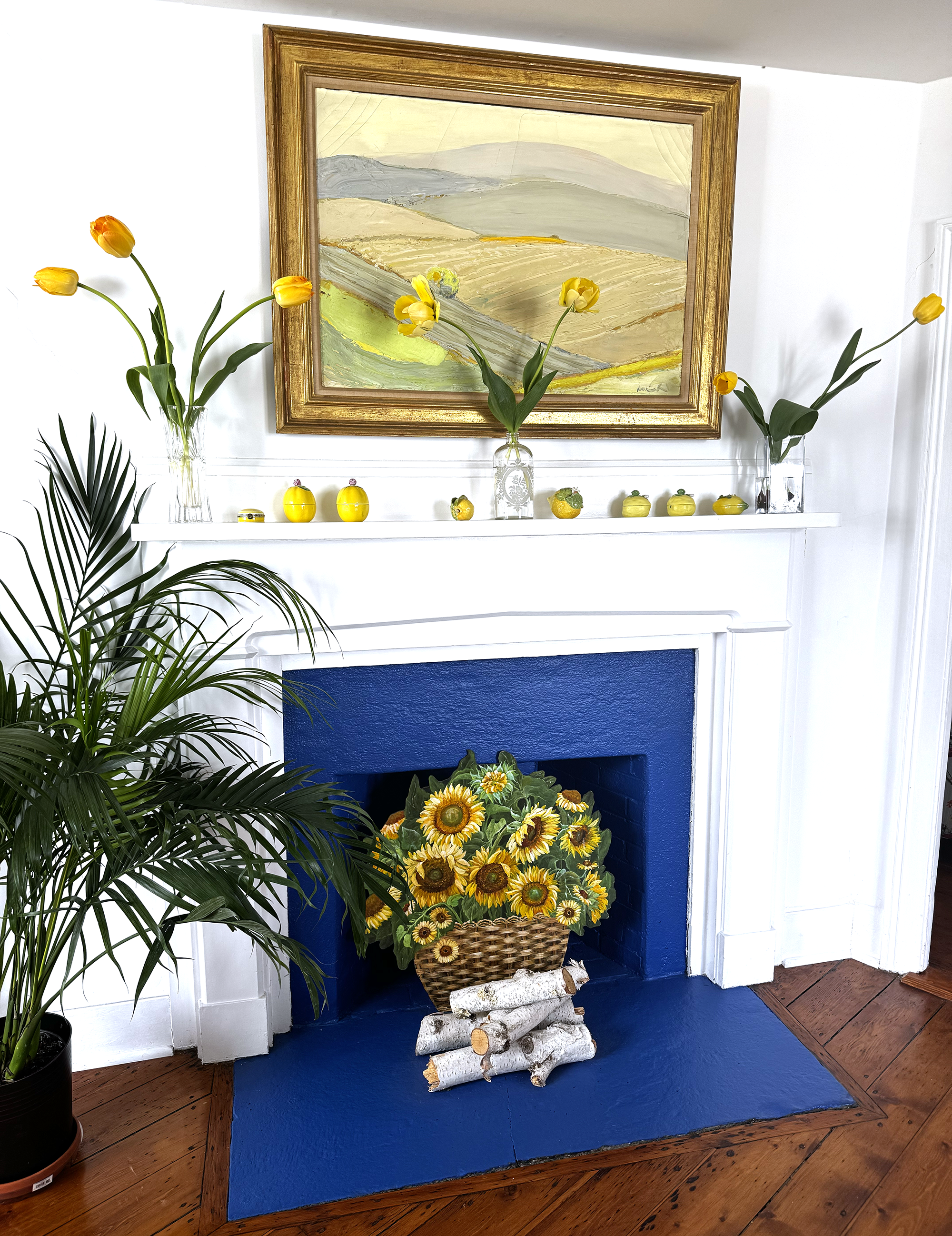
Photo by Elissa
Yellow tulips are gorgeous next to my blue fireplace.
I’d love to hear your thoughts about AI. Many of you are published authors and writers. When I took an informal survey, I was astounded at people’s strong feelings about AI — one way or another, there’s no way to avoid the intrusion of nonhuman intelligence. AI is in schools, beginning in kindergarten. Most businesses use AI. I try to avoid nonhuman contact as much as possible, but I understand how utterly tethered some people are who must embrace it for their work and personal life.
And while I am mostly writing about generative AI, artificial intelligence in general poses threats not just to the environment, but also to security. For example, Anthropic’s Claude Mythos superintelligent AI arrived last month; this software code is a turning point for cybersecurity. Initially, its large language model is being released to only 40 tech companies and banks.
“Mythos Preview has already found thousands of high-severity vulnerabilities, including some in every major operating system and web browser,” Anthropic said in a statement. Thomas L. Friedman wrote in the New York Times that hackers could use AI to infiltrate “pretty much every major software system in the world.” Stay tuned.
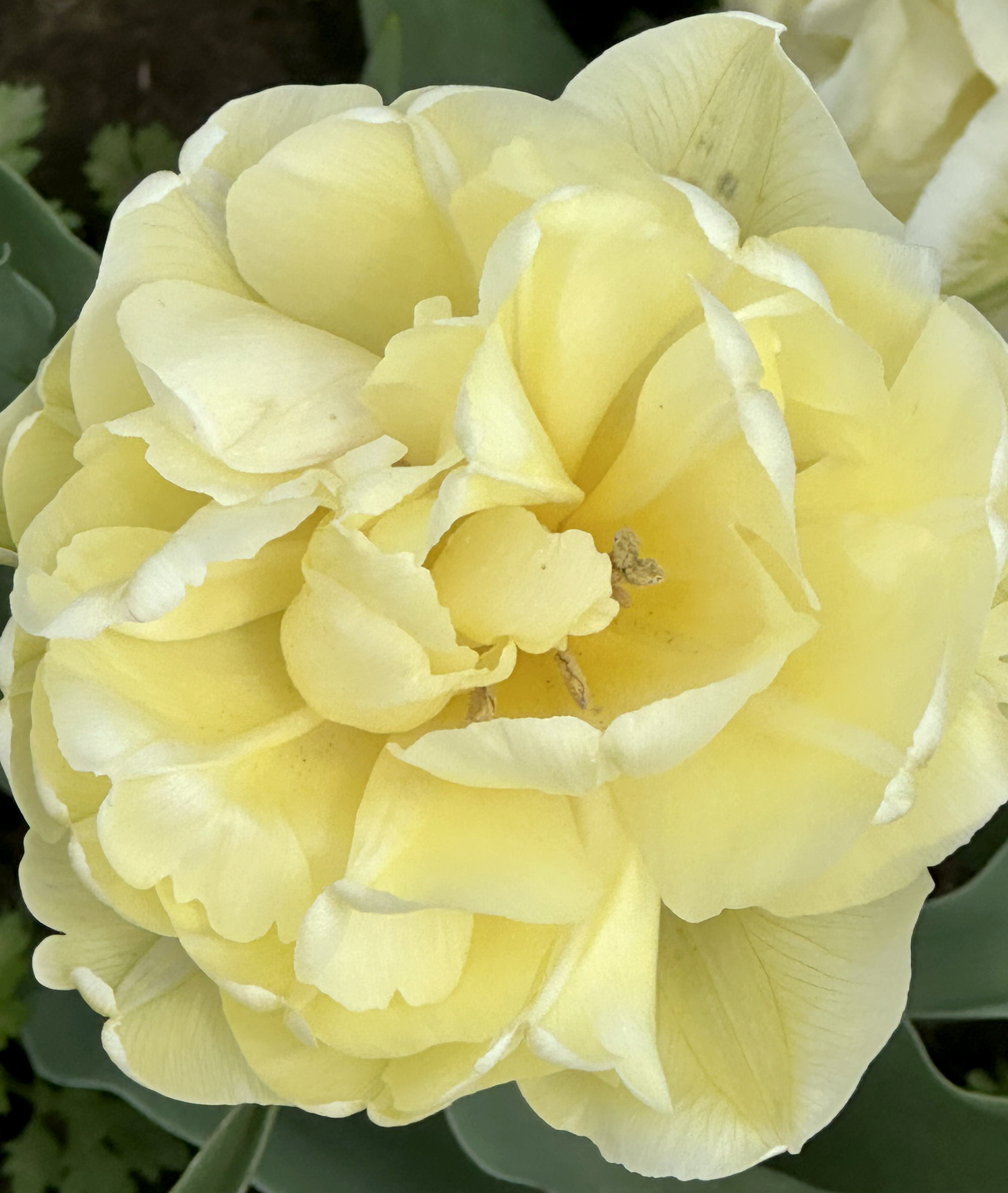
Photo by Brooke
Here are some questions I would like to ask you about AI. Feel free to write to me with your answer if you’d like to:
- What is your personal relationship with AI?
- Do you work for a tech company?
- Are you currently using AI regularly? Daily?
- Are you concerned with the amount of water and electricity it requires?
- Do you live near an AI plant?
- Have you or anyone you know lost their job because of AI? (Elissa lost two of her clients because they replaced her art with AI.)
- Would you pay for and read a bestseller that was “helped” by artificial intelligence?
- Do you trust creative writers to disclose to their publishers the extent that they use AI in their work?
- Do you have faith in publishers who claim they want originality to maintain their core values when AI has become so sophisticated and they use it in-house?
- Do you know someone who has been changed by their reliance on AI for emotional advice and support?
The world has changed, and this change affects everyone, even those of us who have opted out of using the internet and artificial intelligence. The genie has left the bottle, and we now must think carefully about how we want to live our lives as humans.
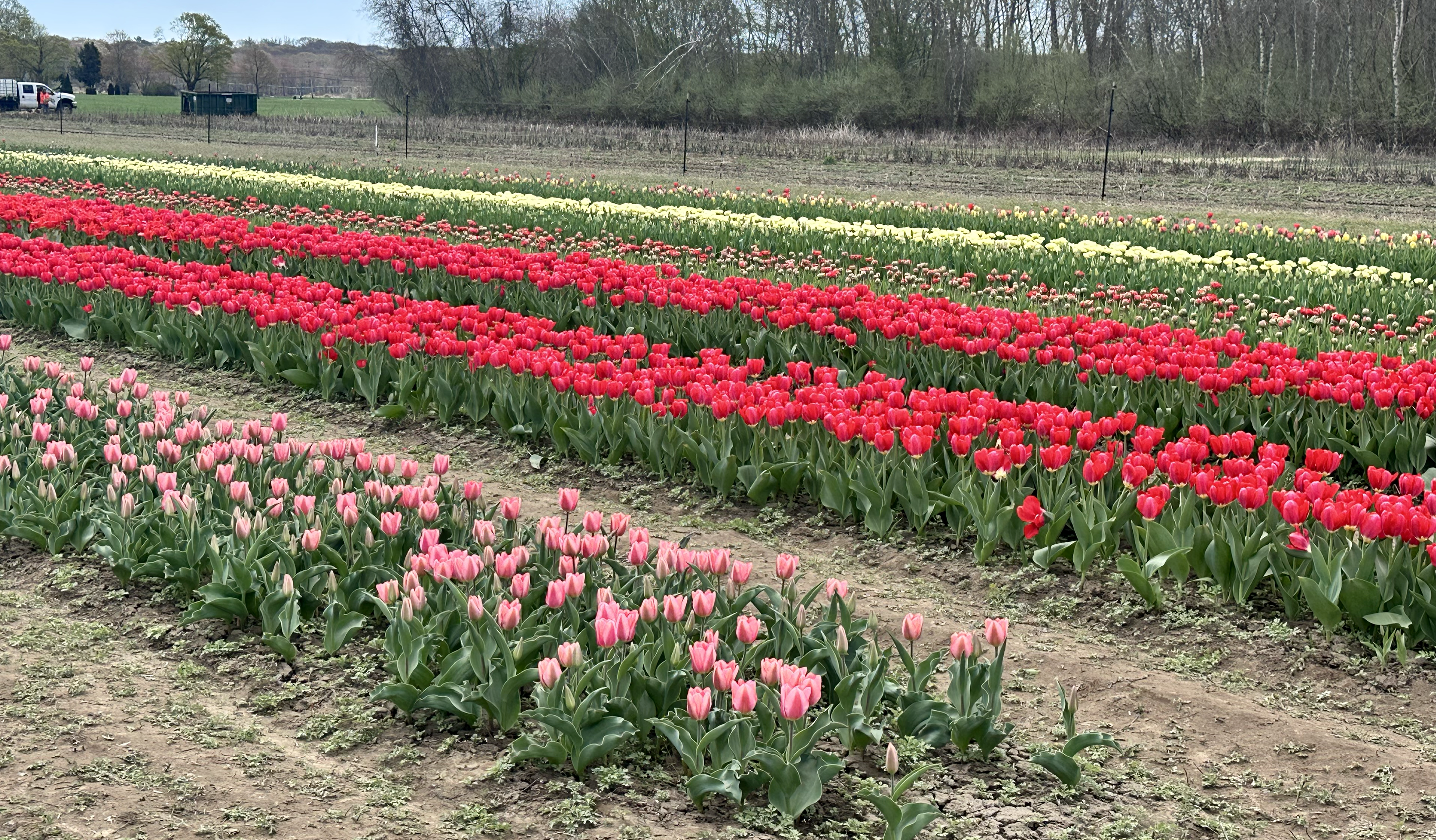
Photo by Brooke
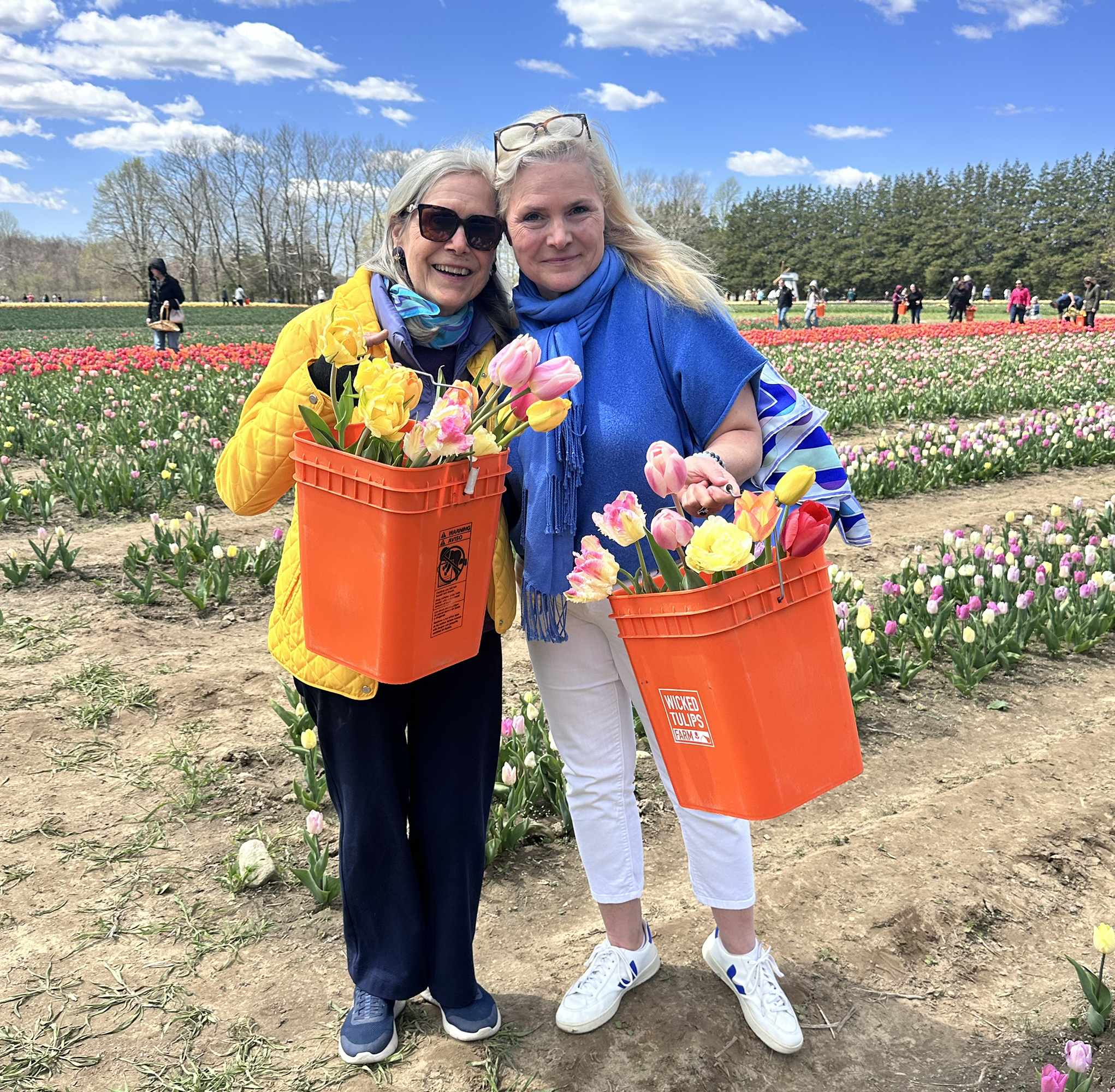
Brooke and I had a wonderful time at Wicked Tulips.
Tulip Mania
My daughter Brooke had never gone to Wicked Tulips, an outing I’ve enjoyed experiencing with friends every April since they opened in 2015. She got tickets a month ago, and we lucked upon a glorious, sunny day for our spring adventure.
We took back roads (the process is the reality), enjoying all the different varieties of flowering trees along the country roads and observing peaceful farms and green fields on our way to North Kingstown, Rhode Island.
The sky was bright blue, the clouds bright white, and suddenly we saw field after field of a rainbow of tulips in every shade, tint, tone and combination from a box of crayons. Tulips are one of my favorite flowers. I share my love of tulips with both my daughters, Alexandra and Brooke, as well as my favorite contemporary French artist, Roger Mühl.
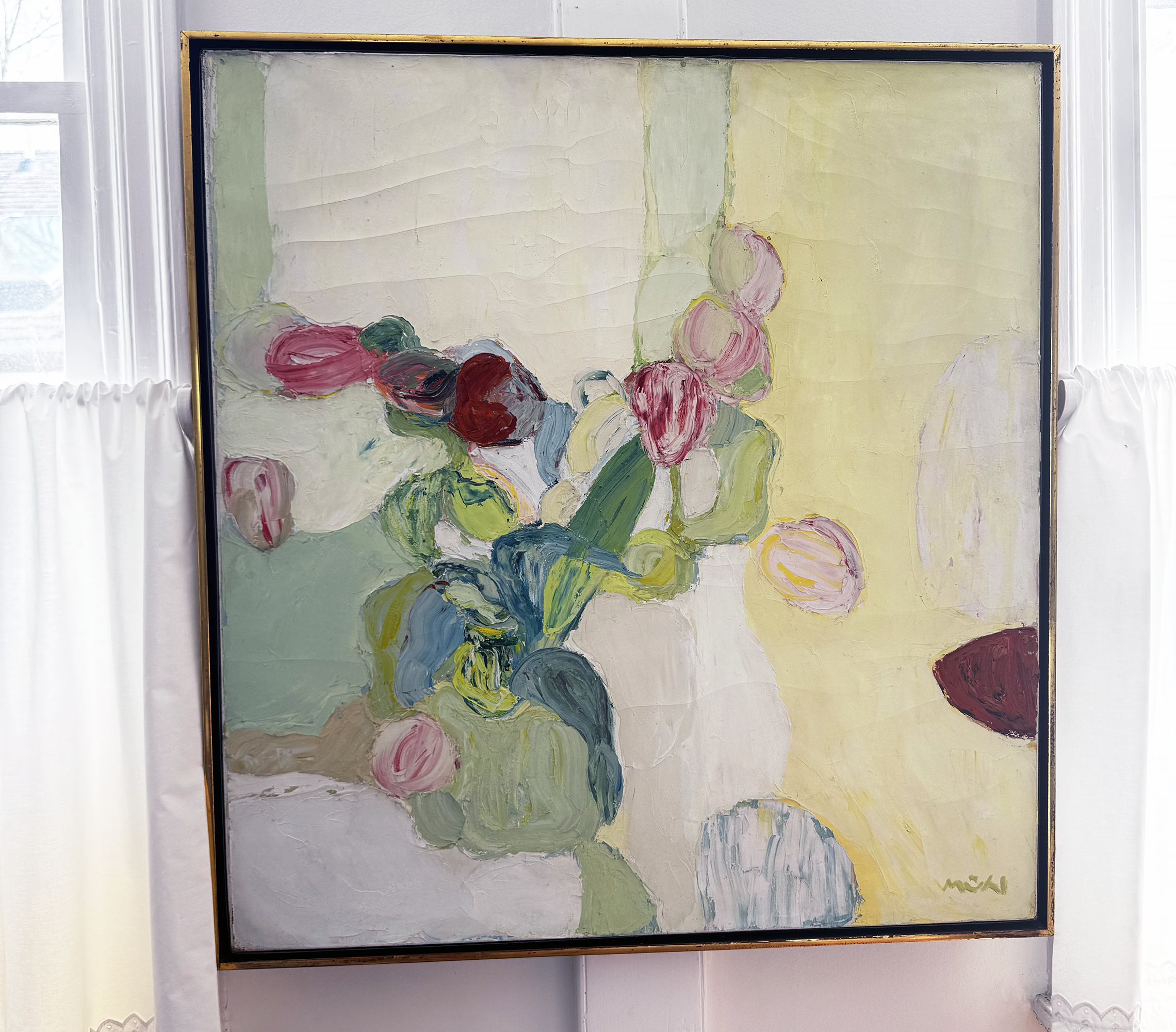
Photo by Elissa
This is the Mühl painting with the magical dancing tulips!
I have such lasting, fond memories of visiting Roger in his homes and gardens in the South of France, in Grasse, and later when he moved to Mougins. He cultivated unusual varieties of variegated parrot tulips. Roger’s gardens have always been a great source of inspiration for his art.
Mühl, like Monet, loved the water and flowers. Whenever he picked flowers, he’d place them in a composition inside his renovated post office in the ancient village of Mougins. Inspired by the beauty of his garden, he’d paint his freshly picked flowers. Of the several tulip paintings in my collection, one bouquet of tulip blooms seems to be flying, many blossoms without stems. Sheer magic.
At Wicked Tulips, we’re invited to pick 10 tulips with the price of admission. Seeing men, women and children with their baskets and buckets, observing the splendor in front of them, greatly added to our joy. We were all rapt in concentration, patiently waiting until the aha moment. When a specific tulip spoke to us, we’d pause in a meditation, bowing in reverence as we pulled the stem from the soil. Truly a magnificent, happy experience. If we wished, we were allowed to pick as many additional tulips as we wanted to for $1.50 a stem.
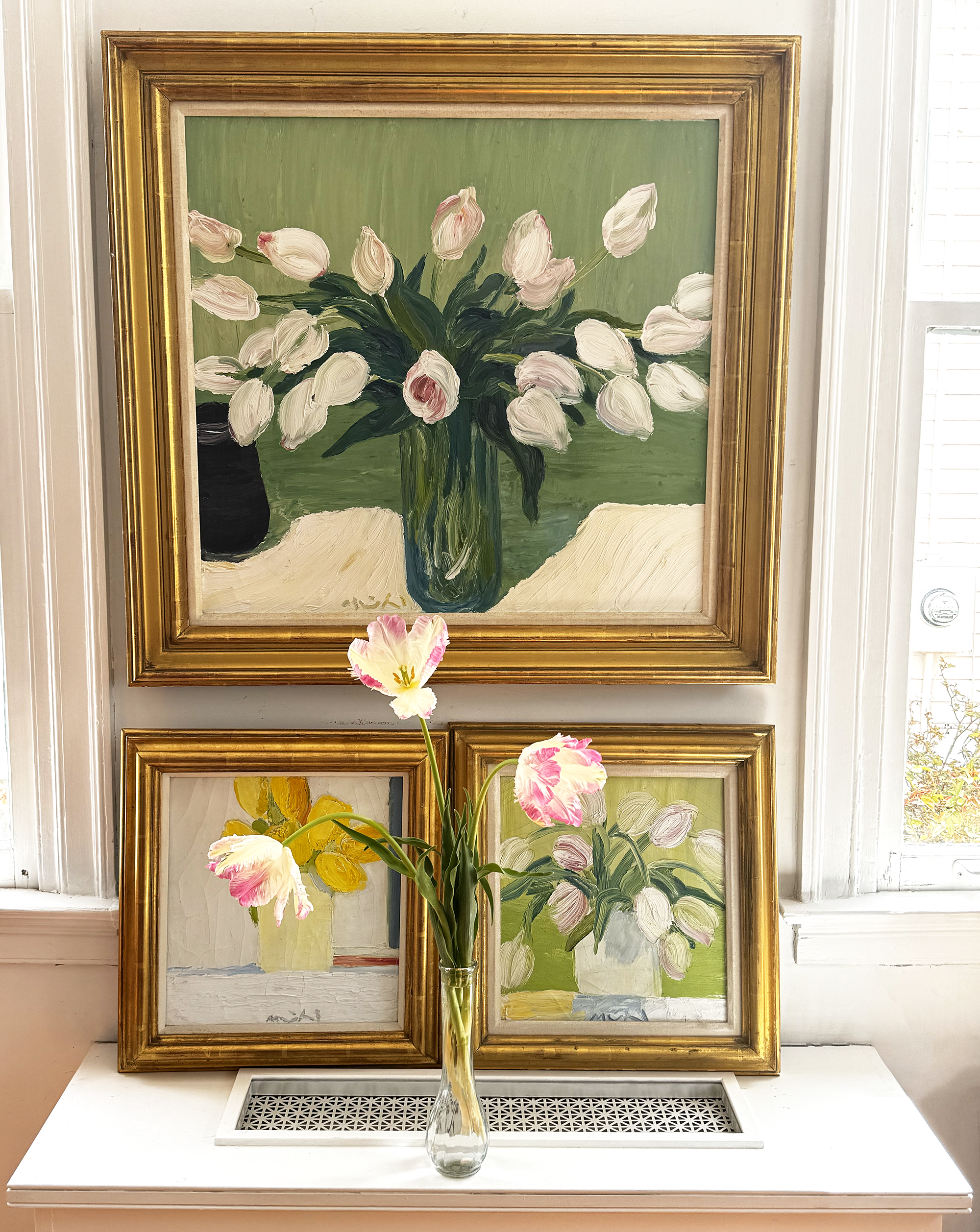
Photo by Elissa
My collection of tulips painted by Roger Mühl next to the real thing.
There was a sign that informed us that Wicked Tulips planted 1.5 million tulips! Some were not in full bloom, staggered so the season could last through Mother’s Day on May 10. No guarantee; the weather is in charge.
Wicked Tulips also has a tulip farm in Preston, Connecticut, that is equally spectacular. A friend brought a yellow and pink tulip she’d picked for me when she went to Preston. Garden and flower lovers make a pilgrimage to be in the presence of nature’s exquisite beauty. We absorb, in our entire being, the rapture, the awe, of participating in such magnificence.
Brooke and I had our tulip day! The magic and wonder linger on. We have the good fortune of leisurely enjoying and studying our intimate selection of beautiful, colorful tulips at home. Sweetening our private retreats, as well as our hearts, the tulips seem to be hand-painted by a master artist. And, indeed, they are.
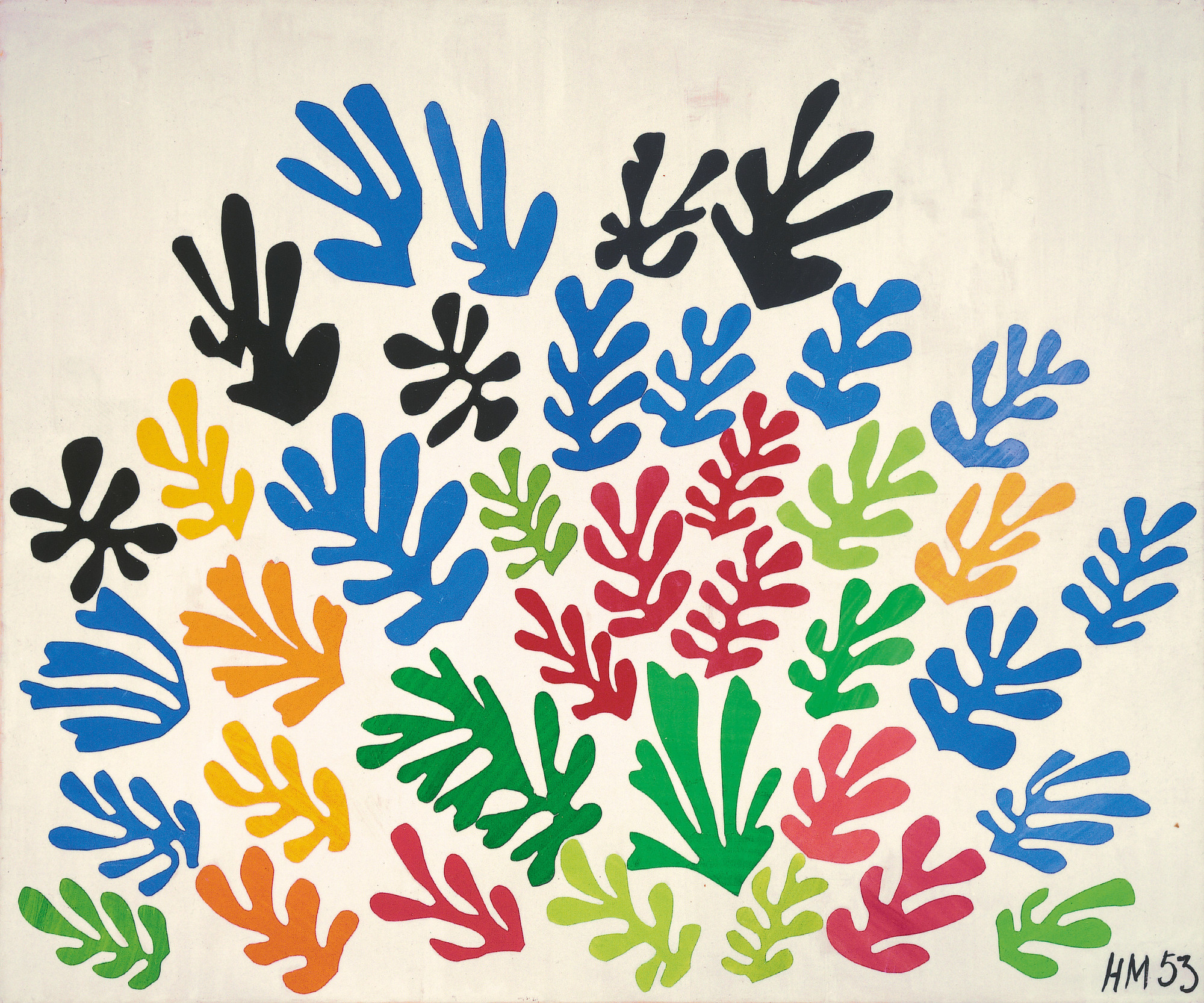
The Sheaf, by Henri Matisse
Matisse’s Moment
If any of you are planning a visit to Paris between now and July 26, I urge you to go to the Grand Palais to see this late-in-life burst of inspiration: Henri Matisse’s paintings from 1941 to 1954. My love of Matisse brings me continuous joy. His ability to simplify his colorful brushstrokes or gouache collages lifts us up to revitalize our spirits. He makes us jump for joy.
I got a vicarious pleasure in reading a New York Times art review from Emily La Barge called “What Was Old Is Young Again.” I know I’m not going to see this show, but I have so many friends who will, and I’ll savor reading the exhibition catalogue. My art-loving friend Rebecca gave me the book from the exhibition in Philadelphia at the Barnes Museum. I wasn’t able to attend it, but I was able to imagine I was there viewing so many of Matisse’s paintings I’ve been especially fond of for years. I have a large Matisse postcard collection I enjoy looking at, as well as several books about this artist, whose radical simplicity allows us, his viewers, to pause and remember the joy of our first crayon box, when we played in different shapes and patterns of pure pigment.
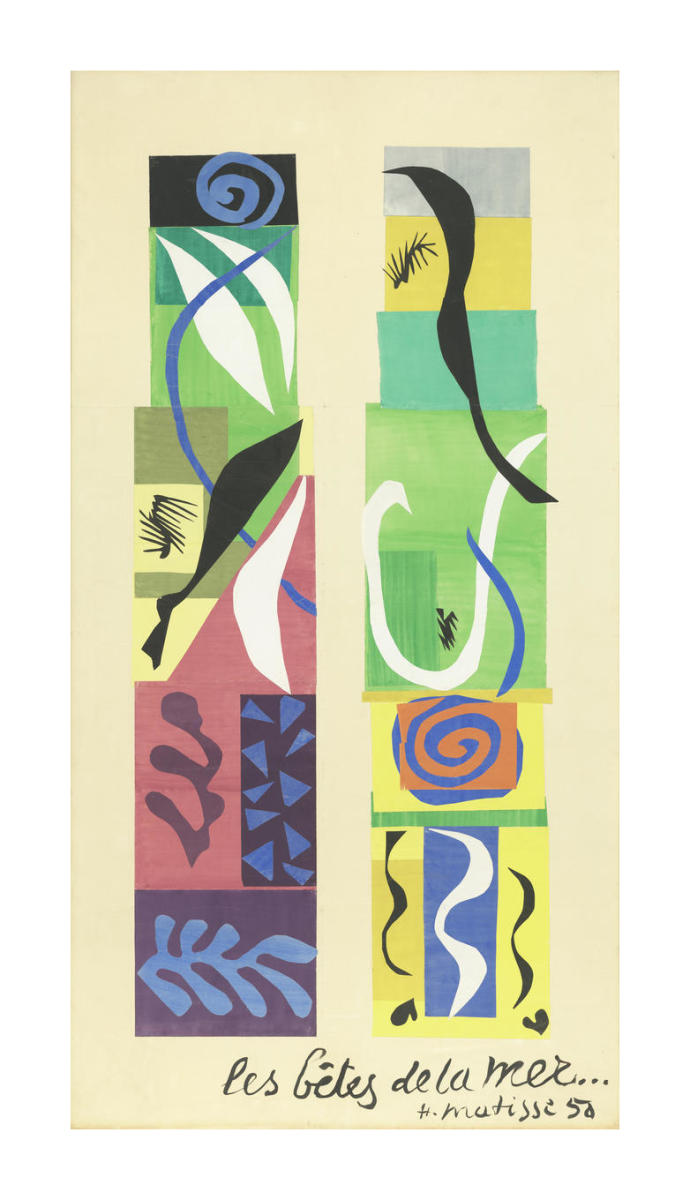
Beasts of the Sea, by Henri Matisse
In 1950, at age 80, Matisse said, “I hope that, however old we live to be, we die young.” In 1941, according to the article, he had a “close brush with death during a 1941 operation for intestinal cancer.” Since then, he “was in a new period of profound creative growth: ‘a second life,’ as he called it in a letter to his son Pierre.”
“Matisse: 1941–1954” covers a famous period in his oeuvre that includes so many different forms of his creative expression, “beyond his best-known paintings — to innovative drawings, gouache cutouts, illustrated books, textiles and stained-glass windows,” writes La Barge.
“It also challenges the conventional understanding of any artist’s ‘late’ years as an inevitable tapering off,” she continues. “Here, we see a blossoming, a relentless drive to experiment in new mediums and a radical simplicity that only a lifetime of making could achieve.”
Matisse’s studio, called “the factory,” was where he produced endless creations. He once said: “You cannot imagine how much, in the cutouts period, the sensation of flying that was unleashed in me helped me to refine the motion of my hand when it guided the path of my scissors.” With large dressmaker’s scissors, he “cut shapes from colored paper, his motions fluid and instinctive.”
His “hard-won simplicity” and youthful exuberance are inspiring and contagious, and his art is timeless, created over 84 years of living “the art spirit."
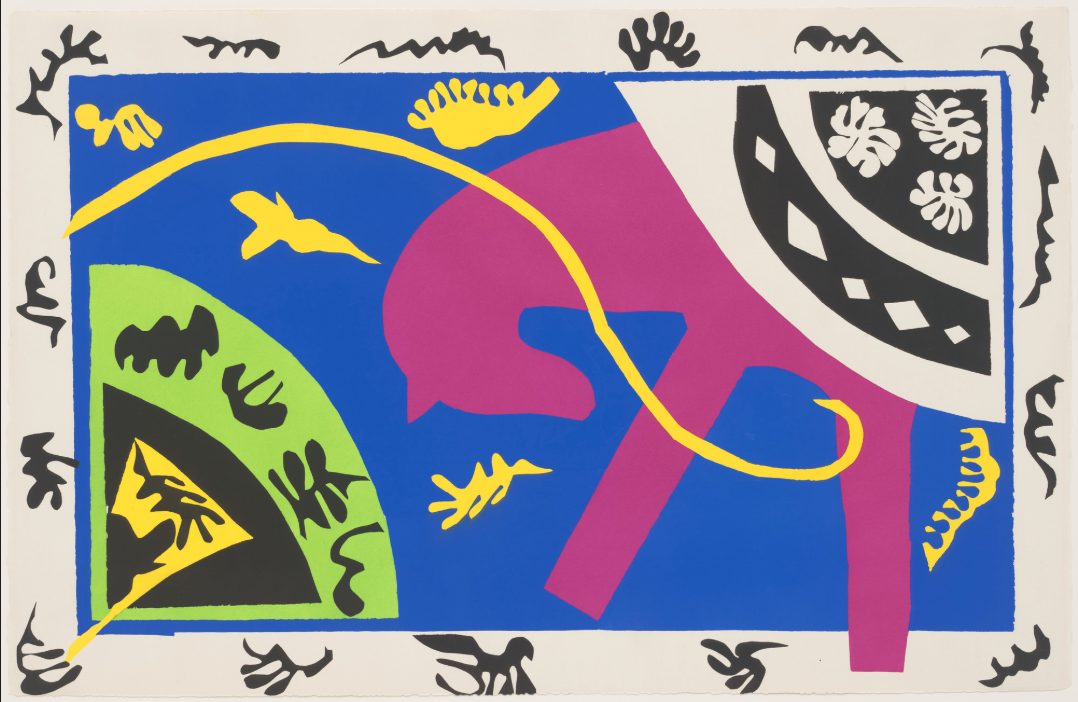
Horse, Rider & Clown, by Henri Matisse
Paris is not the only location to celebrate Matisse. Carol Vogel wrote an exciting article in the New York Times called “Devotees of Matisse Take Note.” We’re experiencing “the Matisse Moment,” she wrote. Timing is everything.
“Matisse once famously said painting is like a good armchair,” James Rondeau, director of the Art Institute of Chicago, told Vogel. “And in these troubled times that appears to be exactly what the public is craving.”
Matisse understood that humans long to be uplifted from the difficulties of circumstances beyond their control.
The Art Institute of Chicago has an exhibition called “Matisse’s Jazz: Rhythms in Color.” The San Francisco Museum of Modern Art is opening a show on May 9 exploring the impact of the celebrated painting of Matisse’s wife, Amélie.
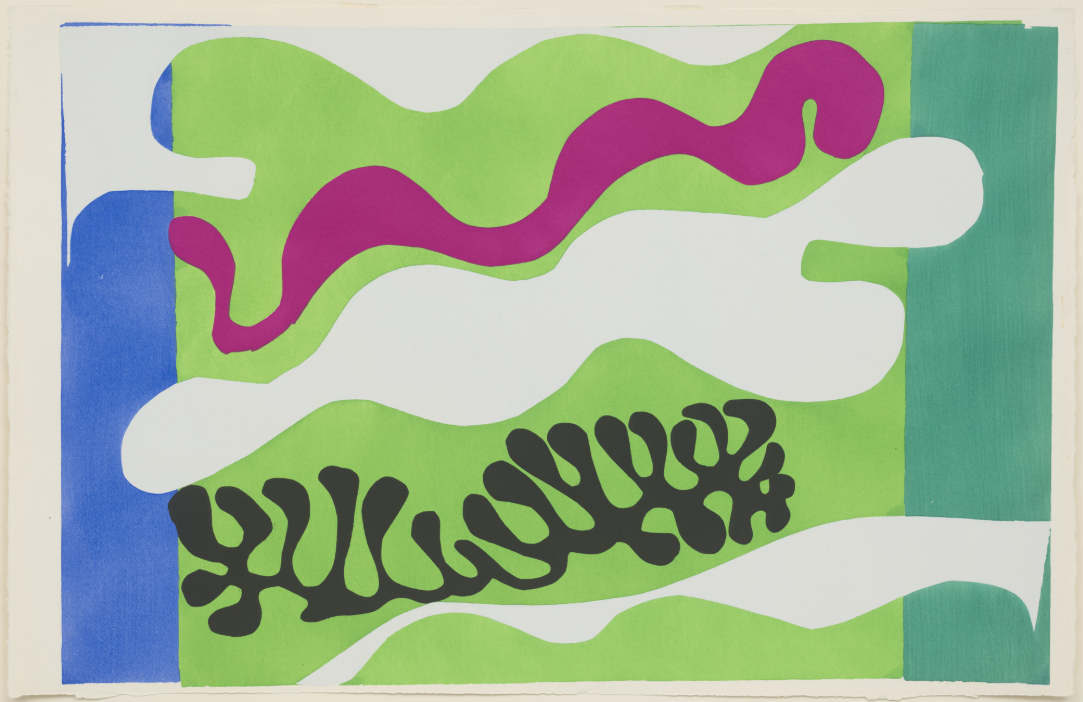
The Lagoon, by Henri Matisse
Vogel tells the story of then 35-year-old William Acquavella, who worked for his father at Acquavella Galleries in 1973, watching people waiting in line in the rain to see a Matisse show. At Matisse’s exhibition, the New York Times art critic Hilton Kramer wrote, with a wink of admiration, “there are unexpected revelations to be gleaned.”
Now, more than half a century later, Acquavella, now an 88-year-old art dealer, has organized “Matisse: The Pursuit of Harmony.” Fifty paintings, sculptures and works-on-paper are on view, many on loan from major art galleries around the U.S. as well as from his own clients who bought Matisse’s works from the gallery over the decades. The exhibition is located in New York City, at 18 East 79th Street, in a 1918 neo-Classical townhouse on two floors.
Master artists’ greatness is their love of their work. They honed their skills regularly, each day discovering new heights of insights into their talent. Matisse’s playfulness opens our hearts to become more playful, spontaneous, curious and daring. No matter what medium we choose, enjoy the process of creating something only you can give birth to.
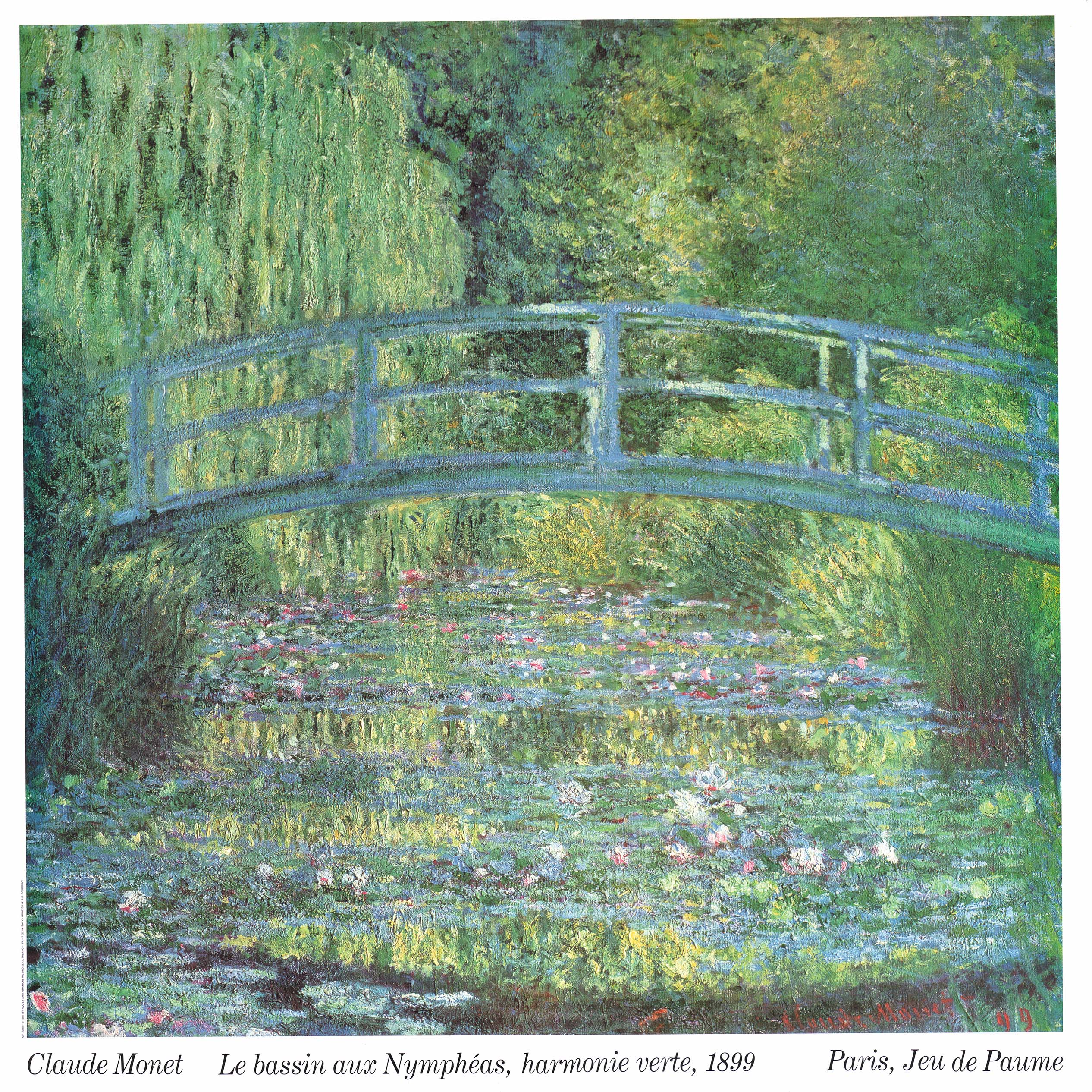
Water Lilies, by Claude Monet
Claude Monet: The Magic of Water and Light
I saw my first Claude Monet painting when I was five at the Boston Fine Arts Museum. My artistic, aesthetic mother and godmother wanted to expose me to French Impressionism early on. Many of you are familiar with my passion for French art.
My daughter Brooke invited me to go to a documentary, The Magic of Water and Light, at the nearby Mystic Luxury Cinema. What a sentimental journey to have Claude Monet’s genius artistic talent, one that always involved water, light, color and flowers, on full display.
When he was five, the narrator told us viewers, Monet would skip school in order to go to the water’s edge. He said he wanted to be buried in a buoy so he could always be in water.
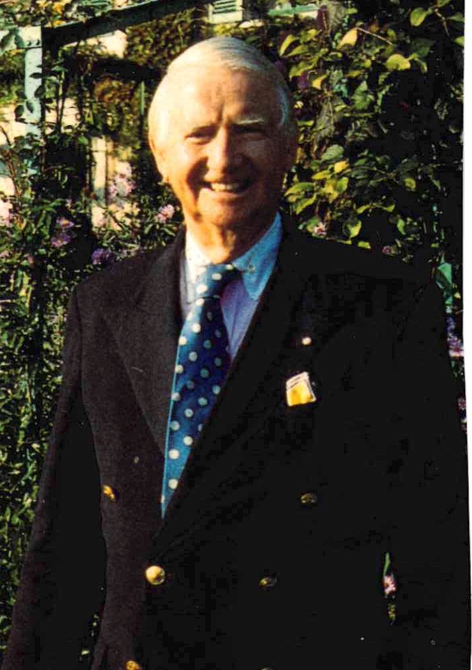
My favorite photo of Peter, taken at Giverny.
His residence and gardens in Giverny hold a sweet spot in my heart. I’ve been going to Giverny since it opened to the public in 1980. The photography of the 10 full-time gardeners is breathtakingly spectacular, with their stories of Monet’s obsession with diverting the river Seine to his garden. Miraculously, he got permission: construction started, and his dream came true. He would have a water lily pond, a green Japanese bridge and flowers, “always flowers.” I took a picture of Peter on this iconic bridge that fills my heart with our love of Giverny and each other.
In his early 70s, when Monet was painting his water lily pond from the bridge, he noticed his superpowers, his eyes, were not able to focus. He was literally seeing impressionistically. So discouraged and depressed, he stopped painting. Blessedly, his close friend Georges Clemenceau, who visited Monet in Giverny regularly, had a mission to get him back painting. He knew if Monet didn’t paint, he’d die. Together they went to the basement and looked at several of Monet’s early water lily paintings. Clemenceau fibbed a bit, praising them and encouraging Monet to return to his studio — and paint. Within a few weeks, Monet wrote his friend a simple message: “I’m back!”
Before he had trouble seeing, fellow artists, including Paul Cézanne, understood his uncanny genius to see and paint the floating light, a feat that is most difficult to capture on canvas. Known for his observation and talent to paint what he saw, Monet was an eye, “but what an eye,” Cézanne admitted.
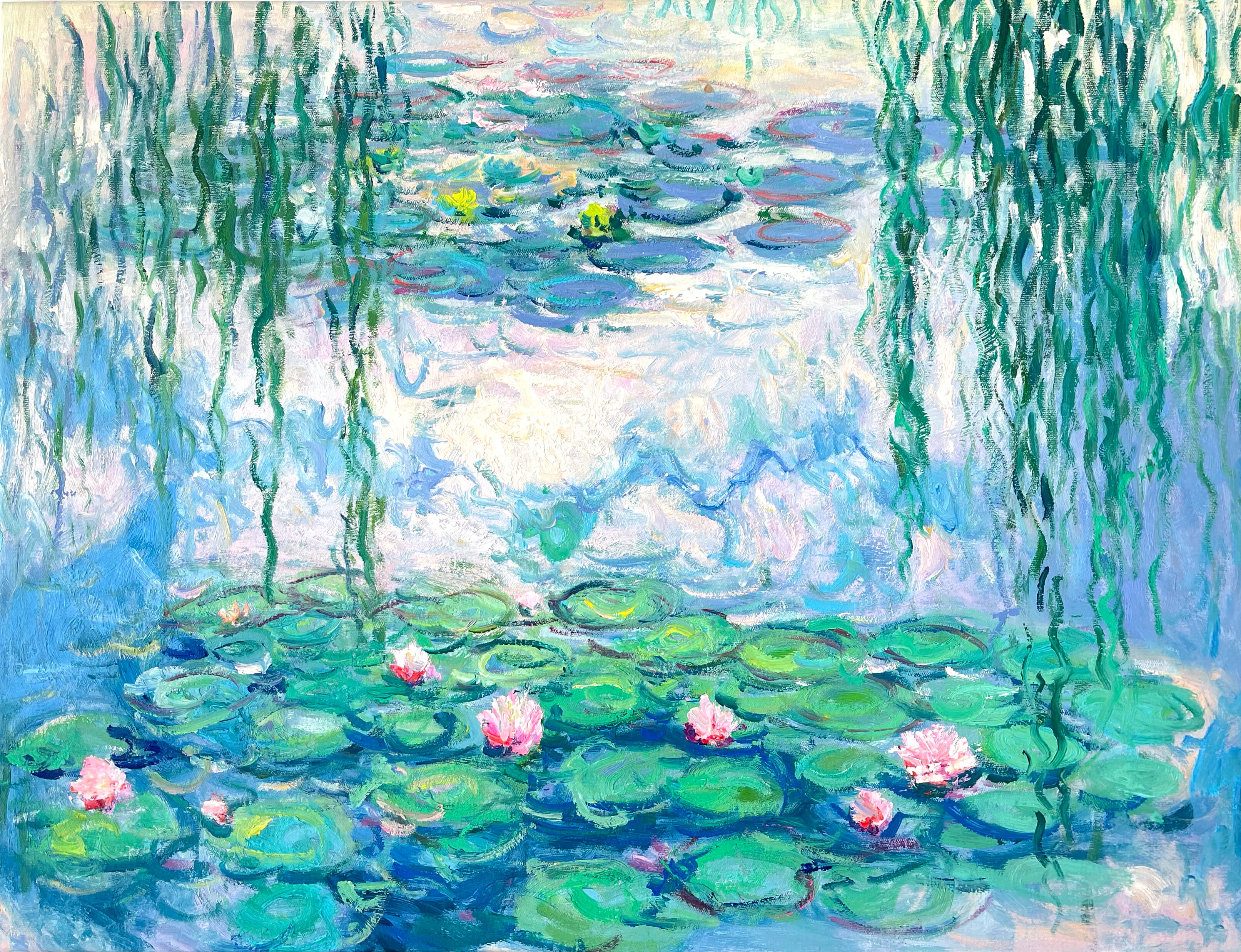
I love the play of light on water.
Monet died in 1926, one year before his water lily paintings were opened to the public. The reviews were initially unfavorable, which seems unimaginable now.
In his burst of enthusiasm, he was on a quest to see the invisible, to see beyond the surface and into the mysterious, to capture the air’s atmosphere. On his canvas, he was underwater, looking up at his flowers that grew deep roots in the mud below.
We know Monet as the most famous, beloved French artist who died 100 years ago. His need to capture the fleeting light and color inspires us to see with his eyes. In my tribute to him in my book Open Your Eyes, dedicated to Roger Mühl, I included a photograph of him on a green garden bench. He invites us to sit next to him.
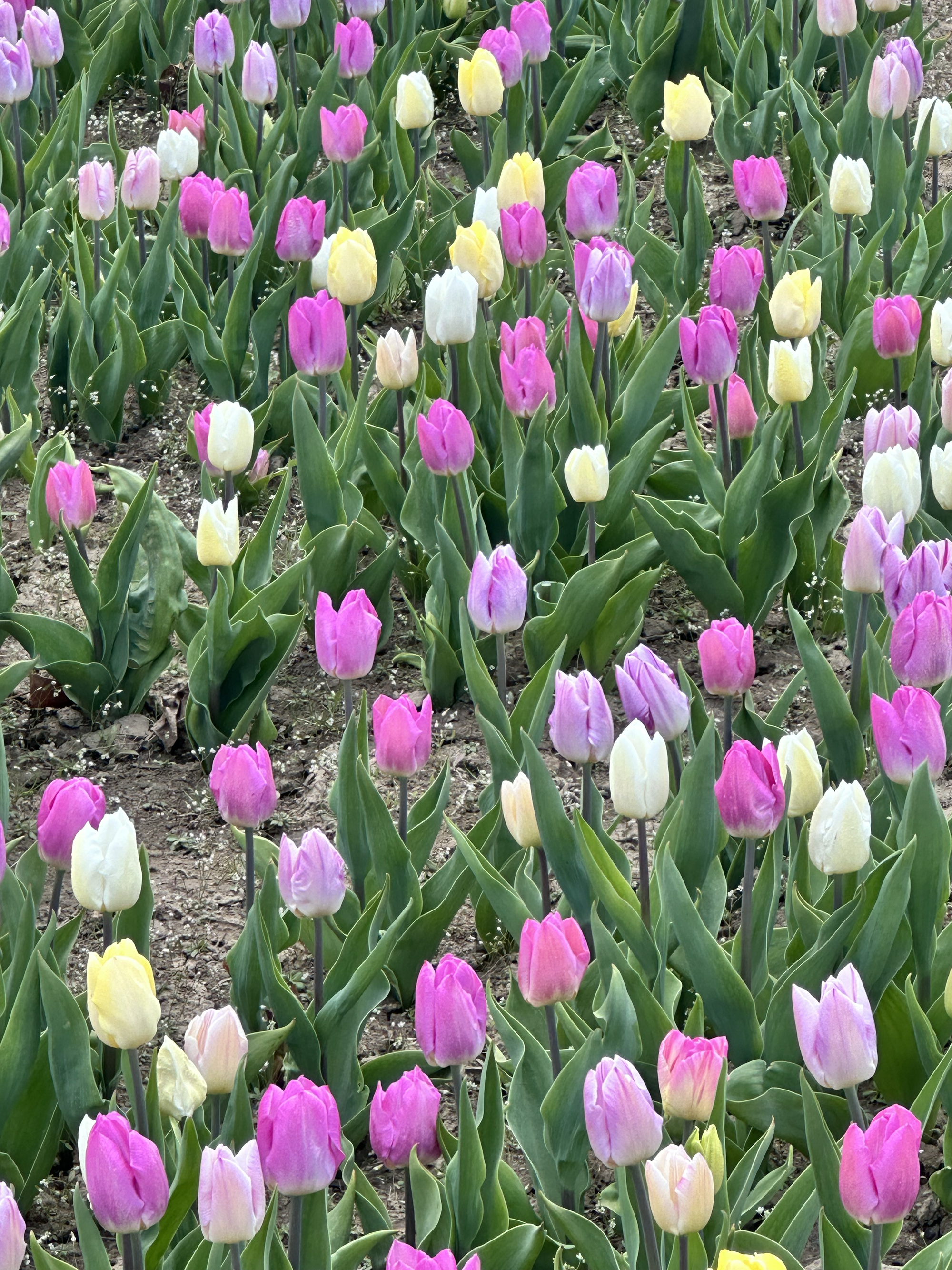
Springtime tulips in springtime hues.
“Put your hand in mine and let us help one another to see things better.”
Monet’s lifelong quest to capture the fleeting flashes of light on his canvas helps us become light seekers. When we take a stroll, we can ask ourselves: What would Monet see? I owe my love of beauty to great artists’ vision. Collectively, they teach us how to see.
In closing, I will be thinking of you as you embrace the light and beauty of being out-of-doors, in nature’s splendor.
Take time to pause. “Hurry never.” Savor all you see. Reflect on the fun of being carefree when not plugged in. Pay attention to how you feel. Happy days ahead! Lots to smile about. It’s ice cream time!
Off to prune the hydrangea!
Love & Live Happy,

“Love truly, laugh uncontrollably, and never regret anything that makes you smile.” —Mark Twain
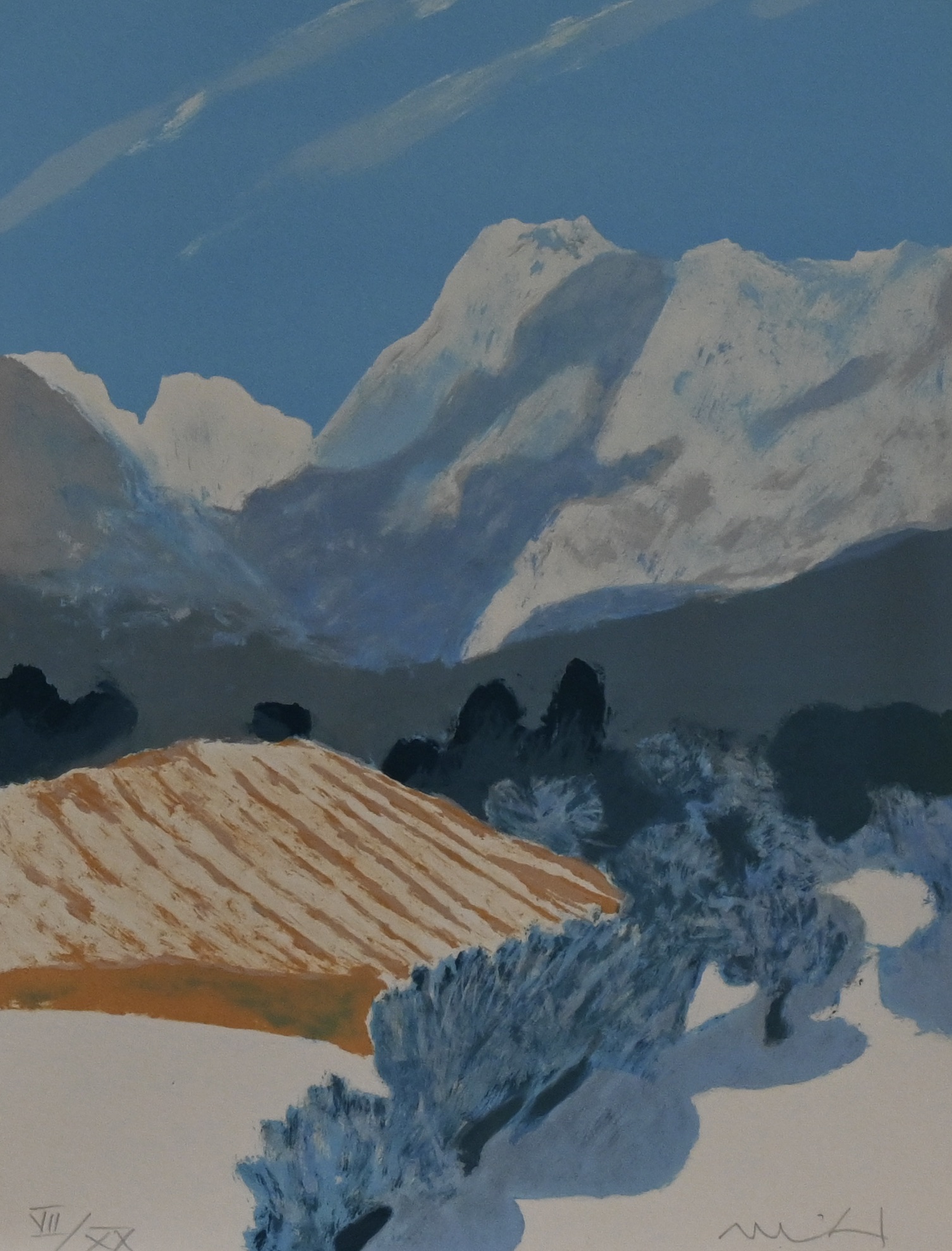
This month, I'm letting go of a lithograph by Roger Mühl if anyone is interested in adding it to their art collection. Please contact Pauline at Artioli Findlay (pf@artiolifindlay.com) for more information.
Roger Mühl (French, 1929 - 2008)
"Provence V, Au midi, là bas une barre de montagnes"
Limited edition French lithograph
16 3/8 x 12 1/2 inches
The image is printed to the edge of the sheet of paper.
Executed / printed 1986
Edition VII / XX
This delightful Provence landscape has thyme and vineyards as well as expansive mountains in the distance.
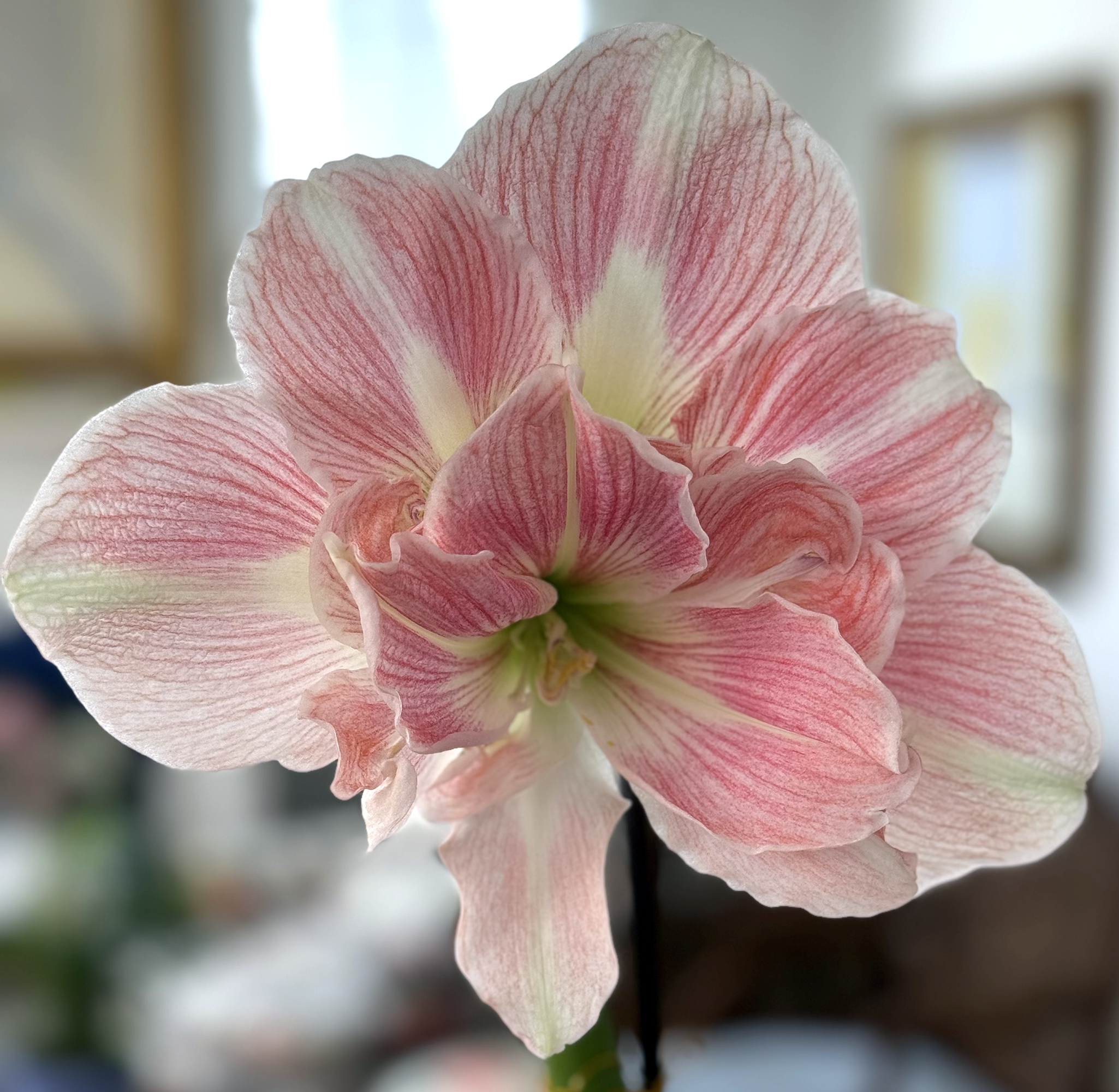
Photo by Elissa
A perfect amaryllis blossom from Alexandra.