AUTHOR | SPEAKER | PHILOSOPHER | DESIGNER

January 2026
date:
1/1/2026
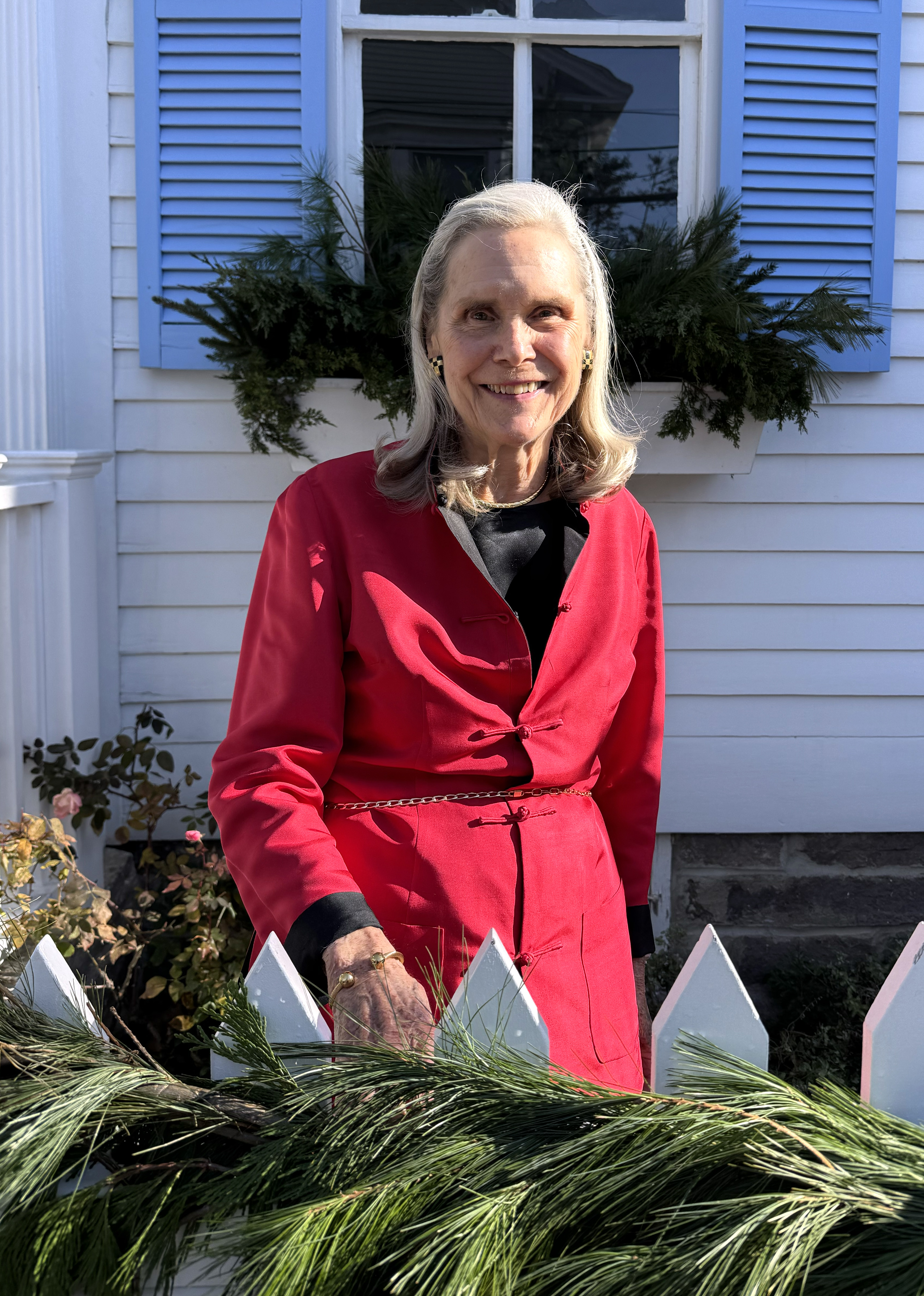
Photo by Elissa
Happy New Year!
Dear Friends,
I love you!
Happy New Year! I am looking forward to beginning 2026 with a grateful heart, full of love.
This past year has demonstrated that there are so many kind earth angels that quietly grace our lives in small but meaningful ways. I’m humbled to feel the warmth of true affection and kindness from caring friends, neighbors, acquaintances and strangers.
A few blocks down Water Street, an antique shop is owned by a friend, Roberto. On a visit in September, I told Roberto that Peter’s English tall hall clock had died. (Roberto deals in fine American art and antiques!) Ten years ago, the afternoon Peter died, the clock stopped ticking and chiming. Antique clocks are temperamental, and the slightest disruption in their delicate mechanisms can upset the instruments’ balance. I had the clock fixed after Peter died, and it had been running for the past 10 years until it died recently.
I feel Peter’s pulse in this cottage when the clock is ticking, welcoming me as I open the front door of our cottage. As our friends and family know, Peter’s clocks keep me company and keep him near me. They make a chiming, oscillating sound as they keep time, moving the hands forward clockwise. They breathe his life force into the atmosphere, tick tock, reverberating with echoes as though they are his pulse. His ancestral tall hall clock needs to come alive again.
“I’ll take a look at it,” Roberto said, ending with several time-draining attempts that weren’t successful, because the clock needed to be sent to a proper repair place. In order to put the two weights’ movement in working order — for good, not just for a few hours — it required the equivalent of traction. Only one problem: Roberto’s clock repairman had recently retired. Only for Roberto would his clock man “take a look at it.” Silent, patient weeks passed.
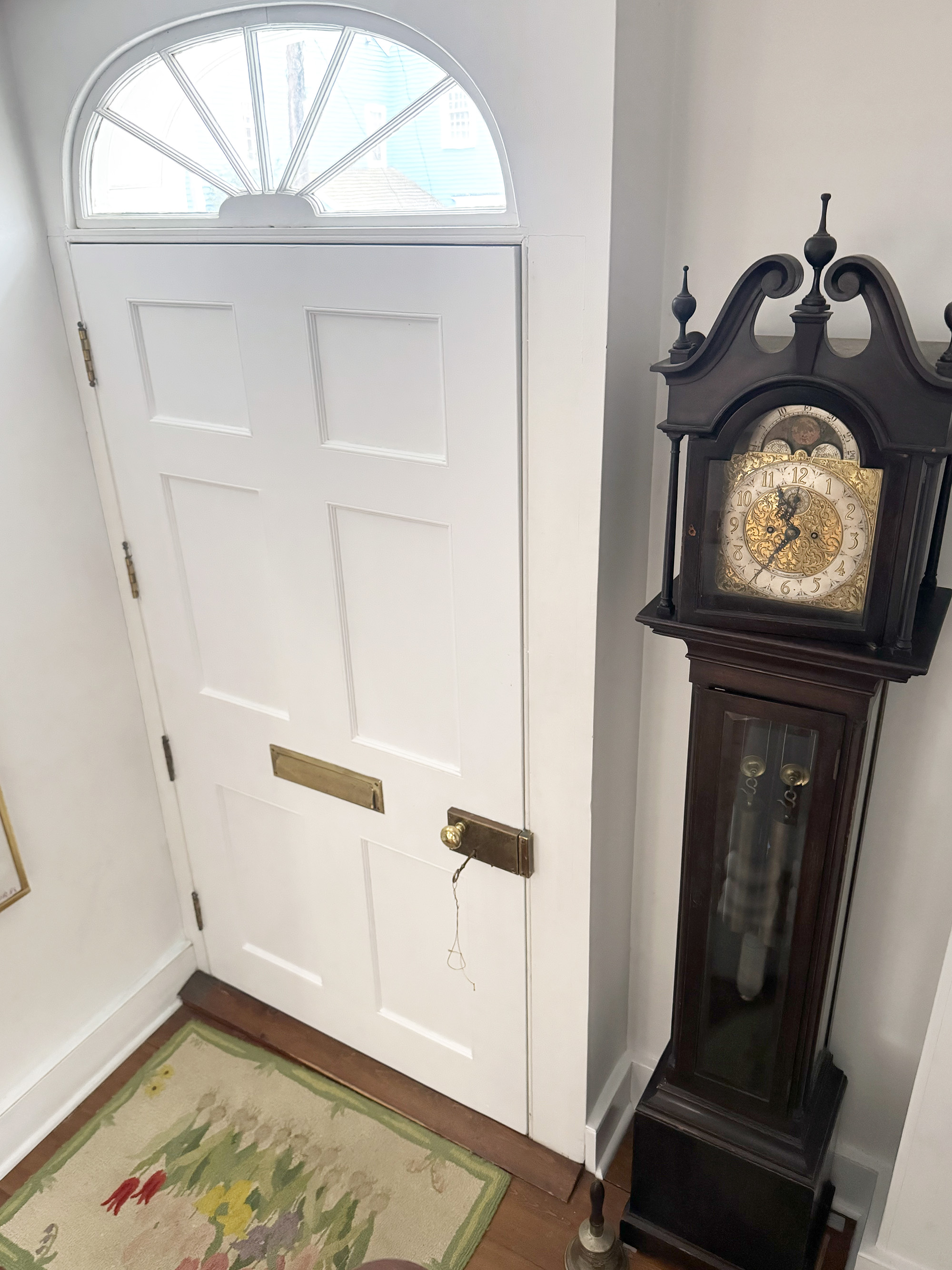
Photo by Elissa
Peter’s tall clock is alive once more!
Miraculously, I opened the front door to the cottage (after being out of town for a day visiting an art museum in Massachusetts), and I heard the clock chime. Roberto had reinstalled the clock into its case while I was gone, and it was resurrected. My heart thumped. I smiled and had soul bumps. Peter’s beloved clock was alive again, and ticking! Inanimate objects that have a personal history and meaningful story behind them connects them to their owners spiritually, symbolically uniting us with loved ones, awakening wonderful memories and keeping us in excellent company. Our children and grandchildren had grown up with some of our sacred objects that bring them joy, and they would miss them if they were not there.
Little acts of kindness, when we feel the giver genuinely wanted to do a favor for us, make us feel so fortunate. Roberto went out of his way to lend a hand. He knew how much his help would mean to me. We always know when someone is heartfelt in their help.
As I wrote in Gift of a Letter, “Our lives are made up of time, and the quality of our existence depends on the wise use of the moments we are given. We only have so much time. Use yours wisely. When we’re thoughtful and feel we can help someone, we will never be wasting our time. We will be living by the golden rule. When we go the extra mile for a friend, this is a grace note that enriches the giver and receiver. Grace in action.”
January is a new beginning. Let’s make it a new way of living. It’s a quiet time for some uninterrupted introspection, when we can focus on taking a good look within. As wise Dr. Samuel Johnson understood, “Life is short and uncertain; let us spend it as well as we can.”
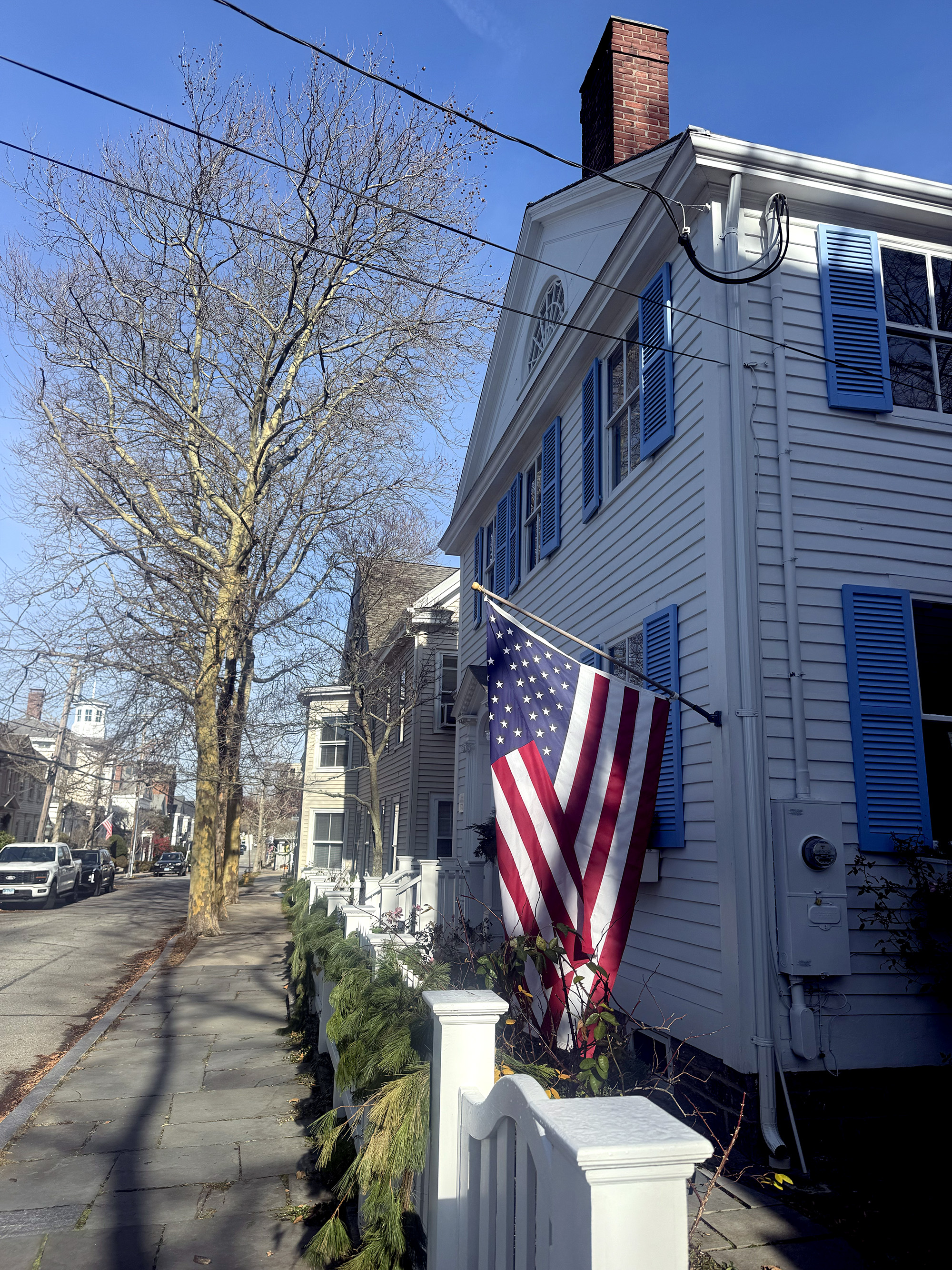
Photo by Elissa
Festive winter greenery on the white picket fence.
So many people are struggling. We are so abundantly blessed to have family and friends who support us in mind and spirit. Some of our loved ones are sick, others are dying. The Greek writer Nikos Kazantzakis, who created the beloved character Zorba, wrote, “Since we cannot change reality, let us change the eyes which see reality.”
The 20th century writer Thornton Wilder’s classic play Our Town is a favorite. I will continue to write about his work because he makes us acutely aware that we have to be present for our loved ones now, while they’re alive and we are able, when we have our wits about us. We never know. We can’t afford to take anything for granted.
By being discerning about what we truly value, we can focus our attention on what truly matters. Thornton reminds us: “We can only be said to be alive in those moments when our hearts are conscious of our treasures.”
The play makes us acutely aware of our need to pay attention to what’s in front of us before it’s too late. In Act II, he writes that “the morning star always gets wonderful bright the minute before it has to go — doesn’t it?”
One of the things I enjoy most about live theater is that what is before us is alive. The actors and the audience are experiencing living, breathing connection. Wilder is a brilliant playwright because he awakens us to each fleeting, unrepeatable moment. “On the stage it is always now.” In life, it’s always now when we have our breath, when loved ones have theirs.
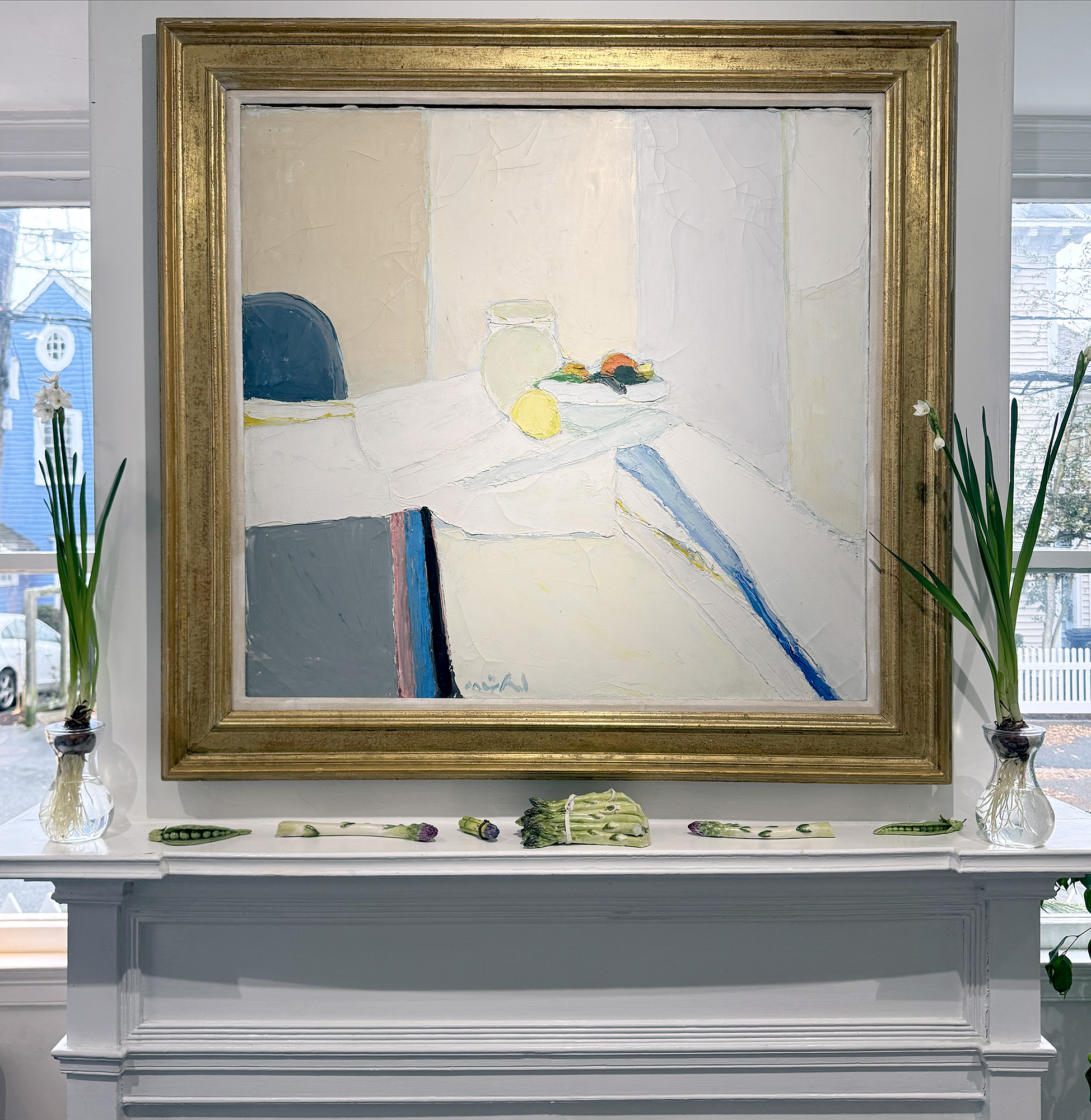
Photo by Elissa
This Mühl painting sits in the living room between two windows facing the harbor.
Joy to the World
Goodspeed Opera House’s White Christmas was spectacular. Based on a popular film that came out in 1954, the play’s story was nostalgic. We all wanted Vermont to have a white Christmas.
Irving Berlin’s music and lyrics are appealingly familiar and uplifting. Scene I opens somewhere on the Western Front of World War II on Christmas Eve 1944. Because we want the troops to be cheered up, we’re happy to hear “Happy Holiday” and “White Christmas.” Most of us love the song “Snow.” The music with a message — “Count Your Blessings Instead of Sheep” — touches a chord in our heart.
The cast are members of Actors’ Equity Association and really know their song-and-dance routines and how to act. I left the theater in a joyful mood. “Let Me Sing and I’m Happy,” “How Deep Is the Ocean” and “I’ve Got My Love to Keep Me Warm” end the dazzling show with what we all wished for: a fairytale ending. “White Christmas.”
Going to see and hear this classic musical put me in the holiday spirit. I’m counting all my blessings, humbly knowing just how fortunate I am to be alive and living a full, richly rewarding life.
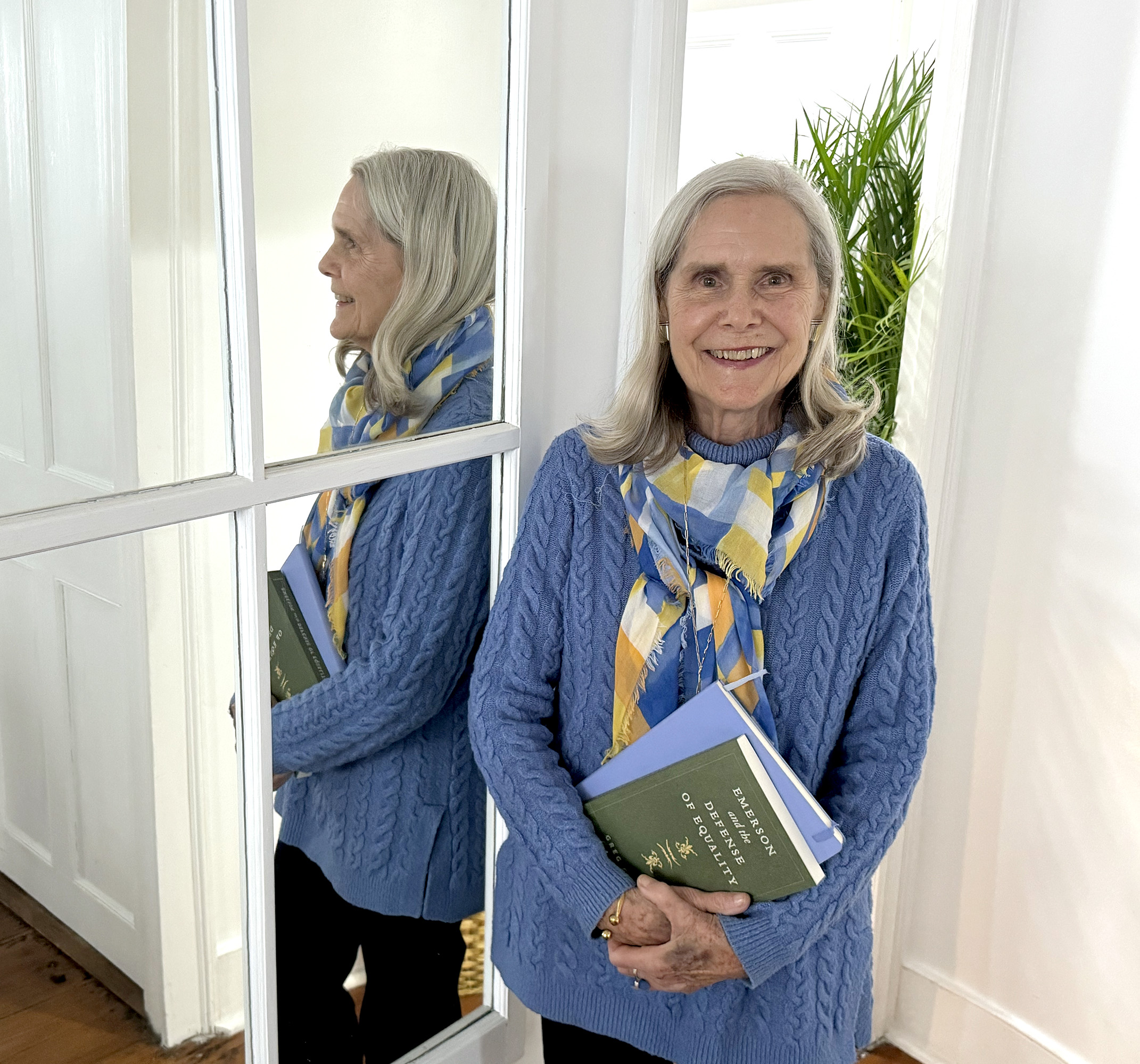
Photo by Elissa
I always have a book with me.
The Correspondent
Although I don’t make New Year’s resolutions, I do feel that January is an ideal time for us to make a commitment to reading more good literature. I welcome all your suggestions of books that you’ve read and loved that you want me to read. As you know, I’ve read so many of them already, to my great benefit, education and pleasure. One of my favorite thinkers is the 16th century essayist Michel de Montaigne. He spent a large portion of his life in his vast library in a tower on his French estate. Insatiably curious, he declared, “Books are my kingdom.”
In the latest novel I loved, a brilliant woman finds solace writing letters to anyone and everyone as a late-morning ritual. As a former lawyer, she has a way with words.
Viginia Evans’ debut novel, The Correspondent, is beautifully, poignantly touching and a triumph. It is a portrait of one woman, Sybil, who writes letters to better understand the world and her place in it. She changes herself, and her entire way of relating to family, friends, neighbors (and a wannabe lover), from a narrow life to one blown wide open and blossoming.
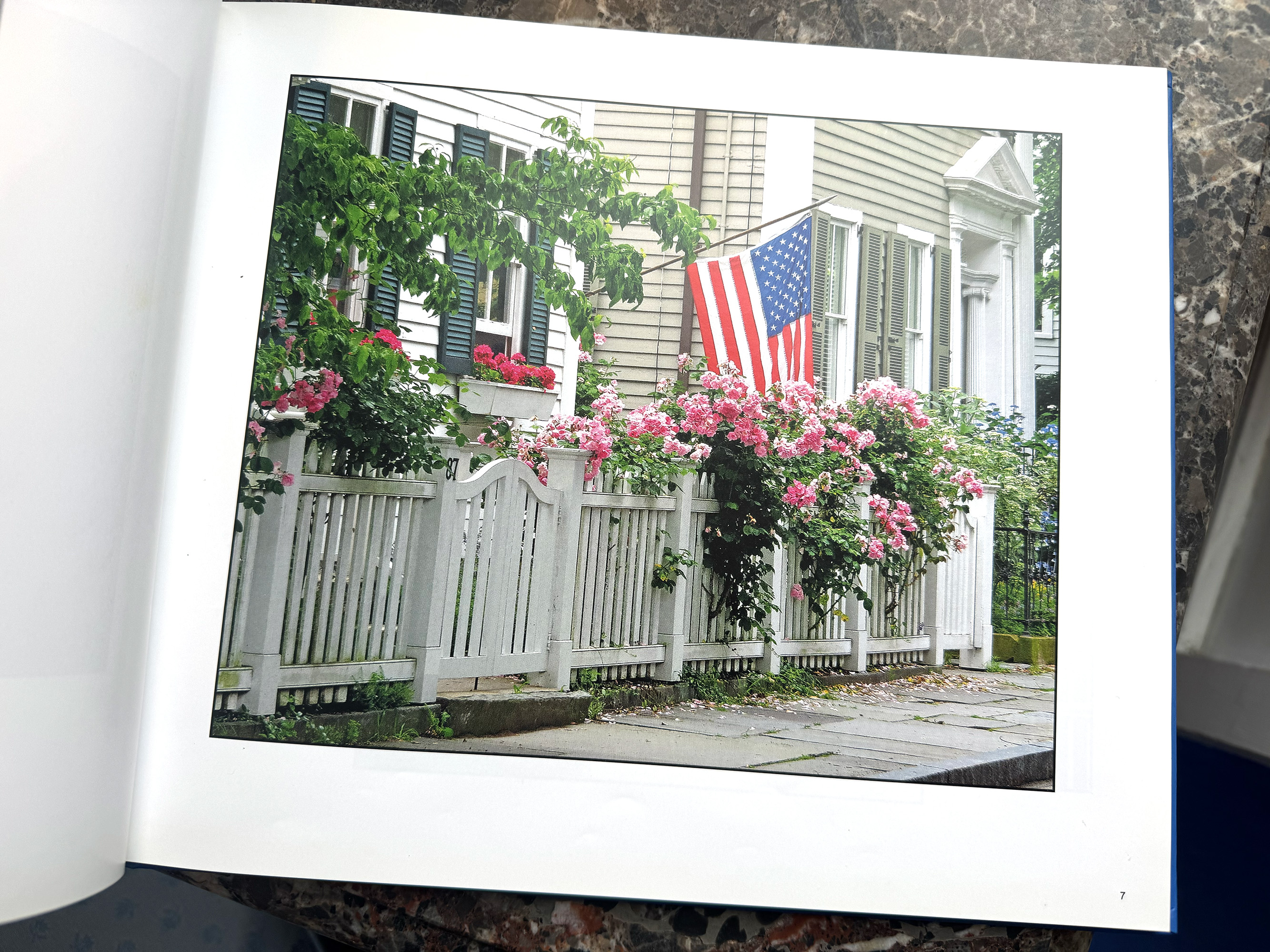
Photo by Elissa
I always have a book with meAn early photo of the cottage was featured in the book “Stonington Borough: Sky, Land & Sea” by Ingrid Feddersen.
I loved reading and savoring every letter she wrote, learning as she did as a wife, mother, grandmother, lawyer and divorcée about life’s endless mysteries and surprises. Her life of letters brings her solace as she connects with people in all walks of life all over the globe whom she might never have known in person.
We relate to Sybil’s challenges and feel we understand our own mistakes better after she forgives herself for her own. Virginia Evans was deeply influenced by a close friend’s young child dying after she’d just drafted the novel. It altered the story, and we feel her pain as she developed her character.
This book reminds us that we often discover our own truths when we write them down on paper. The Correspondent is a gift you’ll give yourself to read and share with friends and family. Ann Patchett and several authors you read praised this extraordinary book. Evans’ exacting prose makes growing old an exciting adventure of discovery, intimacy and love. I highly recommend this treasure of a book. To all of us who love to write and receive letters, this is a must read.
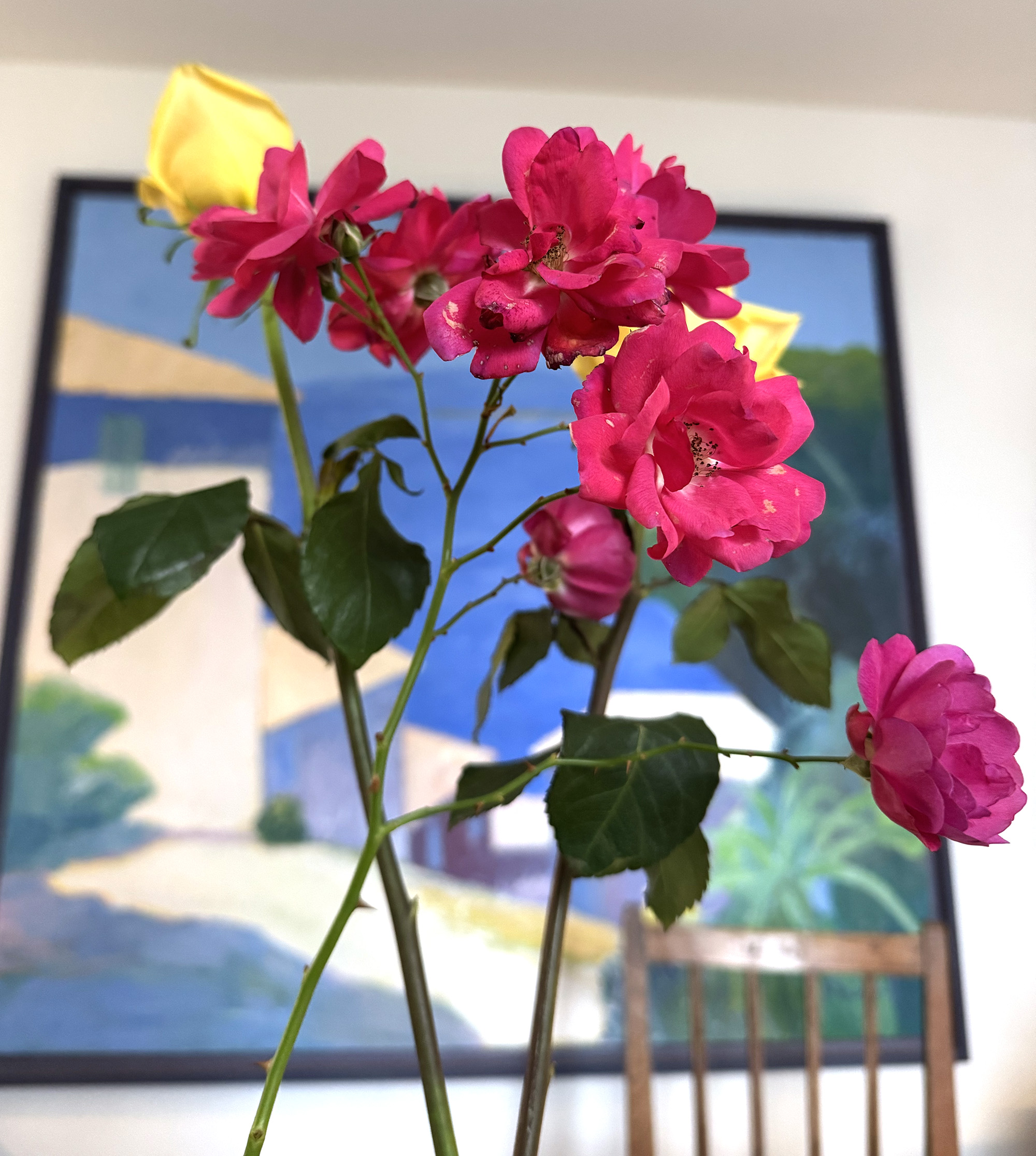
Photo by Elissa
Bright flowers light up the desk in the study.
What We Can Know
Ian McEwan, approaching 78, is the most popular British novelist and has been for nearly 50 years. He’s a gifted writer whose brilliant prose makes reading his characters’ stories an intellectually stimulating, spellbinding experience.
What We Can Know is McEwan’s latest book, just published. I read a glowing review by Dwight Garner in the New York Times, and then one by columnist Frank Bruni. He felt “buoyed” by “Garner’s beautifully turned insights, McEwan’s gorgeously wrought fiction — but also the persistence of wisdom.”
“From the vantage point of the 22nd century,” he wrote, “one of McEwan’s characters says that he’d ‘like to shout down through a hole in the ceiling of time and advise the people of a hundred years ago: If you want your secrets kept, whisper them into the ear of your dearest, most trusted friend. Do not trust the keyboard and screen. If you do, we’ll know everything.’”
What We Can Know was literally put into my hands by the right person at the right time. When my first book, Style for Living, was published by Doubleday in 1974, a young book buyer for The Today Show selected my book! Barbara Walters interviewed me. There was a beautiful bouquet of fragrant fresh flowers on a coffee table that perfumed the atmosphere. These were the same flowers that I wrote about in my book! (Roses, lilies and tuberose.)
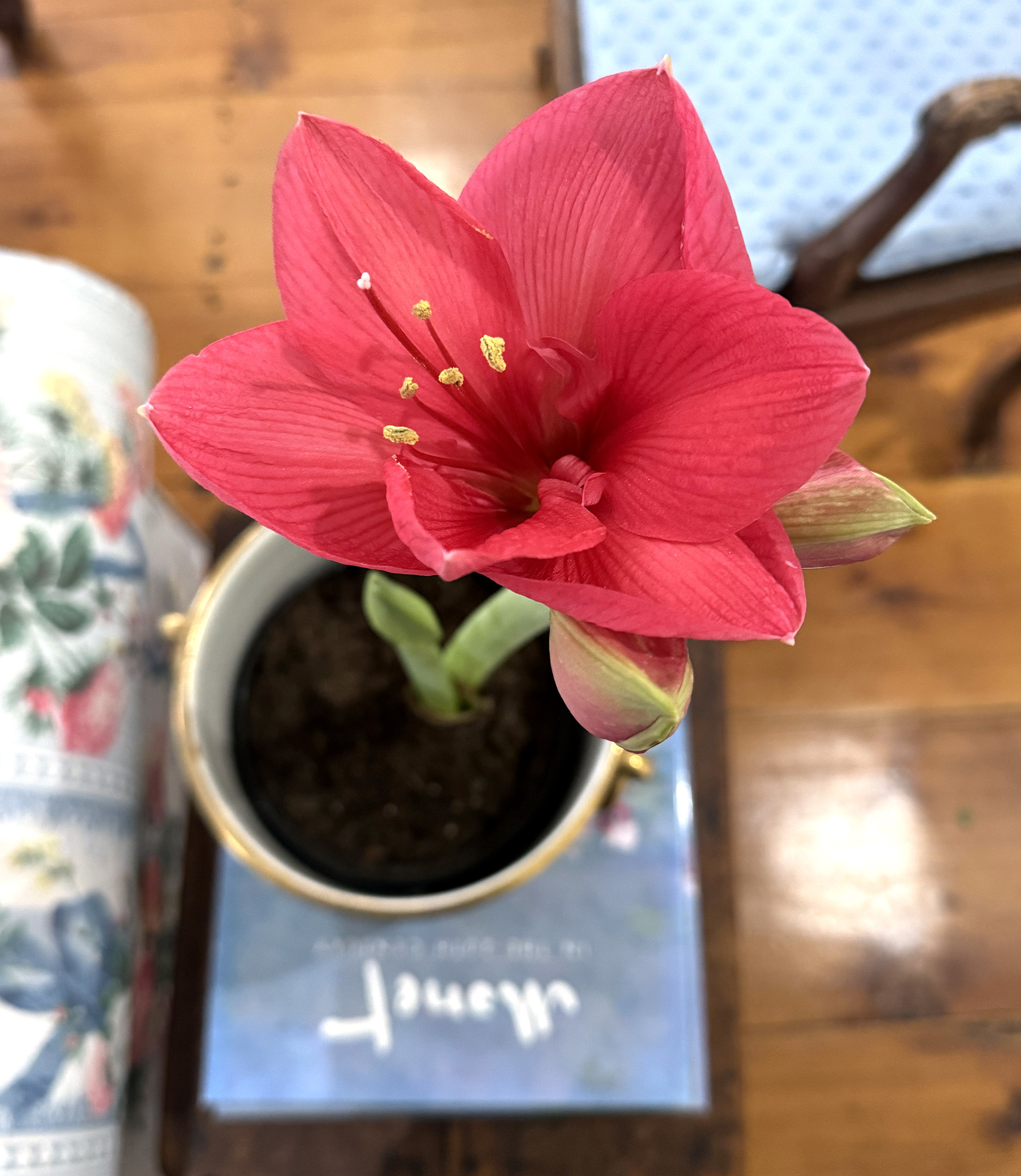
Photo by Elissa
I love this fuchsia amaryllis from the grocery store.
More than 50 years later, two New Yorkers ended up in Stonington, the book buyer and the author. A mutual friend got us together, and we’re now buddies. Betsy is a reader. She was married to a publisher. She is a discerning literary critic. When she wanted to stop by the library to pick up a book she’d ordered — What We Can Know — I knew I was meant to read it. She handed it over to me. “I’ve read it on Kindle,” she said. In the book, McEwan imagines the 22nd century, and we can only imagine the future’s devastation.
I told her I wanted to read it because the story sounded fascinating, but I didn’t know if I could stand the sadness. Why do we continue to destroy rather than build up? Why do we have wars, not world peace? Why is nuclear war inevitable? Why don’t we take responsibility for destroying the climate’s natural ecosystem? Betsy said, “You can handle it.”
McEwan refers to our present time period as “the Derangement,” a time when everyone knew about climate change, but we failed to act. “We know what to do, but we can’t somehow summon the political agreement on doing it or change our selfish behavior,” McEwan said in an interview. Derange is disarrange, “to make insane,” according to the American Heritage Dictionary.
Until What We Can Know, Atonement was McEwan’s most popular novel. Jon Day wrote in The Financial Times that this new book is his “most entertaining and enjoyable novel in years.” Timothy Garton Ash, the historian and McEwan’s friend since the early ’80s, who has been an early reader of his manuscripts, told Sarah Lyall of the New York Times that despite its futuristic elements, the book is “what his work is always about — namely human beings and relationships, particularly those of men and women.”
Photo by Elissa
An early photo of the cottage was featured in the book “Stonington Borough: Sky, Land & Sea” by Ingrid Feddersen.
In Lyall’s profile column, she quotes Garton Ash further: “They have love and heartbreak and joy and misery and all the rest.” He understands that “there are still human beings and they’re quite like us.”
In an interview with Lyall, McEwan speaks about “an illusion of knowingness.” How much can we ever know about the past? Even if McEwan imagines that everyone will have access to everything on the internet, can we truly know everything about the past information stored electronically?
In the book, a famous poet, Francis Blundy, writes “A Corona for Vivien” for his wife’s 54th birthday in 2014. A lonely scholar and researcher, Thomas Metcalfe, becomes obsessed with his Blundy’s life a little over 100 years later. The copy on the book’s jacket flap tells of how he “chases the ghost of one poem.”
“‘How wild and full of risk their lives were,’ thinks Thomas, as he pores over the archives of that distant era, captivated by the freedom and possibilities of human life at its zenith. When he stumbles across a clue that may lead to the elusive poem’s discovery, a story is revealed of entangled loves and a brutal crime that destroy his assumptions about people he thought he knew intimately well.”
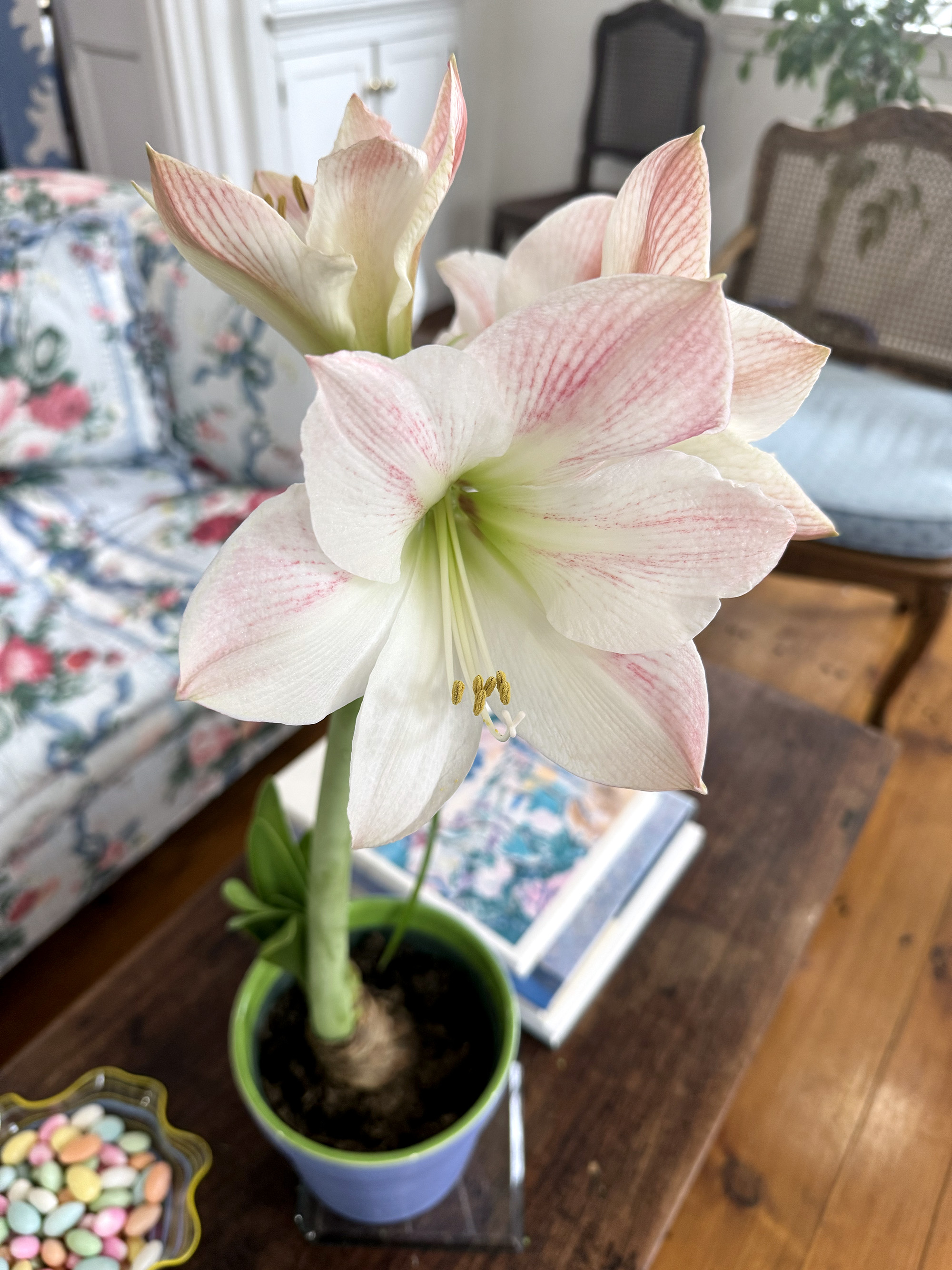
Photo by Elissa
A beautiful amaryllis from Brooke in bloom!
Francis Blundy’s domestic reading of the 15-sonnet corona at a dinner party with friends is a mystery, with scholars referring to the event as the Second Immortal Dinner. There was only one copy of the poem, and it was never published — Metcalfe’s professional obsession.
“What Tom feels is colossal admiration and envy and longing for an intellectually or culturally alive, vibrant world,” McEwan told Lyall.
Lyall writes that the novel “is an enticing literary mystery, but it’s about much more besides: intellectual reputation, academia, love, the secrets and lies in marriage, climate change, the ultimate unknowability of the past and — perhaps most poignantly — how we in our turbulent present will be judged by generations to come.”
McEwan has put the past and present into a flow of connectedness. Tom Metcalfe’s huge admiration for this previous golden era made him envious.
I was mesmerized by this masterful novel that is a love story about life and how we can all pay more attention to how we spend our precious time, and how people will see us 100 years from now.
McEwan said to Lyall, “We don’t get to climb some sort of mountain of truth and stand on the top and know everything.”
I’m reminded of the brilliant philosopher Socrates, who wisely admitted, “I know nothing.” If the pursuit of happiness is being a lifelong learner, every day is an exciting adventure of discovery and meaning.
Thanks to all of you who have read some of the books I’ve enjoyed reading. It’s exciting to discover books that inspire us to live more deliberately and find joy and some soul-searching in the process. I’m delighted. Let’s share our enthusiasm for reading with those we love.

Photo by Elissa
The window boxes and fence are decked out!
What Are Your Reading Habits?
I mentioned William Lyon Phelps last month in relation to the light and beauty we choose to put in our mind. He knew his students well: “I divide all readers into two classes: those who read to remember and those who read to forget.” I think either is great — both are good for your brain. I read to remember. I’m hungry to learn. Books to me are my teachers, my mentors and my inspiration. I buy all my books that are for research because they are my textbooks. I highlight, underline and make notes in the marginalia.
The library is a great source for my fiction reading. I’ve learned that historical fiction that is well written and researched can be infinitely engaging and educational. I’m open to suggestions, anything that will add to a well-read life.
If we are to live a full-to-the-brim life, we can take a page from Rudyard Kipling’s “If”: “If you can fill the unforgiving minute with sixty seconds’ worth of distance run.”
In closing, I hope this January is full of inner light and inspiration. I want to feel that I can strive to live up to the example of Abraham Lincoln: “I do the very best I know how, the very best I can.” We’re moving toward the light; each day, there is more light in our soul.
Love & Live Happy,

A Snowy Memory

Peter and me in a snowstorm in the village years ago!
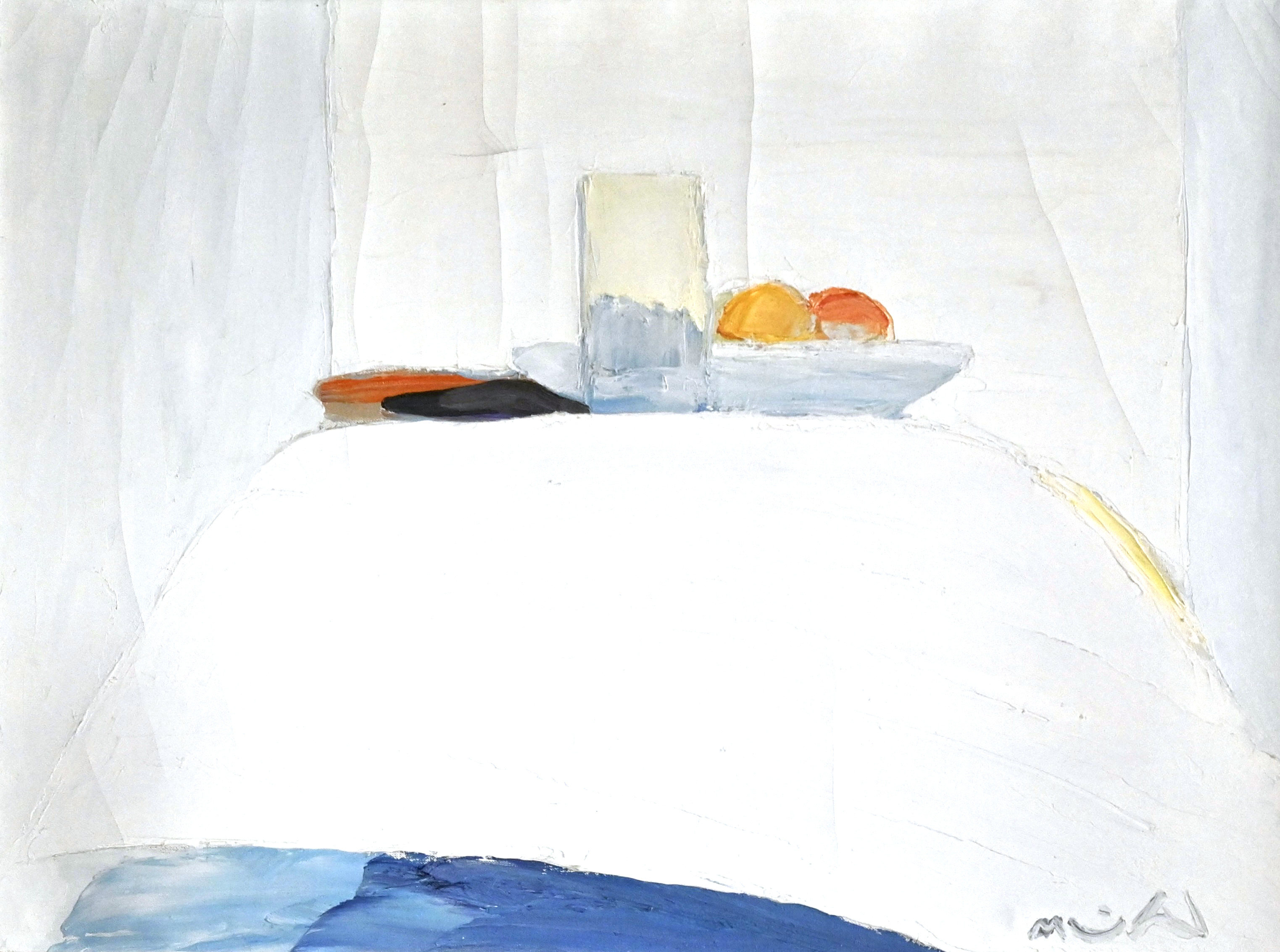
This month, I'm letting go of an oil painting by Roger Mühl if anyone is interested in adding it to their art collection. Please contact Pauline at Artioli Findlay (pf@artiolifindlay.com) for more information.
Roger Mühl (French, 1929 - 2008)Nappe blanche, 1977
Signed lower right, "Mühl"
Oil on canvas
Canvas size
23 3/4 x 31 3/4 in
23 3/4 x 31 3/4 in
Roger Mühl's still lifes distill everyday objects into serene fields of color and light, revealing the understated beauty of simplicity.
“No legacy is so rich as honesty.”
—William Shakespeare
Photo by Elissa
This poinsettia plant, Tony’s gift to me, fills the living room and me with cheer.