AUTHOR | SPEAKER | PHILOSOPHER | DESIGNER

July 2026
date:
7/1/2026
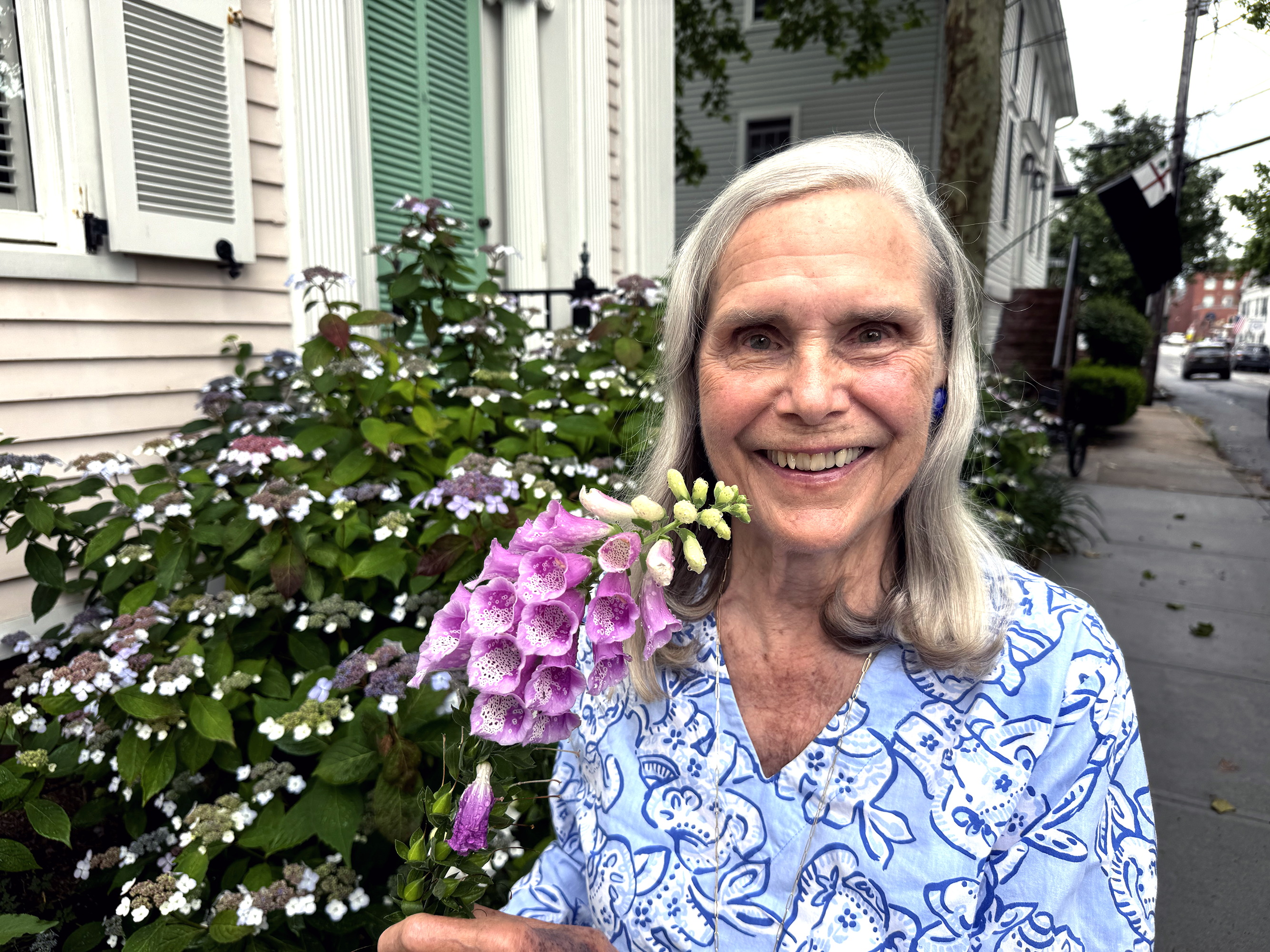
Photo by Elissa
I adore the foxgloves growing in Charlie’s front yard!
Dear Friends,
I love you. Happy July 2026.
The month of June in Stonington Village seemed magically enchanted. Our gardens are in peak bloom. We’ve enjoyed seeing all the boats return to their summer places in the harbor, getting ready for the 250th anniversary celebration of our independence.
I want to share some highlights of fun experiences I’ve enjoyed.

Photo by Elissa
My favorite color blue hydrangea.
Gardens by the Sea
The Stonington Garden Club is celebrating its 100th year. The same weekend my youngest granddaughter, Cooper, graduated from Stonington High School, several thousand garden lovers from near and far swarmed around the village to view 12 beautiful gardens. In brilliantly, sunshiny hot temperatures, the quiet village of Stonington by the sea became electric.
This two-day garden event is every three years. It’s a lovely way to see many secret garden spaces that are not visible from the sidewalks, often behind high walls. The enthusiasm was intense. In addition to seeing so many beautiful front gardens with roses hugging white picket fences, secrets were unveiled. Because Stonington’s history is rich and there are so many 18th and 19th century houses and gardens that are being immaculately kept up, our seaside walking historical village seemed picture-postcard perfect. The sea air is a tonic for the wondrous abundance of flowers.
The tour was ideally timed when gardens would be in their peak bloom. There’s something so soul enriching to be able to meander along any side street and be surprised by the sheer beauty of well-maintained homes and manicured gardens and lawns that overlook the sea.
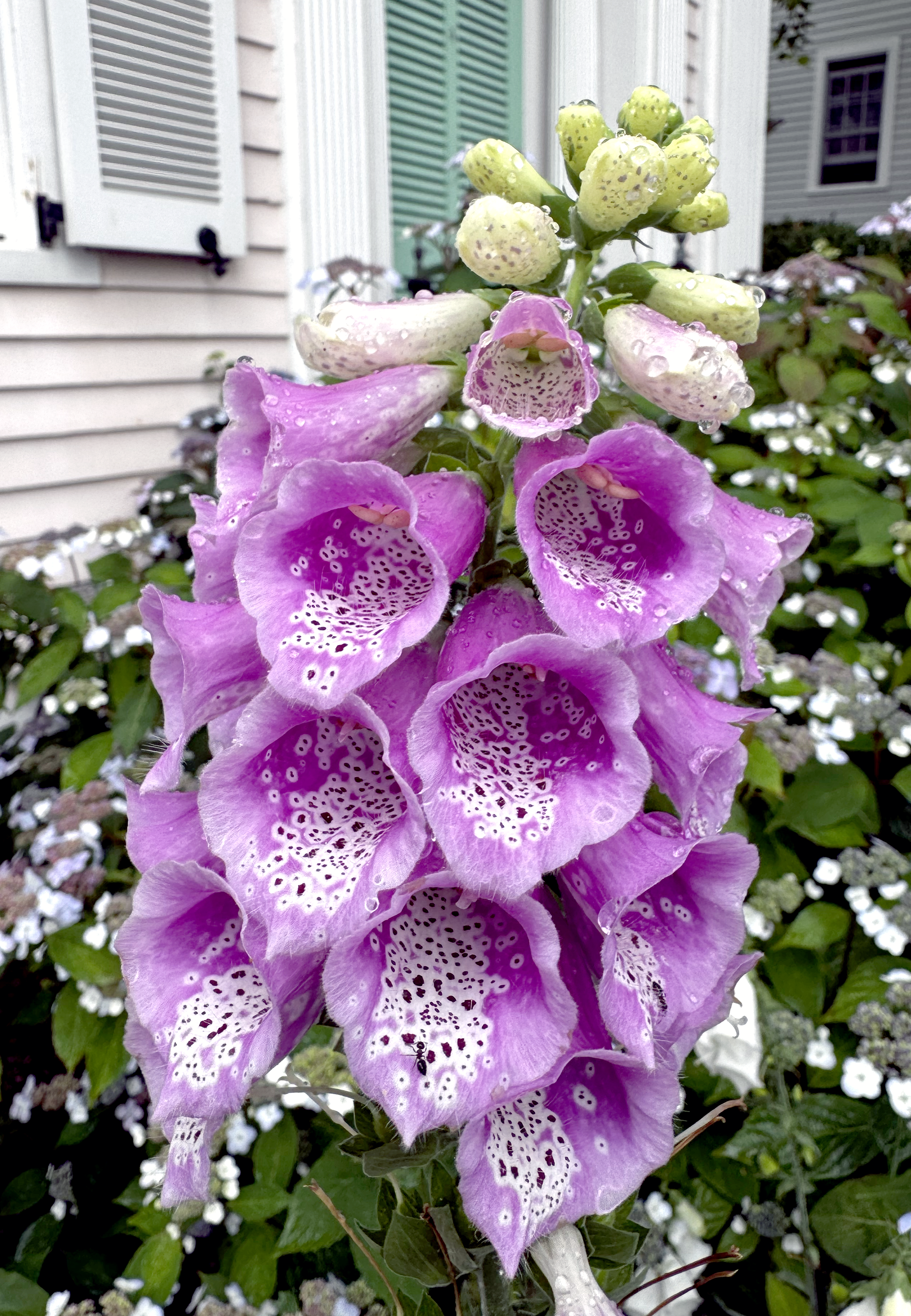
Photo by Elissa
Looks good enough to eat, but I wouldn’t recommend it!
Over the weekend of the tour, June 12 and 13, the peonies in my front yard opened up and all the roses were in blossom. I get such a kick out of seeing people photograph Charlie’s and my houses. His hollyhocks are spectacular this year.
Three of my friends’ gardens that were on tour are documented in the Garden Club American Collection at the Smithsonian Archives of American Gardens. Another friend who cultivates roses and vibrant plant groupings in his spectacular garden is a candidate for the Smithsonian Archives. On a wall of their garage, Mike created an organic sculptured trellis with a bunch of dead vines and branches he’d pruned from trees and bushes. On an adjacent wall is the backdrop of his rose garden that perfumes the air and enhances the pool’s allure.
Our friend Martha created her gem of a courtyard garden in 1983; she’ll be 100 in September! She has an ancient, espaliered apple tree that is stunning garden art. I’m struck by so many master class gardeners who have treasured pocket gardens in shaded areas and have created ideal spaces to sip iced tea and become lost in a good book. We’re all taking Voltaire’s advice and cultivating our own gardens.
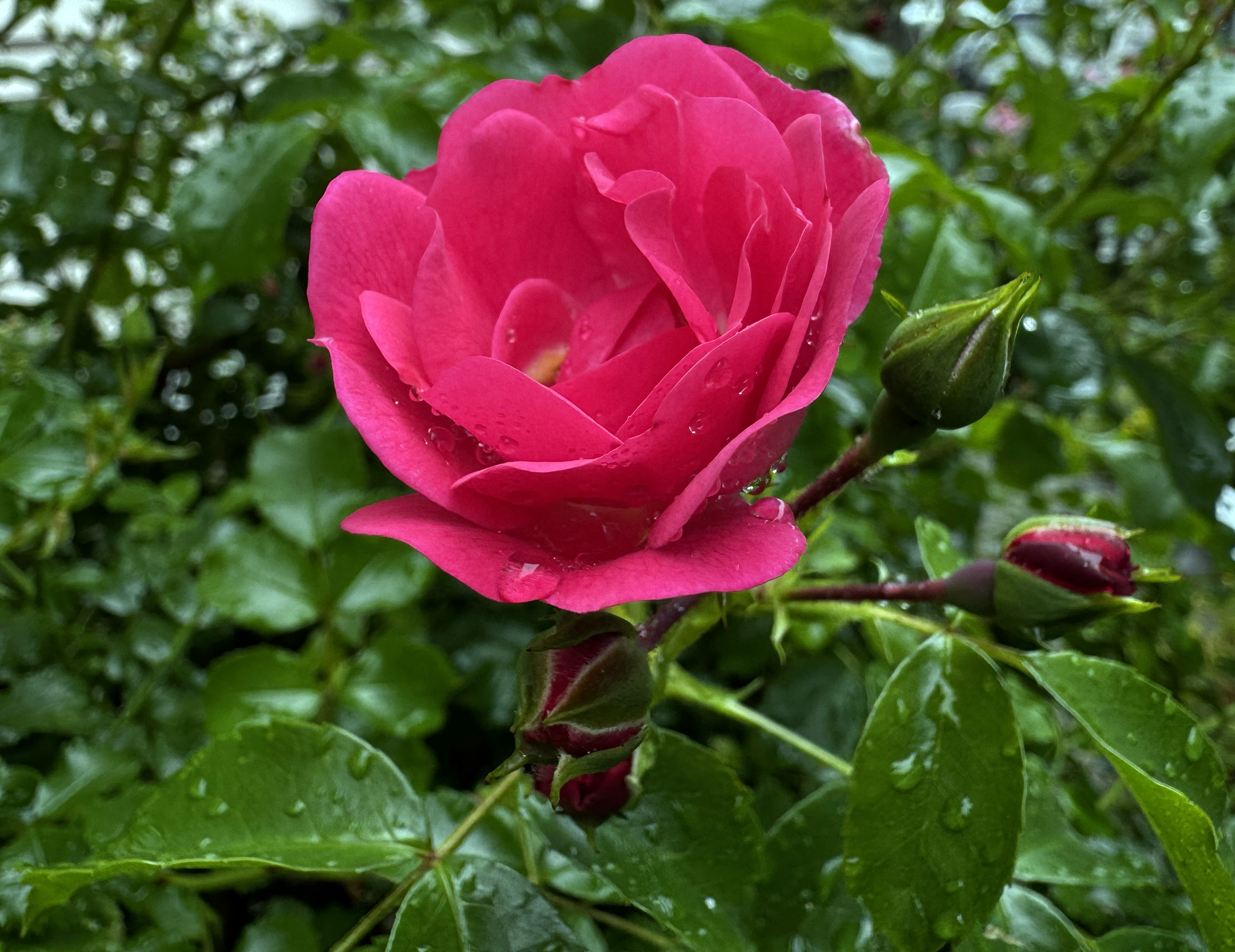
Photo by Elissa
A new rose bush is just now blossoming.
The week before the garden tour my, friend Anne and I went to Newport, Rhode Island, for a relaxing day trip. We decided she’d take country roads because “the process is the reality.” Hurry never. This was one day when we made it our mission to soak in all the beautiful rhododendron that were in full bloom. They were awe-droppingly spectacular this June. When we arrived in Newport, breathing deeply, absorbing the salty air in warm breezes, we took our time, deliberately admiring favorite houses. One was built like a ship that is partially above water, a favorite of Anne’s. She’d lived in Newport for a short period in her youth and enjoyed reminiscing about her good old days on her bike in glamorous Newport.
We had a long, leisurely, delicious luncheon, including grilled corn on the cob, at the Inn at Castle Hill. On an upper terrace overlooking the graceful sailboats in full sail, gliding through the water, we savored the amazing moveable feast. Other than an occasional red or blue spinnaker, the boats’ sails were crisp white. Seeing them along the deep dark sea, against the clear, bright blue sky with a lavish display of puffy white clouds, was a mesmerizing sight. Weeks later, I can still envision the glorious view. There’s something elevating about pure white, lots of white, reflecting against the blue of the water echoed in the aesthetic grace of the moving white cloud formations.
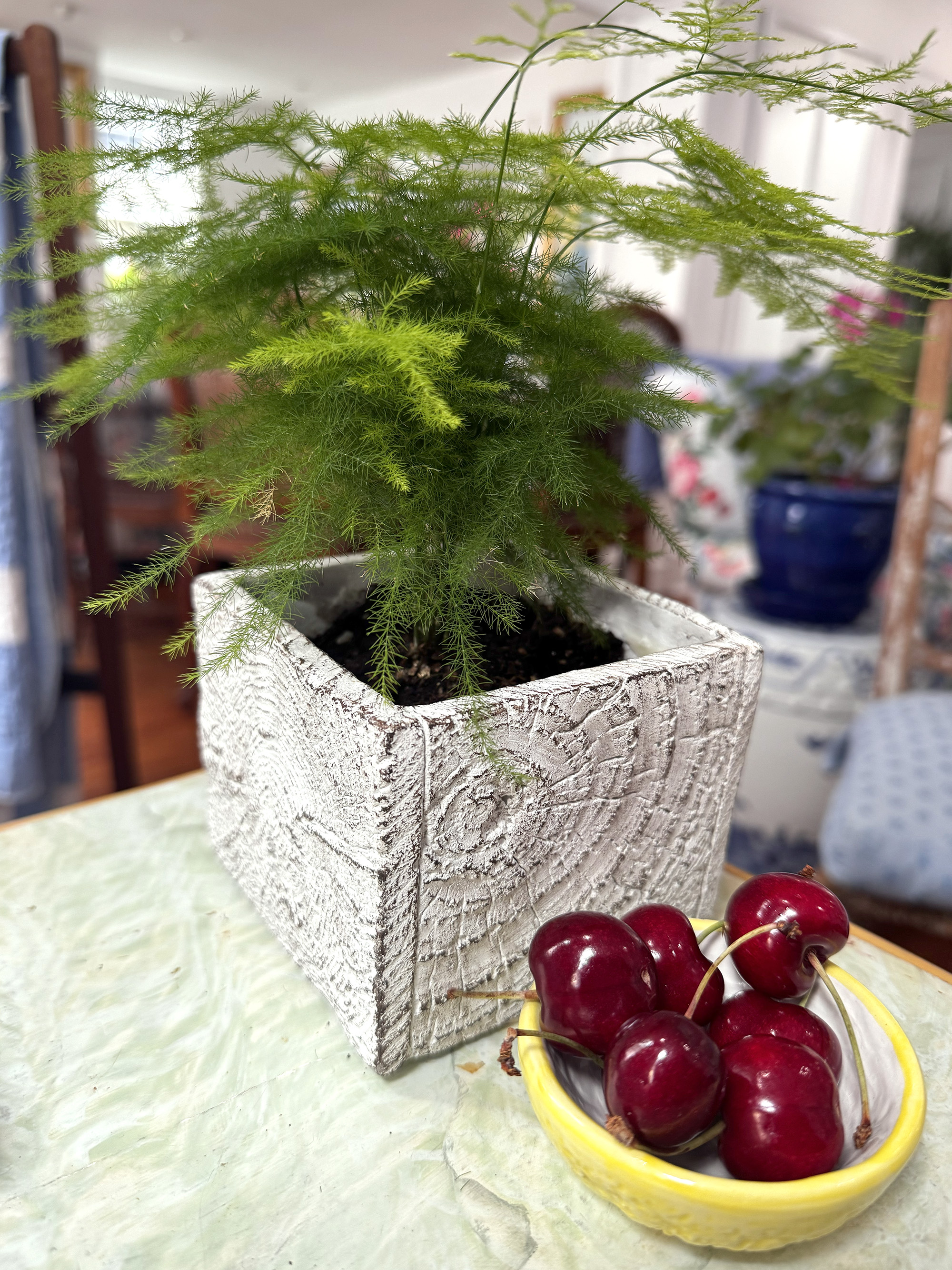
Photo by Elissa
My asparagus fern looks like it's dancing in even the slightest breeze.
On our way home, we took a slight detour to go to a favorite garden nursery, the Farmer’s Daughter. We went through every greenhouse, each one with tempting displays of all the different varieties of anything and everything you would ever want to plant, tend and cultivate in your garden. The displays of garden-themed merchandise are inspiring as well as tempting.
I found a precious, delicate asparagus fern that I carried with me the entire time we wandered around this most wondrous nursery. While I had a moment of shame, hesitating to buy this sweet fern, I went for it. I’d killed one I’d loved for over a year. I’d moved it from my desk to a table out of my regular traffic pattern. Out of sight, out of water! Without love and water, it became petrified. It still looked pretty but was dead. Only recently, I let it go back into the ground. Because of my losing it, I will be more mindful to keep this one moist and misted.
After we’d feasted our eyes on all of the hydrangeas, we went into the herb greenhouse so Anne could pick out a rosemary plant. When we paid, I inquired about their farmer’s market where they’d sold fruit, vegetables and cut flowers in past summers. When told there were strawberries and asparagus, we made a beeline for the spot, only to discover the cashier thought we wanted plants for our gardens! We had a good laugh, happy with our souvenirs to remember the wonderful lark of a halcyon June day in Newport.
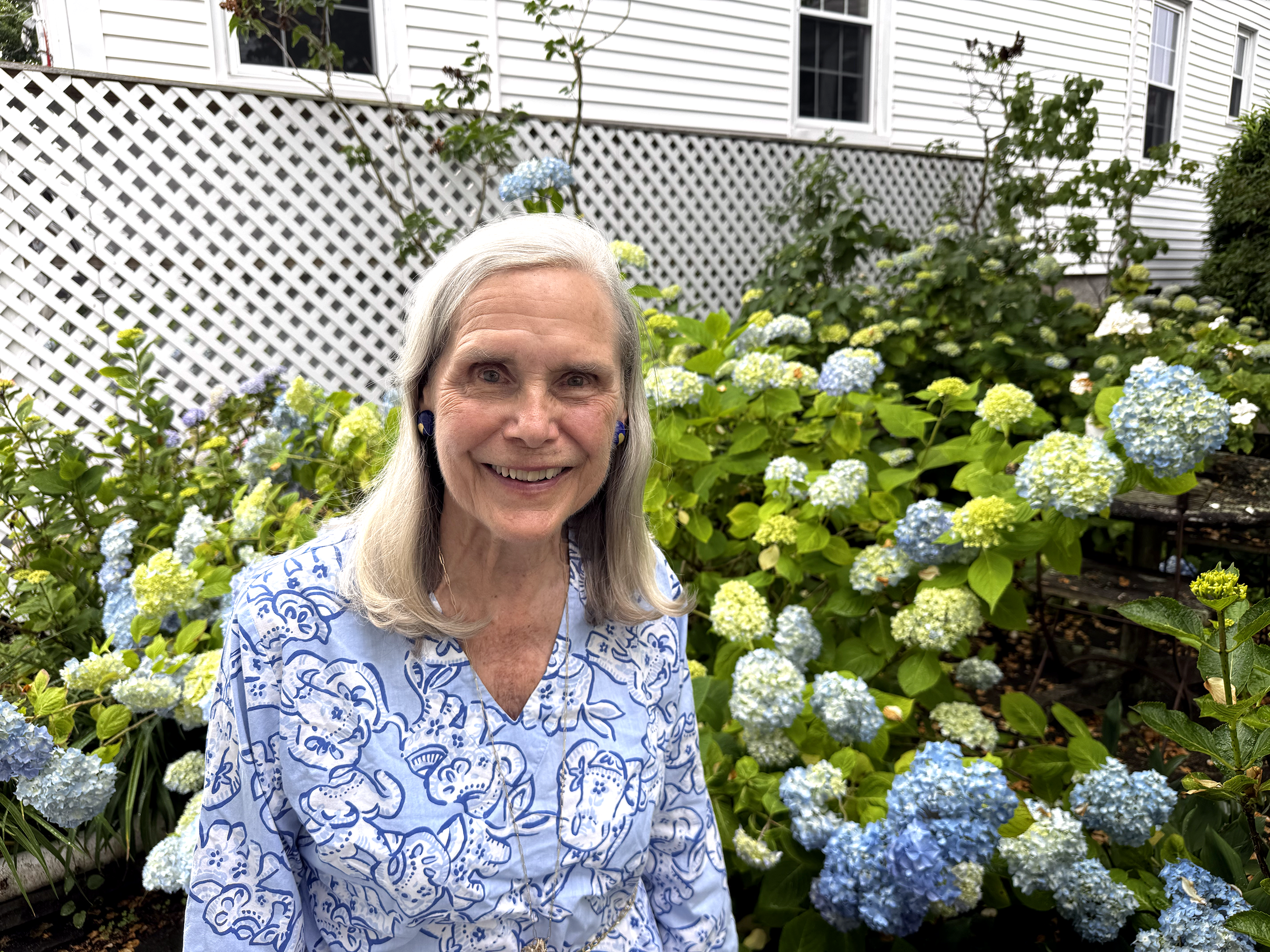
Photo by Elissa
The hydrangeas are always in bloom for the Fourth of July!
'The Philadelphia Story' at the Kate
Everyone who knows me understands that my crush on Cary Grant is real. I’d stopped counting how many times I’ve seen my favorite movie. I remember watching The Philadelphia Story during the pandemic when it suddenly froze and the scenes became all broken up. Apparently, Comcast was upgrading our service. I was hyperventilating knowing I couldn’t see the end, when Cary and Katharine Hepburn kissed after their characters got married.
When I saw that it was playing at the Kate — the Katharine Hepburn Cultural Arts Center — I blocked out the day. Somehow I’d get lucky and could see Cary with Katharine and Jimmy Stewart, on the big screen, with like-minded people in the audience. I took a chance and asked my wonderful friend Carolyn if she was free. She said yes.
Because of my love of all three actors, and because we were in this dignified monument to Katharine Hepburn, the energy was electric. I loved laughing out loud, being in community and clapping vigorously when Cary and Katharine slipped the grip for a second time. At the Kate! Sheer joy unrestrained.
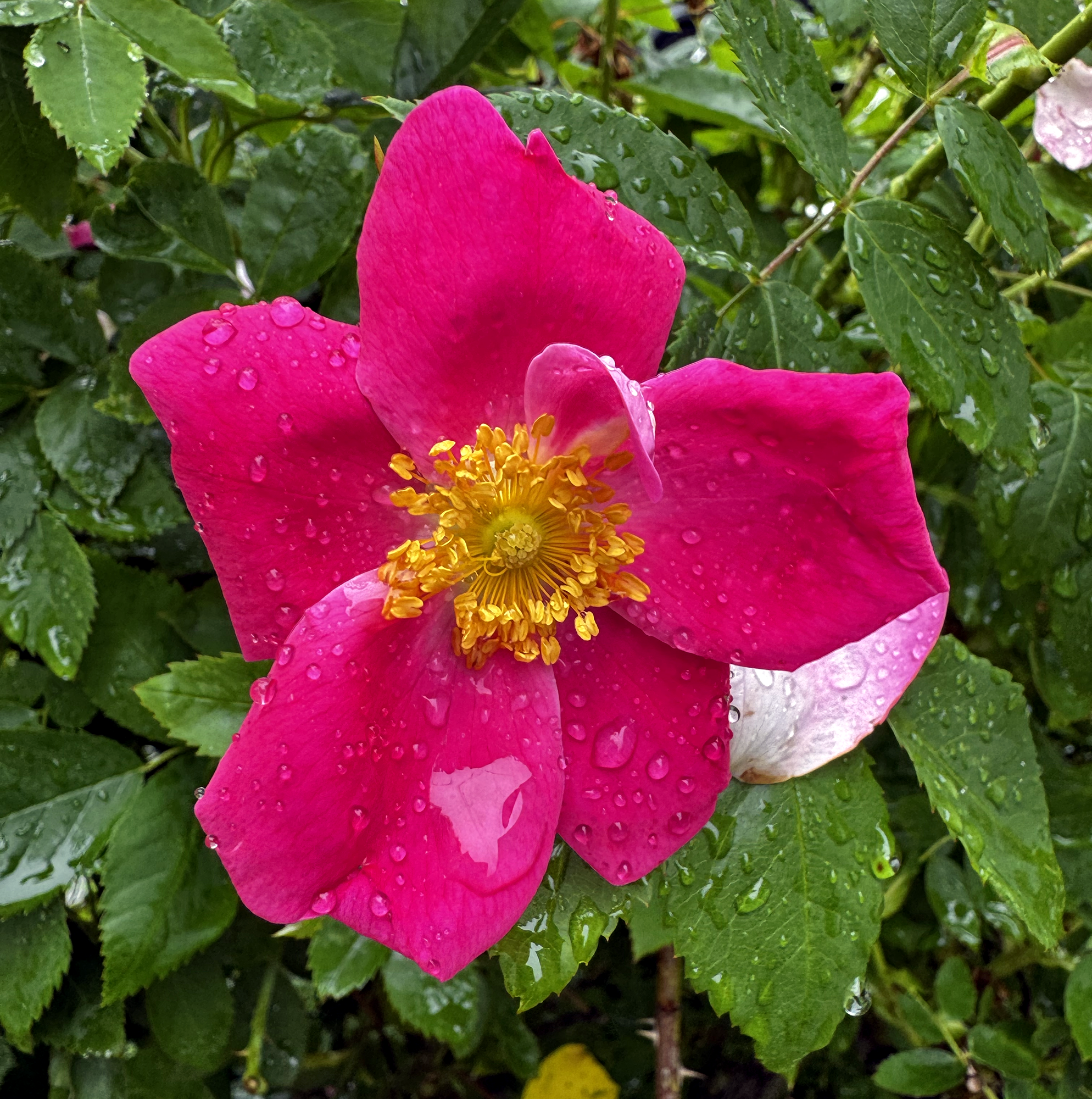
Photo by Elissa
A dainty beach rose in the front garden.
Back to the Kate!
Every month the Kate shows an art documentary as part of its Frames in Film series. I’ve written about some I’ve especially enjoyed in past letters to you. This one is about a favorite American artist who was born in Florence, John Singer Sargent: Fashion & Swagger. The documentary was filmed at the Museum of Fine Arts, Boston and the Tate Britain in London. Sargent is considered the finest 19th century portrait artist of his era (1856-1925). Because of his genius, his sitters became alive to us when we viewed them close up.
Sargent’s portrait subjects were often wealthy and wore fine costumes. Some of the elegant dresses have been preserved and were on display at these exhibitions. As you remember, Brooke and I went to New York to see the Sargent show at the Metropolitan Museum of Art last year. Having been an interior designer, I know how the important dimension that fine textiles add to a room. Sargent’s ability to bring fabric to life is unparalleled.
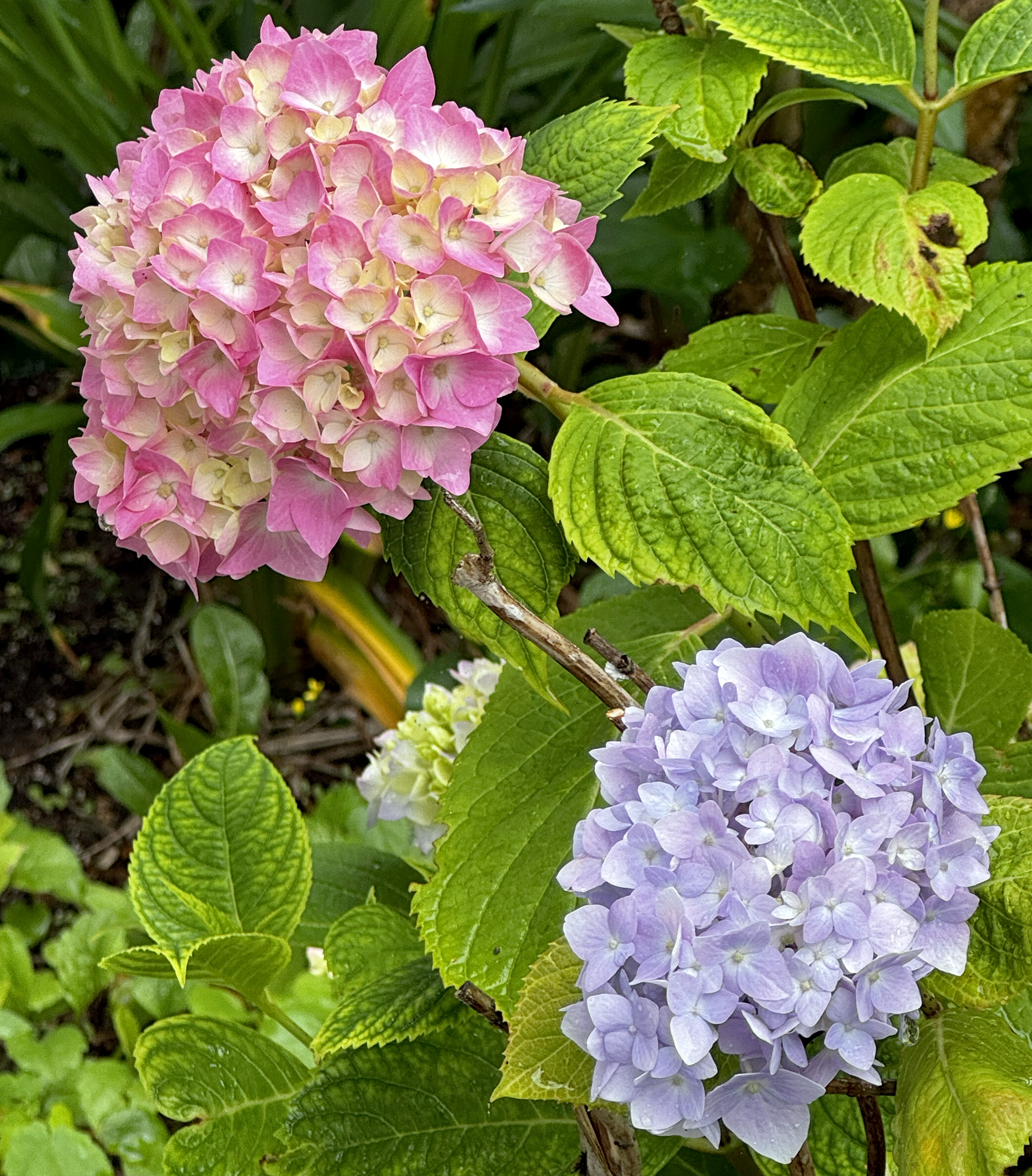
Photo by Elissa
I love nature’s beautiful randomness!
I’m not a lover of portraits, especially when they’re painted by a less talented artist. Not all artists have mastered portraiture painting. As an art collector, I’m not interested in having a portrait of someone I don’t know hanging on my wall. I prefer landscapes, seascapes and still lifes.
This film was beautifully done and a feast for the eyes to study all the details of the objects he included in his portraits. The writer Henry James, who had his portrait painted by Sargent in a plaid waistcoat, said his friend was “cultivated to his fingertips.”
“Every time I paint a portrait,” Sargent said, “I lose a friend.” He didn’t airbrush his sitters. He revealed their character. Some critic said he takes your face in his hands! He said, “I hate to paint portraits! I hope never to paint another portrait in my life. Landscapes I like, but most of all, decoration, where the really aesthetic side of art counts for so much more.”
John Singer Sargent lived a grand international life as an American expatriate. He painted portraits in the grand manner until 1907, when he stopped painting people and focused on landscapes. In his later years, he sculpted and painted in watercolor. His painting Claude Monet Painting by the Edge of a Wood that I wrote about after having seen it in New York was rendered in an impressionistic style in plein air.
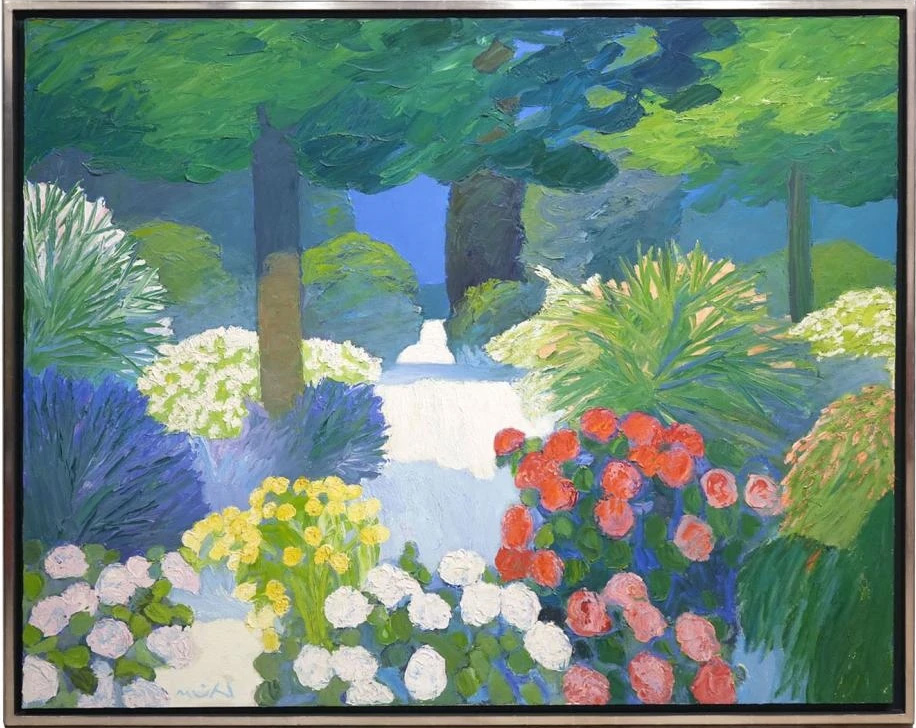
Jardin en Ete (The Garden in Summer), Roger Mühl
My Roger Mühl Garden
This garden painting, Jardin en Ete (The Garden in Summer), by my favorite artist was meant to live with me. Roger died in 2008. The last painting I bought was from his final exhibition that year, just a month before he died of a massive stroke in his sleep. It’s highly unusual and strangely coincidental that two large garden scenes from the same period would go on the auction block within a few weeks. While neither painting was dated, I feel certain from my knowledge of his work and my memory that they were painted in the mid-eighties.
Although Amandiers dans le Jardin (Almond Trees in the Garden) was at a New York auction house with the sale at midday, this painting went on the auction block in Fort Lauderdale at approximately 6 p.m. I had a spreadsheet in front of me so I could see the actual price I had to pay, including the fee. I thought I was prepared, but I wasn’t. I’m grateful I didn’t have a heart attack bidding, because I was out of my mind with anticipation, nerves and excitement. Auctions are fun! You never know.
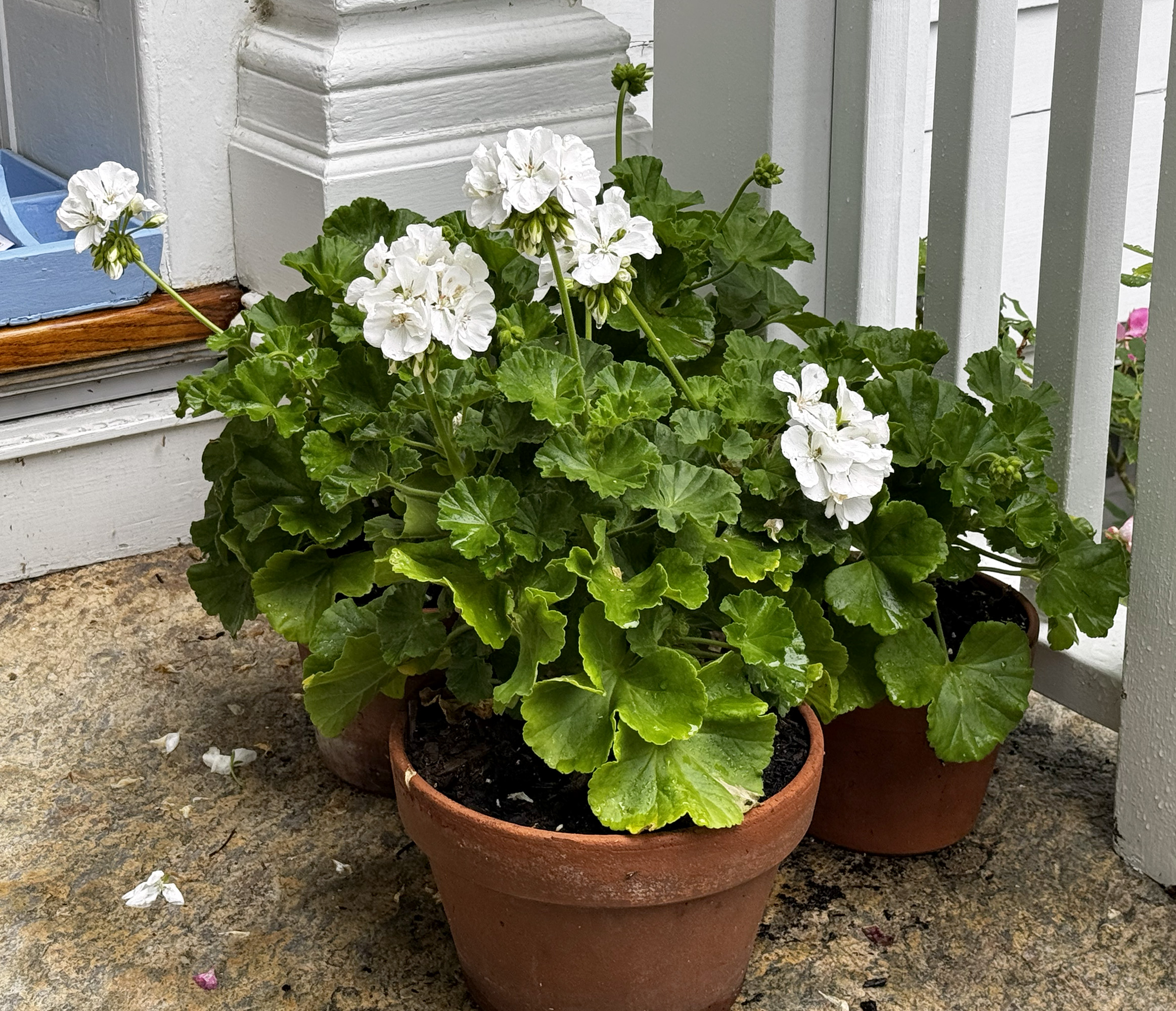
Photo by Elissa
I had to have some white geraniums in the front of the house as well!
Other potential buyers were vigorously bidding before I added up the cost. In a split second it could have gone beyond my reach, and it nearly did. There was a slight pause. Was I in? Yes. I bid. Someone countered my bid. I cried out, “I’ve lost it!” My daughter Alexandra said, “Go for it.” I did. My bid was the winning bid. The dealer on the phone, Andrew, said, “Congratulations, Alexandra.” Grace. I was stunned. This opportunity was fortuitous. So unexpected, so thrilling. I just knew, in my heart of hearts, that this was my chance, in my lifetime.
Friends from Stonington encouraged me to purchase this garden painting that will make me so happy. Trish and Brandon are going to Florida to pick up a painting for a client an hour or so away from the auction house in Fort Lauderdale and will drive my Roger Mühl home. The stars were all aligned.

Photo by Elissa
My favorite little gifts to give to friends!
I’ll keep you posted toward the end of the summer, when The Garden in Summer will be hung in my study wall opposite the window overlooking the harbor. As I envision its arrival, I feel I’ve had a rebirth. I feel complete. All the rich memories of my friendship with this French artist I met one year after I’d owned a painting of his in 1961 fill my heart with light and joy. Mühl’s joie de vivre, his enthusiasm, his love of gardening and painting flood into my consciousness, expanding the boundaries of life’s surprises, mysteries and, yes, miracles.
When we’re extremely lucky, rarely, but possibly, things are just meant to be. In the center of this garden is a sunlit path that draws the viewer into a clear, crisp, cloudless blue sky and the unknown. I will envision strolling in this garden and know that I’ve come home.
The 16th century French philosopher Michel de Montaigne, whom I greatly admire, believed that “The greatest thing in the world is to know how to belong to oneself.”

Photo by Elissa
After heavy rain!
'Cat on a Hot Tin Roof'
Tennessee Williams’ steamy play’s setting is a 1955 plantation in the Mississippi Delta. I saw this powerful play at the Gamm in Warwick, Rhode Island, the last play of the 2026 season. I’ve never been disappointed by a performance there because of the talent of the artistic director Tony Estrella and the quality of the acting.
As you know, I love live theater. This is showtime. Live action on a stage in front of an enthusiastic audience of theater lovers. We tune in to the inventive movements, the fleeting gestures, the voice tones, the silences, the live human beings exposing themselves to us. We become curious about the characters’ inner lives as well as the actors.
Mysteriously, the true nature of the characters is not revealed in Tennessee Williams’ play. We feel the tensions and frustration intensely. Williams wrote about Cat on a Hot Tin Roof, “The bird that I hope to catch in the net of this play is not the solution of one man's psychological problem. I'm trying to catch the true quality of experience in a group of people, that cloudy, flickering, evanescent — fiercely charged! — interplay of live human beings in the thundercloud of a common crisis.” We are in the room, with all the characters, and everything takes place in one evening.
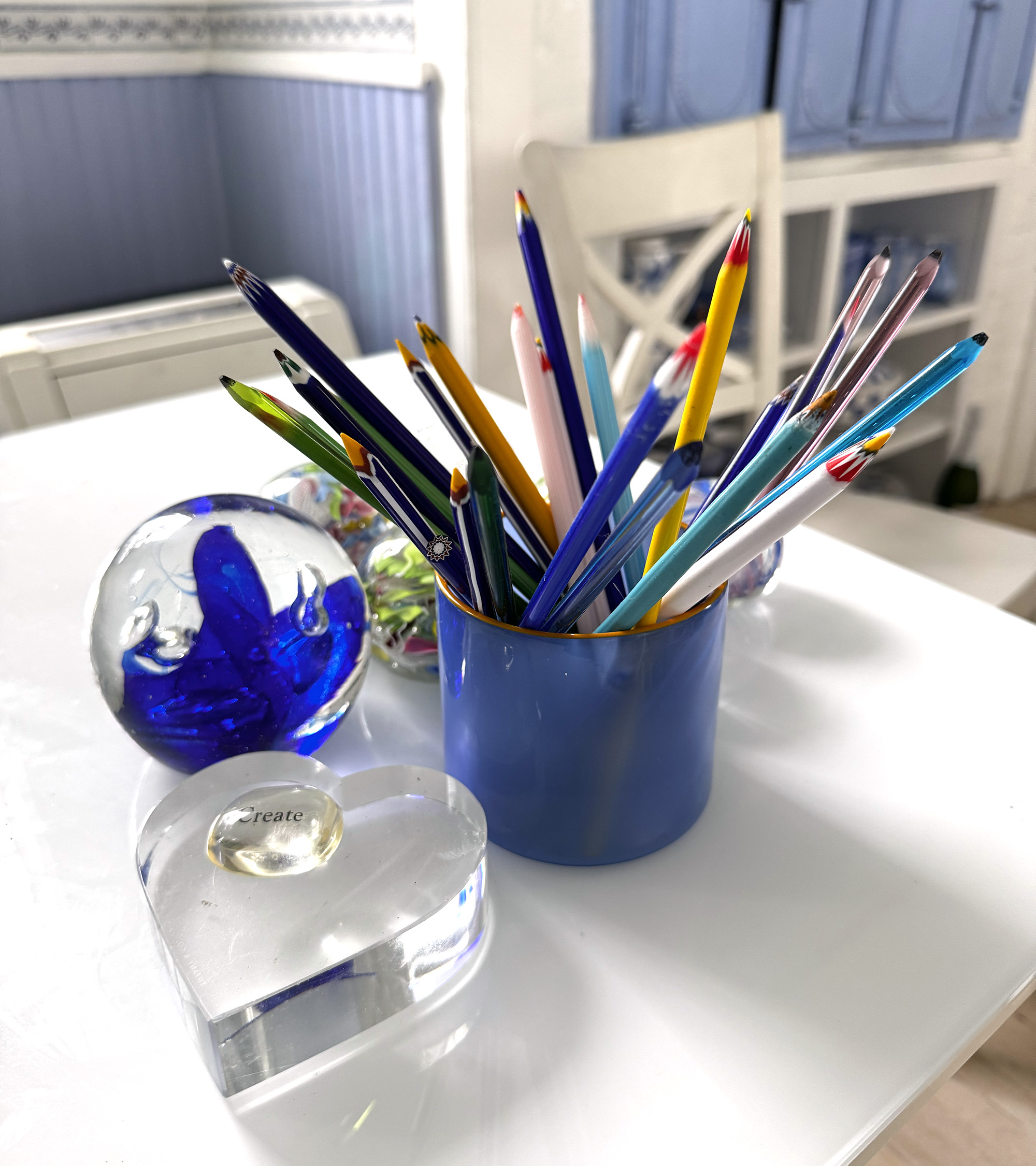
Photo by Elissa
Fun glass pencils from my trip to the Murano factory in Venice.
The play’s director, Steve Kidd, wrote, “Everybody in the play is trapped on some version of the roof, between a rock and a hard place, trying to survive an unbearable emotional heat.” The title (one of the many rich titles of Williams’s plays) contains the entire nervous system of the play, the director believes.
The set is Maggie and Brick’s bedroom. We feel the heat and tension immediately. The bed doesn’t seem to be a place of intimacy and love, as we watch Maggie’s frustration in Brick’s indifference. Her overt overtures disgust Brick. She raises her voice as he shuts down and takes sips to numb himself into oblivion. Throughout the play, the crisis explodes.
Big Daddy and Brick are deeply emotionally connected, while they appear to be very different. Brick is a married, gay alcoholic and loathes himself. Big Daddy (whether he knows it or not) is dying but still wants to be in the game. Big Mama is in utter denial, clinging to love.
Williams writes, “Some mystery should be left in the revelation of character in a play, just as a great deal of mystery is always left in the revelation of character in life, even in one’s own character to himself.”
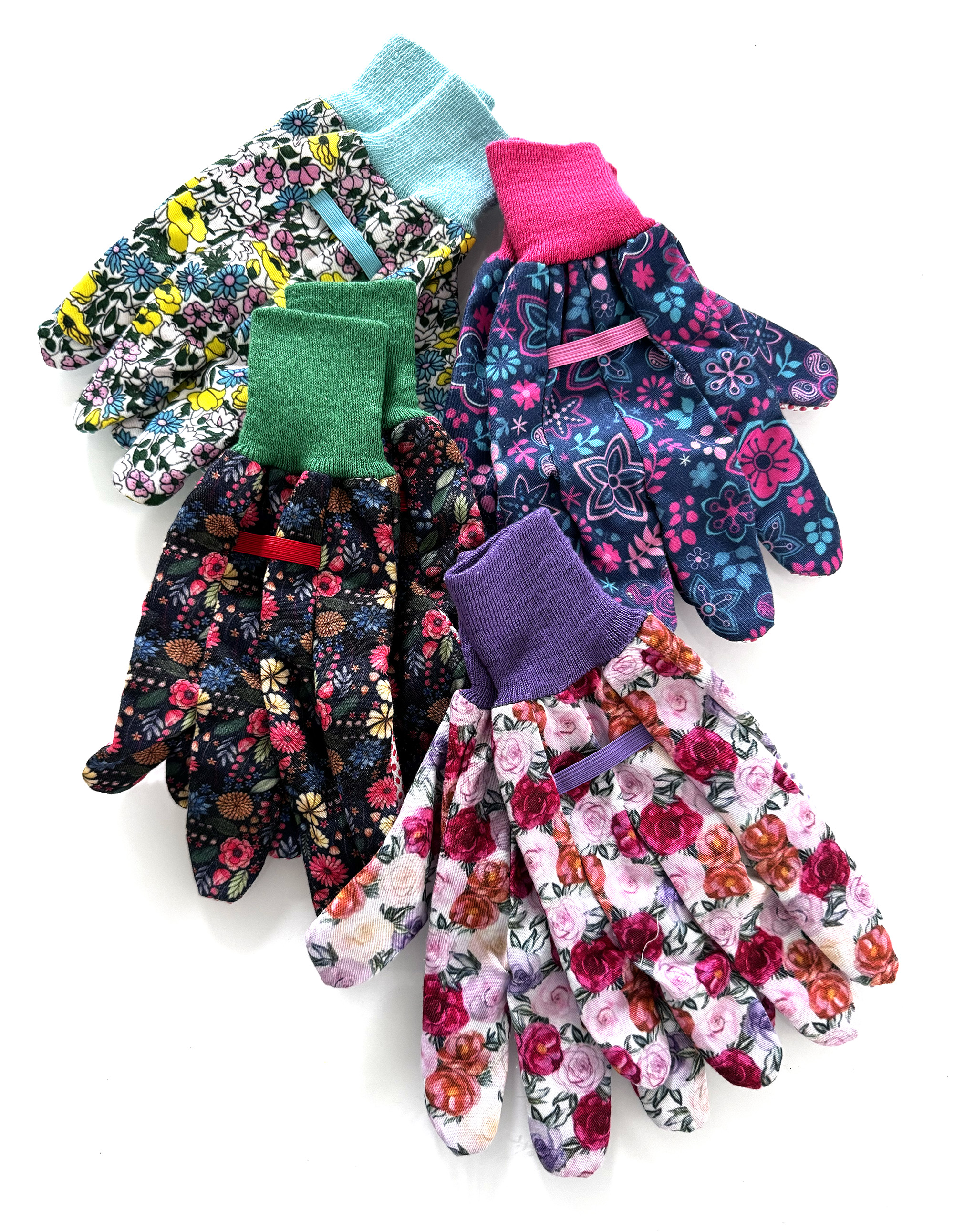
Photo by Elissa
My gardener friend Robin sent me these beautiful gardening gloves!
In the Talk Back segment after the play, the actors come on stage wearing their own clothes, and we’re encouraged to ask them questions about their characters. Immediately, the actor who played Maggie, Nora Eschenheimer, was asked why she screamed and shouted. When we’re not emotionally heard, this is a natural human response. She told us there was a preponderance of all capital letters in the script and many, many exclamation marks! The actors believe the playwright, who was gay, wanted women and, in this case, the frustrated wife of a husband who felt it was repugnant to have sex with her, to relate. What do we tend to do as “deeply, authentically, recognizably” human beings? What would we do if we were Maggie? We raise our voice!
Whether we saw the play in a theater or watched the movie, while we ponder the mysteries of these characters and their sad story, we look within to understand the traps we can find in ourselves and in our own family dynamics. How we manage, balance, have boundaries and flourish is up to the thoughtful choices we make.
I left the theater deeply grateful I wasn’t a mother, daughter or granddaughter in the Pollitt family and yet, having experienced some great acting of a classic American play by an iconic playwright, I felt uplifted, as I always do when I experience excellent theater.
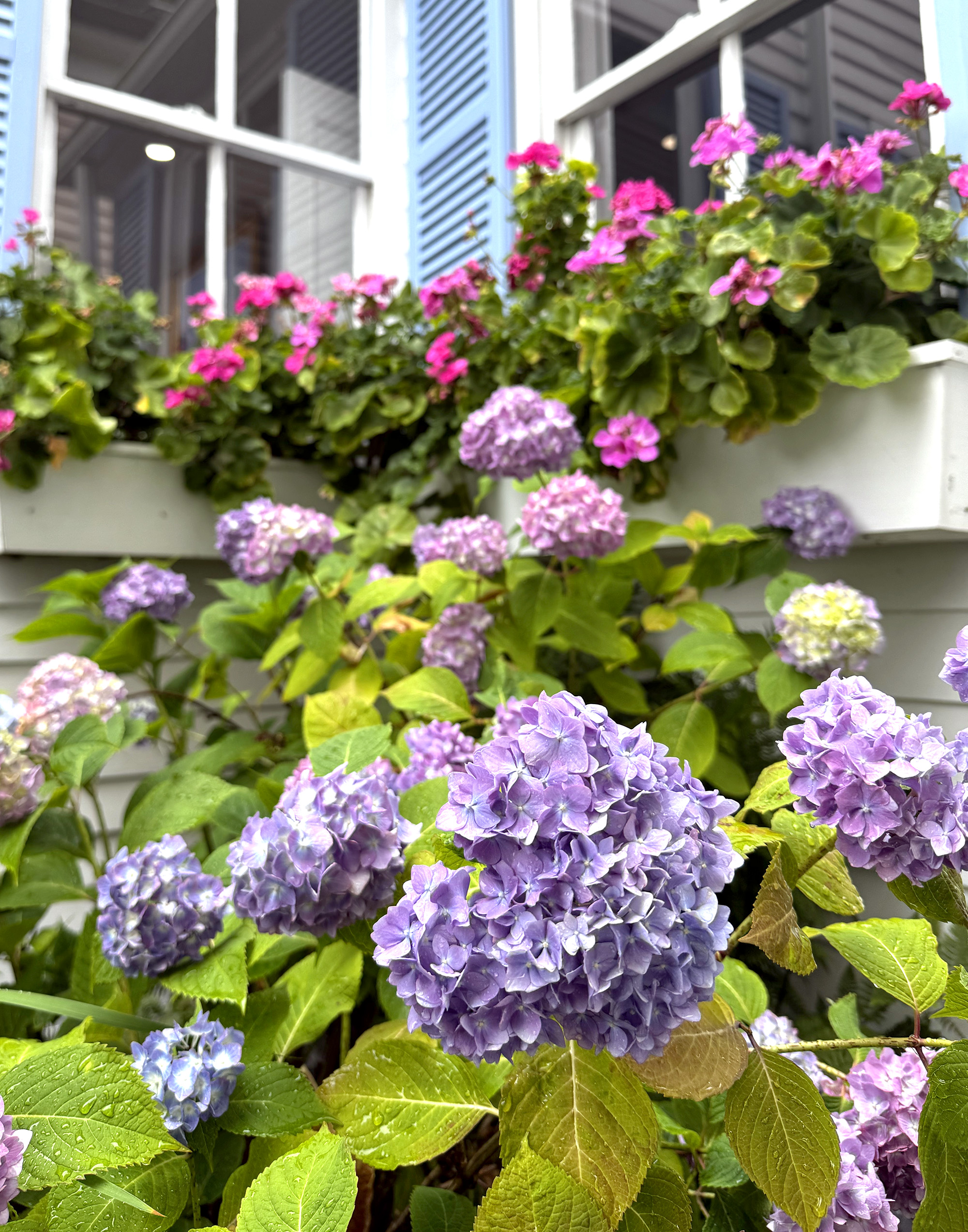
Photo by Elissa
I love the natural mélange of colors!
'Discovery Day'
We don’t know what we don’t know. The universe is vast, eternal and full of space, discoveries and possibilities. Planet Earth is a tiny part of what is beyond the scope of our human understanding. Discoveries are made every day. Secrets are kept until they aren’t. The truth is the prize. Is there existence of extraterrestrial life on earth? Or not?
I don’t know if Steven Spielberg knew that Emily Blunt, the starring actress in his new blockbuster sci-fi movie Discovery Day, grew up watching his movies. Their first encounter, when Spielberg wanted to meet with Blunt, was a very deep secret. She had no idea what to expect. She told the New York Times, “I spent the whole time going, ‘Mm-hmm,’ trying to really compose myself into something that is unflappable, when inwardly I was flappable.” Even her agent was left in the dark.
I can’t imagine how excited Emily Blunt was when he offered her the starring role in his new film as Margaret, a meteorologist in Kansas City, Missouri. We first meet her when she is making toast and glancing at her laptop, late for work, kinetic, constantly in motion, always on the move. Blunt said Spielberg let the scene happen organically. He told her, “I was thinking you could start here, and whatever you want to do, kiddo, you should just feel it out.”
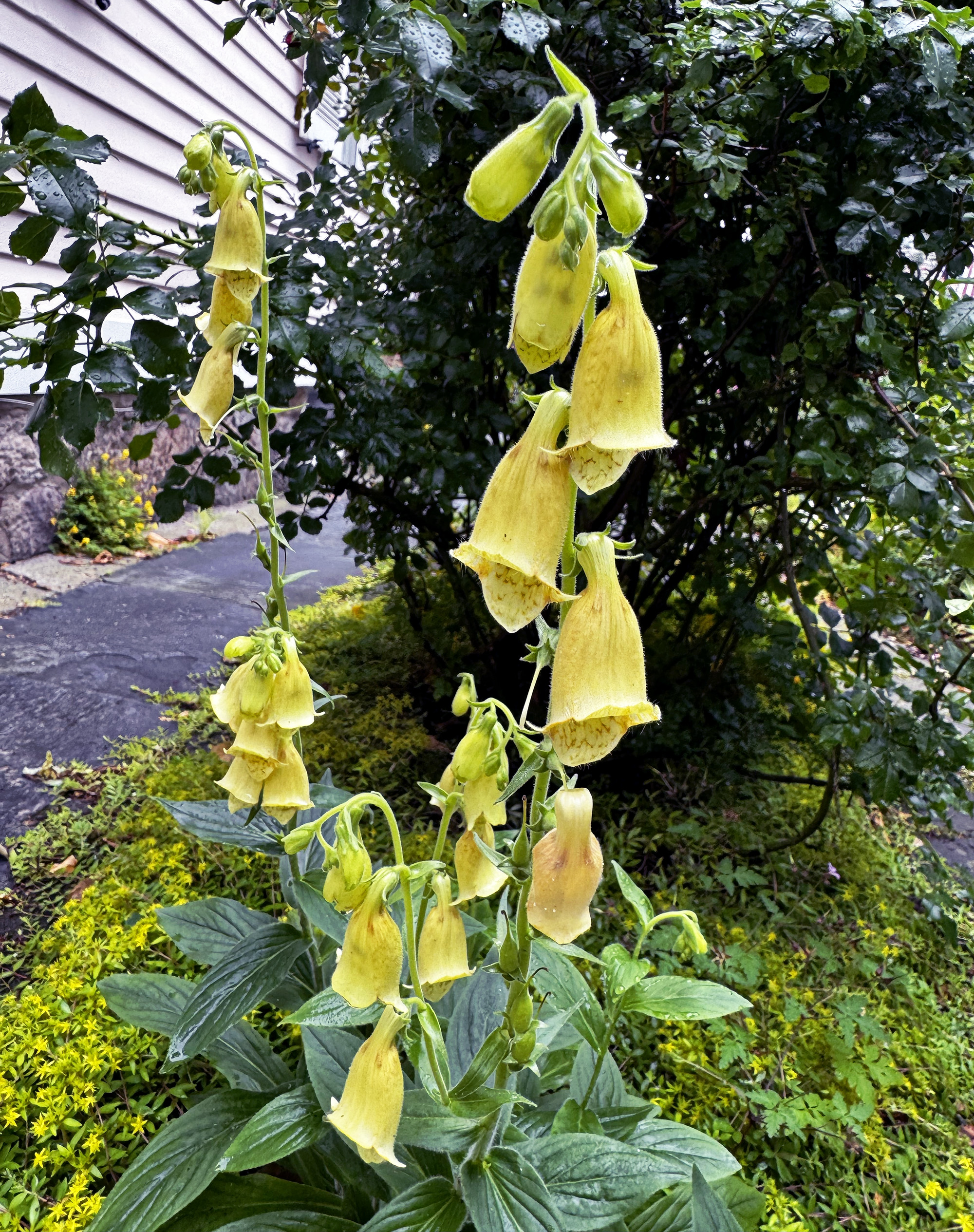
Photo by Elissa
Some of Charlie’s “friendlies” in my yard.
The first glimpse of Margaret’s character being a complex, mysterious personality is when Emily Blunt watches a red cardinal flutter into their kitchen through an open window and alight on the breakfast table, staring at her. Margaret and the cardinal are locked in deep, deep connection. This is the first thread that ties the whole story together. There were so many different human beings inside Margaret’s head. Blunt loved her character so much because she kept discovering all the different aspects of her personality in the process. She actually missed Margaret when the movie ended. “You can sublimate things you’ve experienced into something really artistic,” she said.
Emily Blunt is a fine character actor. She is not only the star in Discovery Day, but her character is also a hero that exposes the truth on television in Spielberg’s new blockbuster.
There’s an expression, “event-izing.” Spielberg believes “It enlarges the experience, makes it bigger than life, when you watch a movie with people.”
Going to a movie, I’m all in! Emily Blunt believes that if the writer has an extraordinary story, “it will catch fire. It just does. I think if you can move people and create something familiar but new … that’s the thing that works.”
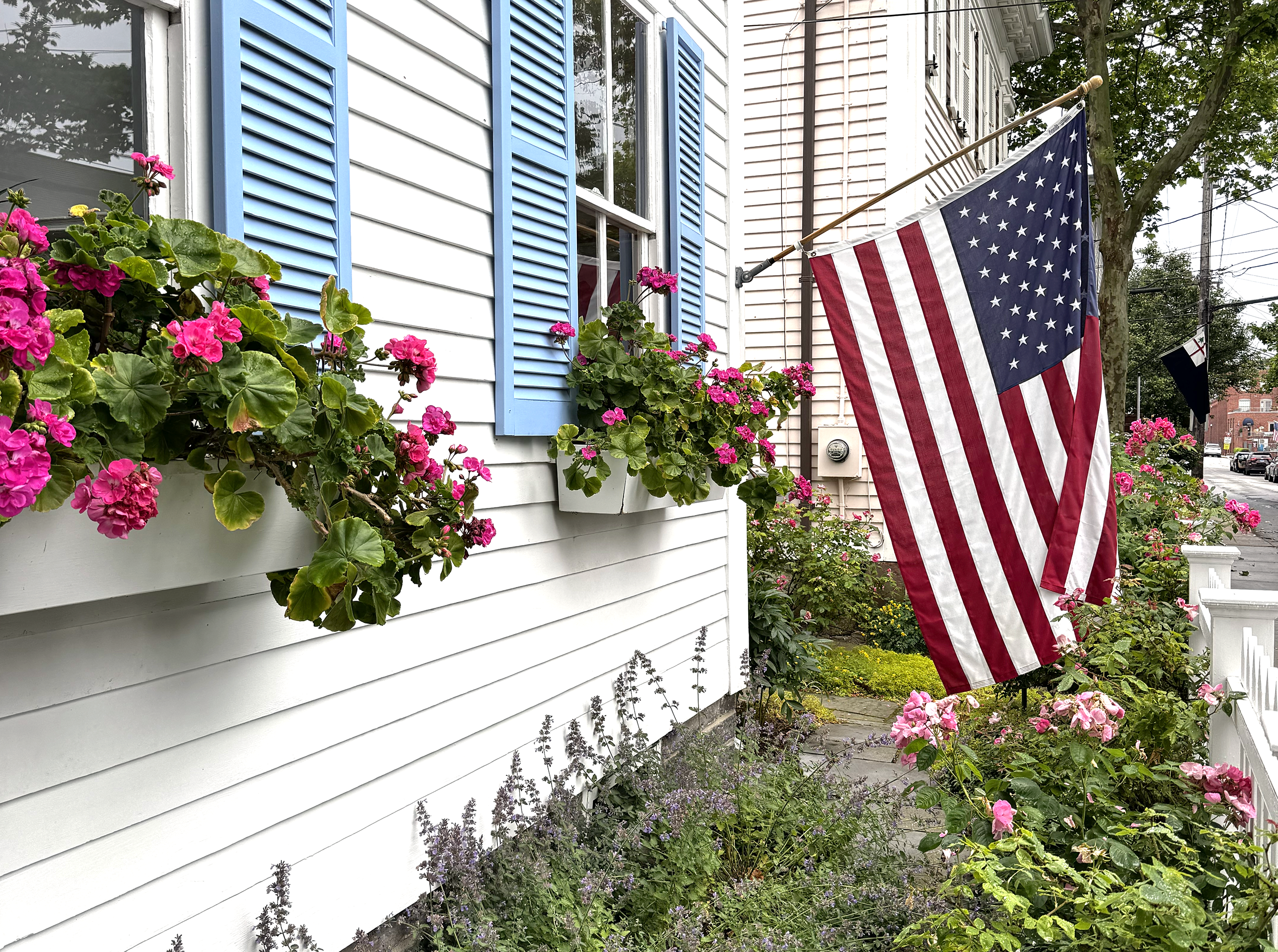
Photo by Elissa
Happy Fourth of July!
Happy July Fourth! I will enjoy our festive village parade, followed by a reading of the Constitution on the steps of the library. Following all that excitement, we’ll walk to Calvary Church on Church Street to listen to patriotic music.
A barbecue picnic at Tony and Paul’s house on Cannon Square will be fun and festive. We’ll all watch a host of boats celebrating this meaningful day of historical significance.
I send all positive thoughts and energy for our country’s day of celebration, remembrance, reflection and hope.
Love & Live Happy,

“Let no feeling of discouragement prey upon you, and in the end you are sure to succeed.” —Abraham Lincoln
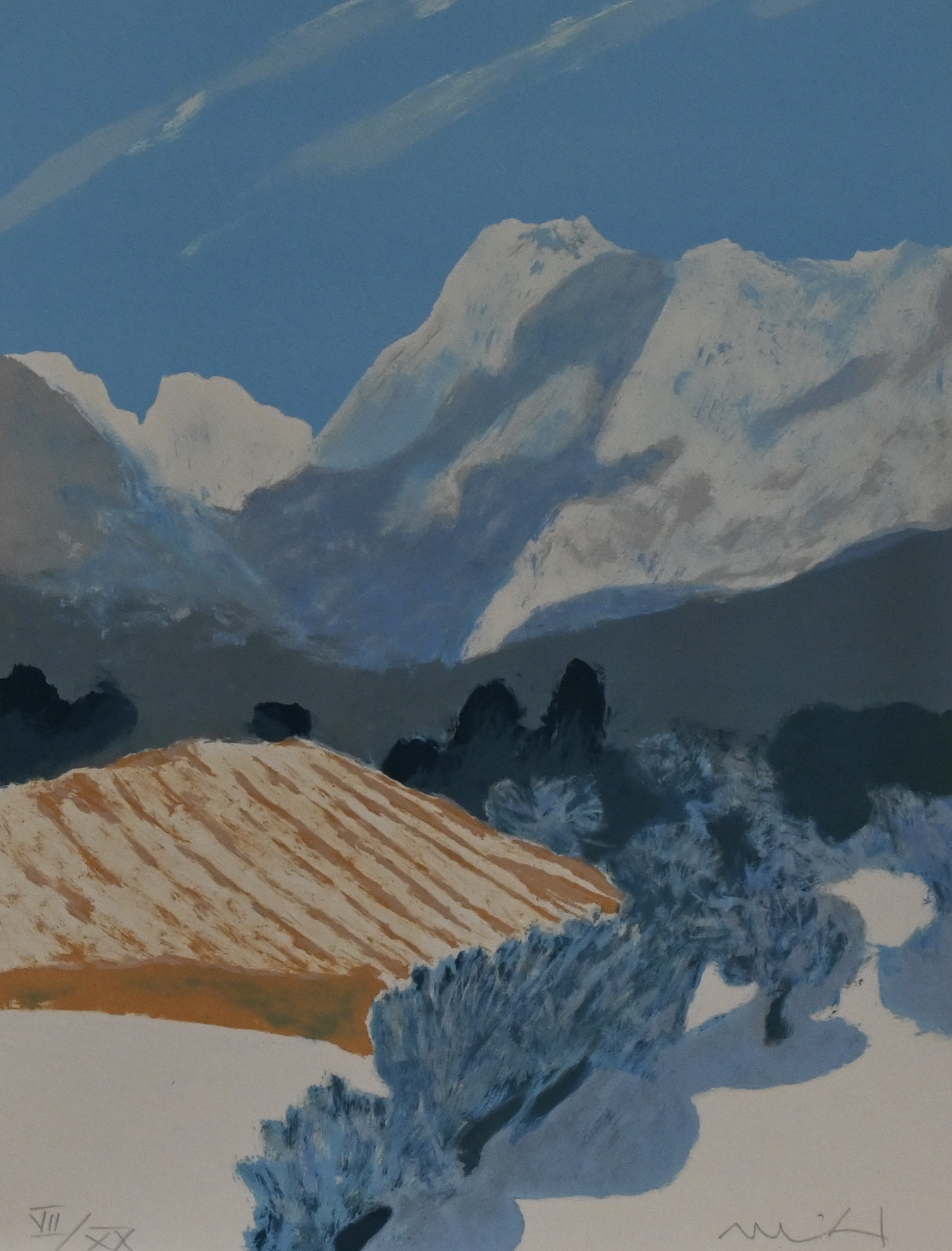
This month, I'm letting go of a lithograph by Roger Mühl if anyone is interested in adding it to their art collection. Please contact Pauline at Artioli Findlay (pf@artiolifindlay.com) for more information.
Roger Mühl (French, 1929 - 2008)
"Provence V, Au midi, là bas une barre de montagnes"
Limited edition French lithograph
16 3/8 x 12 1/2 inches
The image is printed to the edge of the sheet of paper.
Executed / printed 1986
Edition VII / XX
This delightful Provence landscape has thyme and vineyards as well as expansive mountains in the distance.