AUTHOR | SPEAKER | PHILOSOPHER | DESIGNER

August 2026
date:
8/1/2026
“If you can spend a perfectly useless afternoon in a perfectly useless manner, you have learned how to live.” —Lin Yutang
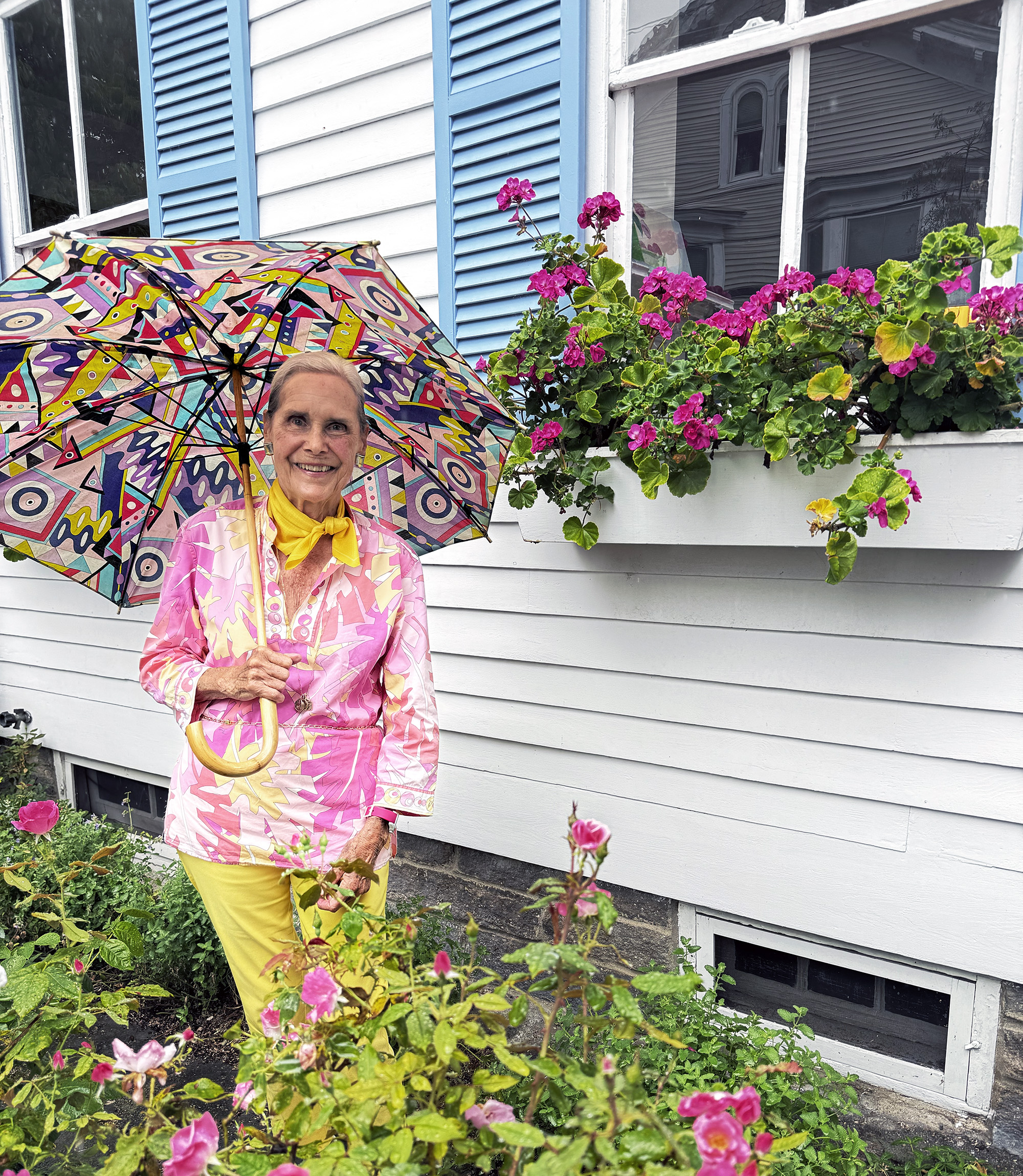
Photo by Elissa
My favorite Pucci umbrella helps me enjoy the rain.
Dear Friends,
I love you! I trust you had a happy July 4th, America’s 250th birthday! Every one of us celebrated “America the beautiful” with passionate enthusiasm. We had our village parade that went all out to bring our community to the streets, waving flags and cheering. There were brass bands, bagpipes, lots of drums and red, white and blue costumes.
I enjoyed watching some spectacular matches in the iconic tennis tournaments in England, at Wimbledon. The World Cup Soccer matches hosted in the United States brought unity to the globe. The energy of elation was palpable. Joy was total, completely unrestrained.
During the fourth weekend of July, we celebrated our proud Portuguese fishing village with the Blessing of the Fleet, a parade honoring St. Peter (the patron saint of fishermen) and a Mass. There are lots of festivities, good food and cheer on land. On sea, the fishing boats parade in the harbor with colorful flags and lively music.
This summer I’m savoring all the beauty and bounty of our gardens as well as all the local farm stands’ fruit and vegetables. I spend soft, leisurely days observing and appreciating nature’s powerful hold over our five senses. The sheer happiness I feel during these soft, serene, sensuous moments makes me vitally alive. The poet Emily Dickinson expressed this emotion I’m feeling so poignantly: “That it will never come again is what makes life so sweet.”
I want to share with you some of the sweet moments I've enjoyed during these calm summer days.
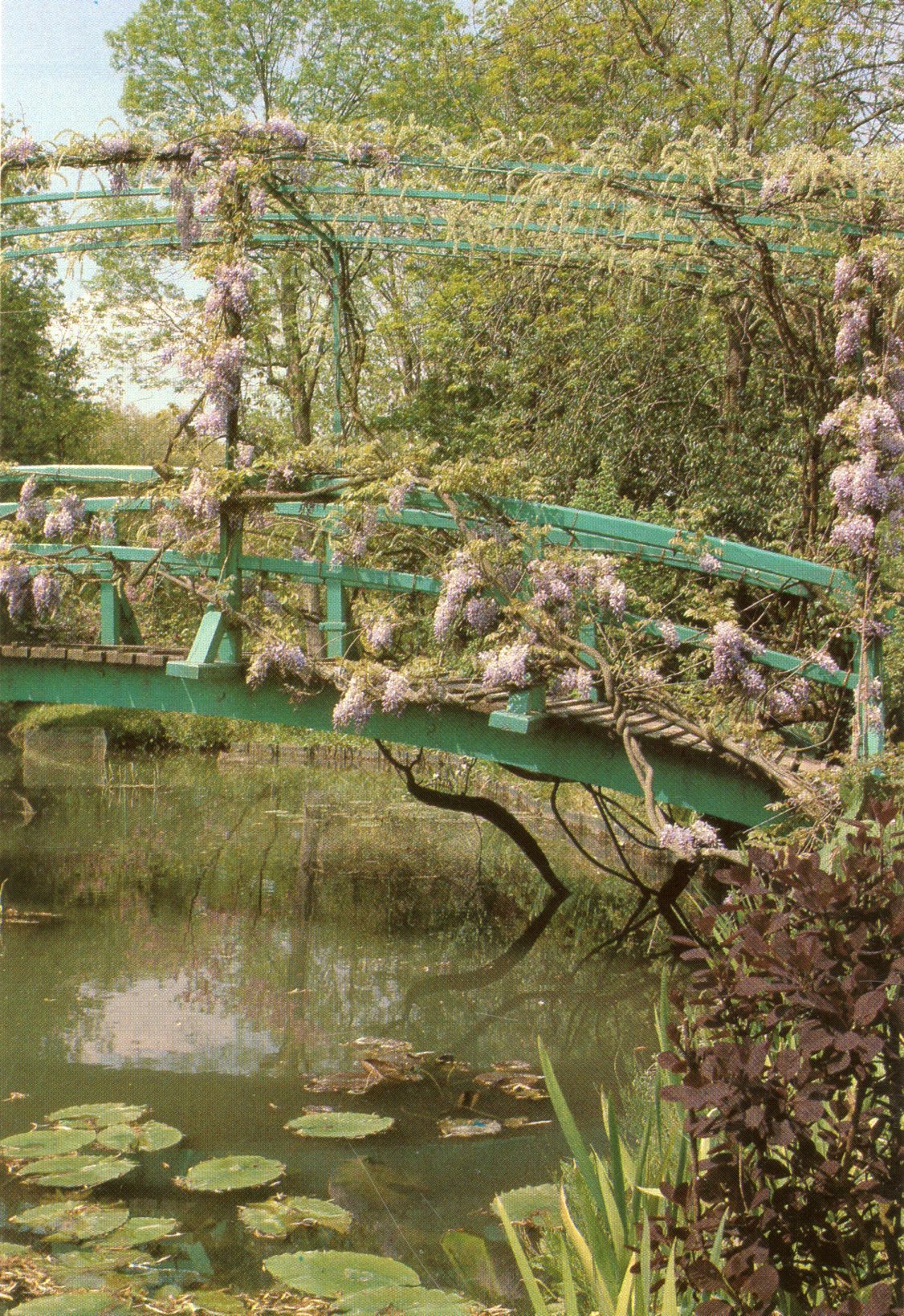
The famous Japanese bridge.
'Light'
Eva Figes’ short novel Light brings us intimately to Claude Monet’s beloved home and garden in Giverny for one hot summer’s day. We’re the viewer, the ghost that shadows Monet, from predawn to dusk. We see the stars reflecting in his lily pond under and around the green Japanese bridge. Because of my devotion to this visionary Impressionist artist, Peter and I have made several pilgrimages to Giverny over the years. I’ve taken the train from Paris by myself several times in the years after he died. This book, Light, is the loveliest gift to his fans. We accompany Monet in residence on a sunny, humid summer’s day when his garden is in peak bloom — the light luminous, mysterious and dazzling.
Coincidentally, I read Light when it first came out in 1983. When it was reprinted in 2005, I reread this gem. At one point, I was working on a book about light. Eventually, I abandoned the project because I would have had to write about lighting and become knowledgeable about the fast-changing technology. I couldn’t keep up. I realized I was over my head and separated from my heart, and the book would have been dated before it was published.
Natural light thrills me and opens me up like a new blossom. My book-loving friend Chereé wrote me enthusiastically about Light being recently reprinted. Not able to locate my copies, I ordered one from Bank Square Books.
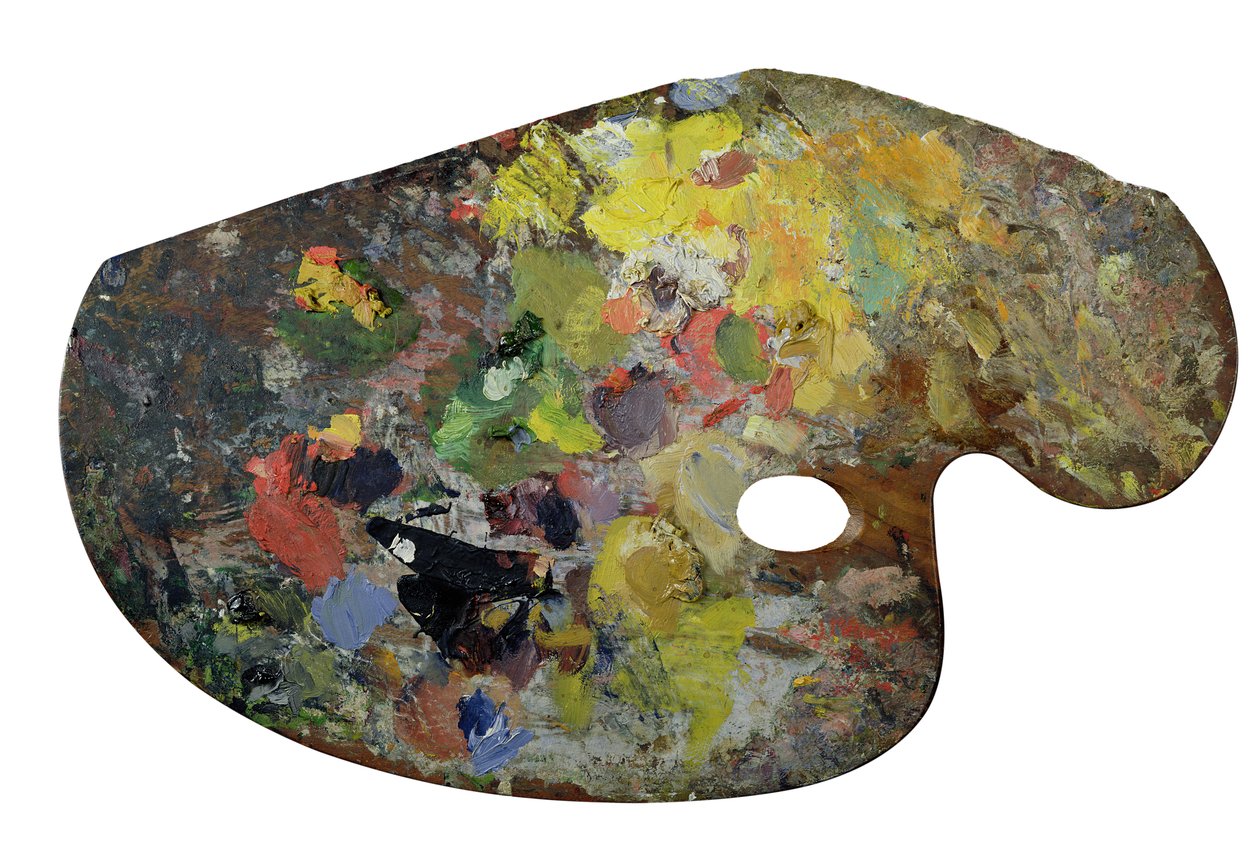
A glimpse of Monet’s colorful palette!
Light is Claude Monet’s story about his passionate obsession with pursuing pure natural light itself. We see through his eyes and witness his thoughts, emotions, attitude, moods and beating heart. Figes gives us intimate glimpses — impressions — of one day of the ever-changing light in his life at Giverny. From predawn darkness to the coming of the day’s light, Monet tries to capture and paint what he sees. He paints the effect of light on his subjects. Incidentally, he pays equal attention to the textures of the objects he selects to render.
Figes paints, with poetic nuance, the most aesthetically beautiful scenes with a light brush, in colorful words. She is calm, unhurried, gentle and understanding as an acute observer. She captures and arrests the most subtle details of what light, stillness and time can reveal. She is channeling the artist of light’s teaching to us, his eager students. We feel Monet gave her his palette of colorful pigment and brushes and asked her to tell his story. With the rainbow of colors from the sun’s quixotic light, we are able to observe the continuous fleeting light that flickers, trembles, flutters and disappears. Gone. The message is to show up. Be patient. Light will spotlight his colors.
“Color is my day-long obsession, joy and torment,” Monet remarked to his friend Clemenceau. The basis of the Impressionist “cult” is of visual impressions and colored light. When Monet was asked whether he painted directly from nature, he replied, “The result is all.”
Photo by Elissa
Leftover amaryllis bulbs from Christmas.
Long before he settled permanently in Giverny, to end his life’s work painting the “Water Lilies” series of murals, he wrote a letter for his friend Frédéric Bazille: “Don’t you think that one does nature better alone? One is too preoccupied with what ones sees and hears in Paris.… What I will do here will at least have the merit of not resembling anybody, because it will simply be the impression of what I will have felt myself alone.”
Monet’s coloring reached its highest point of intensity in the spring of 1886, four years before he purchased his house and garden in Giverny in 1890. He continued to improve and expand both the house and garden for the rest of his 36 years on Giverny’s precious Earth.
In a letter to his friend Paul Durand-Ruel, Monet lamented that “the enemies of blue and pink will make a bit of a fuss, but it is this very brilliance, this magic light, which I am trying to capture … though I come nowhere near the true color.”
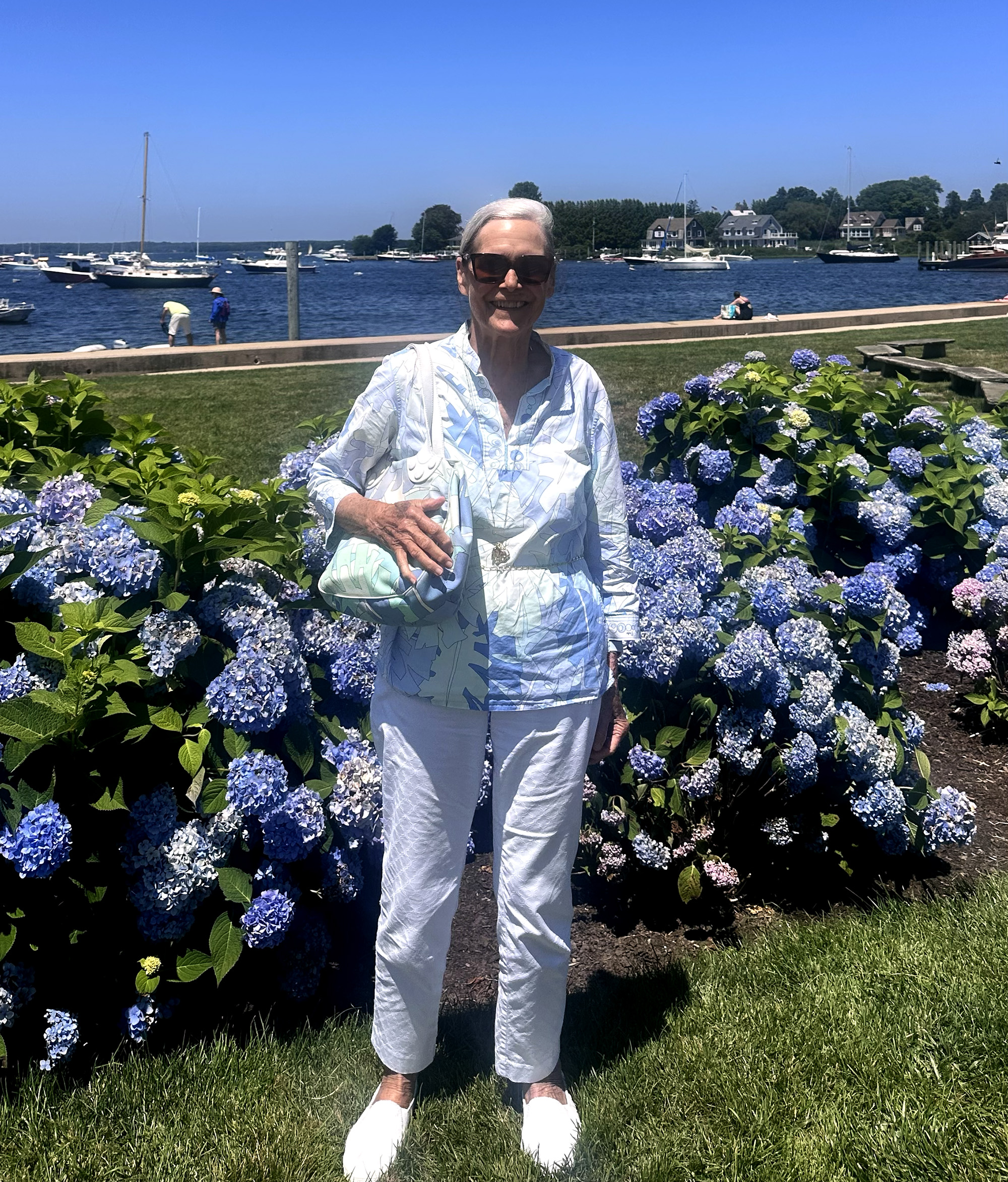
Photo by Brooke
Enjoying the hydrangeas in Watch Hill.
In a slim booklet called Monet 1883–1926 published in 1964 for Tudor Publishing Co. in New York, Jean Leymarie quoted Monet: “It is quite impossible to paint water with weeds waving at the bottom.” Leymarie wrote about Monet’s painting Morning on the Seine in the summer of 1897: “Frequently getting up before dawn to capture the magic moment when real landscape is still indistinguishable from its reflection in the silent river veiled in pink mist.”
Monet’s landscapes with water were possible to paint on his own estate because he diverted “a stretch of the Epte to create the pond covered with water-lilies and bordered with weeping-willows, tended by five gardeners.” He said, “I shall paint water, beautiful, blue water.” He brought the Seine to his garden.
Discussing his “Water Lilies” series with a friend, Monet said, “It’s beyond my old man’s powers, but I long all the same to realize what I feel.” In 1916, the darkest days of World War I, Monet was almost blind. He was still mourning his second wife Alice’s death as well as his son Jean. Encouraged by his friend Clemonceau, he built a new, bigger studio to accommodate his enormous vision of his water lilies. Fortunately, a cataract operation partially recovered his eyesight.
As Monet entered his final adventure, the ultimate test of this painter’s ability, he painted light’s impressions, the effect of an image as he was experiencing it instantaneously. He understood that the pursuit of light itself was too exacting and rather hopeless, but it was what sums up his life’s work.
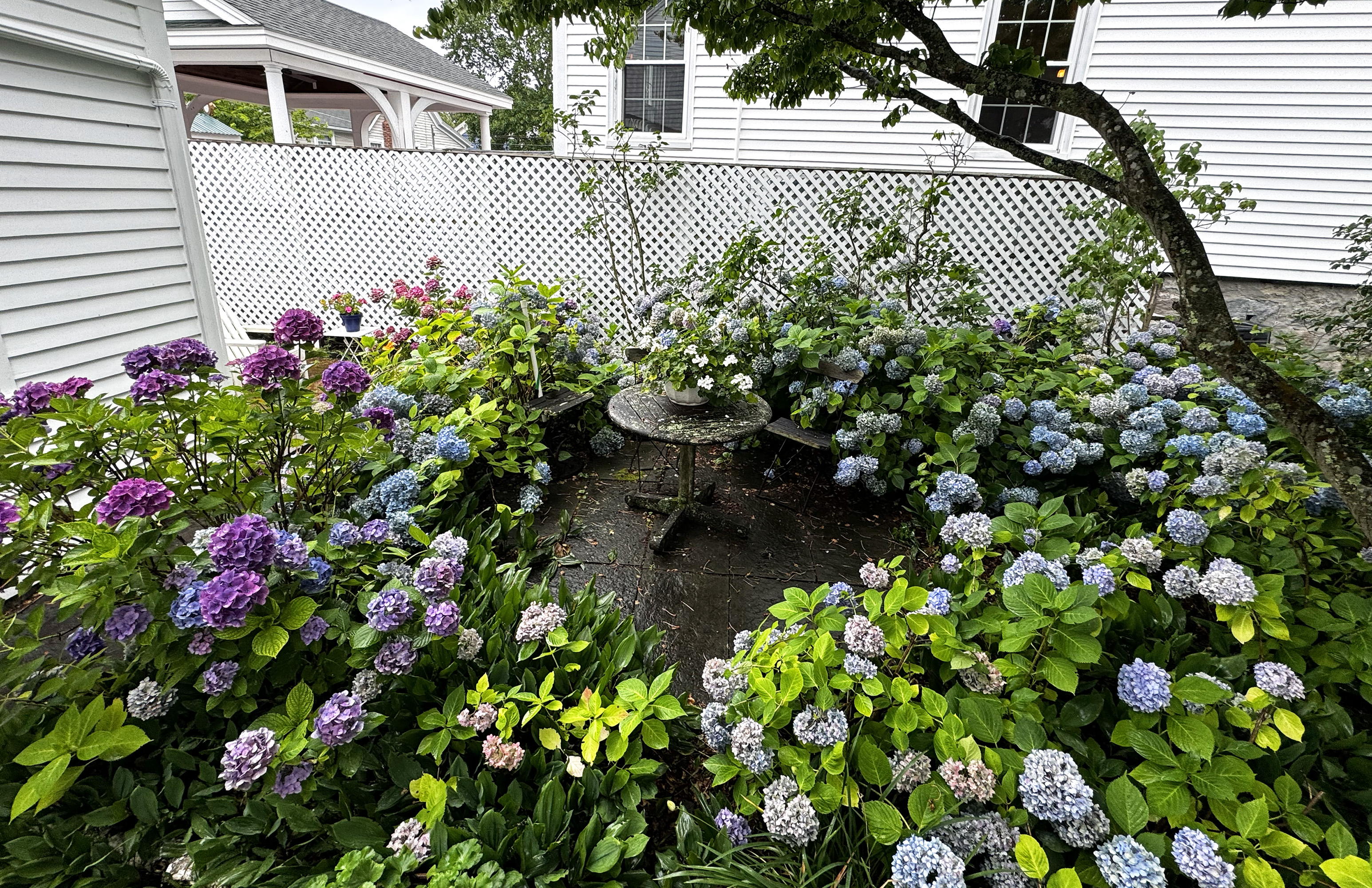
Photo by Elissa
I’m savoring the last moments of my July hydrangeas in bloom.
Jean Leymarie wrote, “Nothing changes color so often as water, the chameleon of light. The still surface reflects the sky where the water-lilies watch like ‘eyes.’” Water mirrors and reflects the weather. For Monet, light was everything. “When it is dark, it seems to me as if I were dying and I can’t think any more.” Light was his focus of observation and his breathing meditation.
Eva Figes writes so poetically about the light at Giverny, where Monet made his entire universe. I’m thinking of the contemporary French writer and critic Charles Baudelaire, who understood that “there are as many kinds of beauty as there are habitual ways of seeking happiness.” Monet created such exquisite beauty in his garden with the water lilies and undulating, quivering willow trees, and he felt compelled to capture — to “catch” —what he saw and felt.
Figes describes a typical scene: “And even as he was studying the changing light, it changed further, the river itself turned to silver and gold, a moving flood, and now as the sun rose it was as though the overhanging trees could no longer hold it back. The air itself was flooded with light, white and gold, so that nothing was visible but light itself.”
Thank you for holding my hand and his on our visit to Giverny, so together we can see better. Seize the light in August until it floods into your ever-expanding soul.

Photo by Elissa
The view out of the kitchen window is beautiful in every season.
The French Philosophy Exam
The French school system’s high school students take a yearlong required philosophy course asking students questions. “Who are you?” Another question asked, “Can one be happy when others are not?” “Do we have control of our words?”
Students had four hours to give their written responses to the end-of-year exam. French liberal arts students are encouraged to examine opposite points of view, essential in being a critical thinker. Philosophy, after all, is simply a love of wisdom. What is moral? What is natural? What is rational? What constitutes the good life? When we contemplate the ultimate dimension, we address our ultimate concerns.
Some top students are then paid to become scientists, professors and philosophers, where they question the source and nature of human knowledge. This philosophy course and examination is a rite of passage for the French. Students are collectively reflecting on who they are as individual citizens, who they are as a country, and what are their values. They wonder and explore what needs to be instilled in someone who wants to become a good citizen. What is fair justice? What is freedom? Who is free? Do we have free will?
One question students were grappling with is “Why do we work?” Is it just to earn a living? How you make a living is critical to our values, ethics, principles and our sense of self. Work, freedom, justice, truth, language and happiness are some of the interconnected concepts in the philosophy course’s curriculum. Students have to understand complex, competing ideas in order to excel as human citizens of their country and be able to contribute excellence to the world.
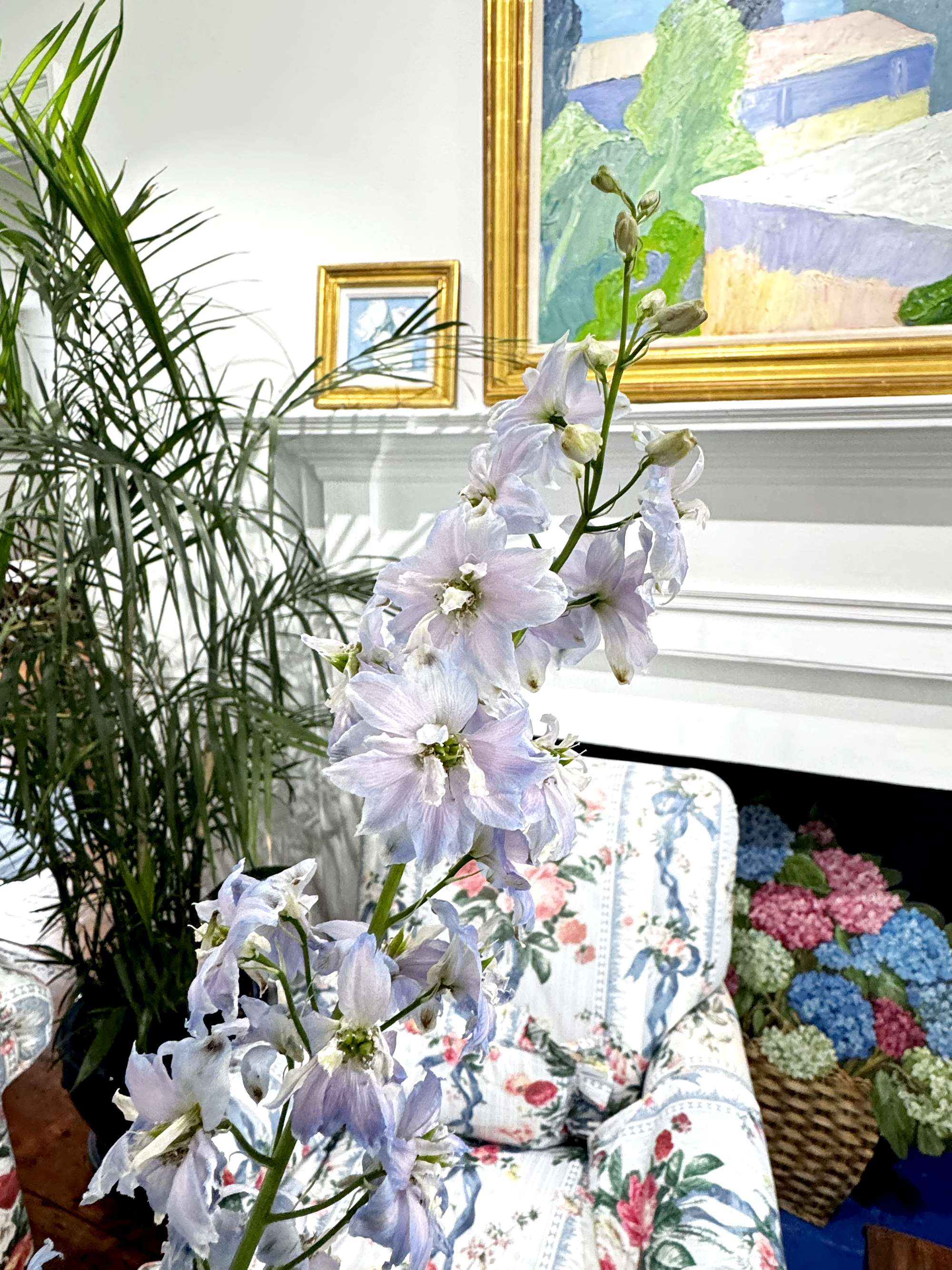
Photo by Elissa
Brooke gave me some delphiniums I’m enjoying, even when they shed their petals!
Some students express how they have completely changed how they perceive the world because their enlightened teachers inspired them. Things they took for granted are more complicated. The more they question and look within, the more they are transformed. Being able to answer the question “Who am I?” isn’t easy. Our identity is in our work — what we do, what we create. Aristotle understood that what we think and do all day is who we are.
This philosophy course is clearly the most difficult one of the year, and the exam is extremely tough to pass. Students take their grade extremely personally because it questions their ability to think about life’s most probing questions about the meaning of life.
I’m delighted my granddaughter Cooper is extremely excited about taking a philosophy course at Fairfield University in September. My studying Aristotle when I was at art school clearly transformed the way I see the world and my choices on how I live my life. I’m inspired daily by studying the insights of history’s deeper thinkers because of their timeless truths. When we value the time we intentionally devote to studying the insights of the best and brightest intellectuals, we are, as Aristotle understood, closest to the gods. We gain wisdom and practical life skills that guide our own judgment.
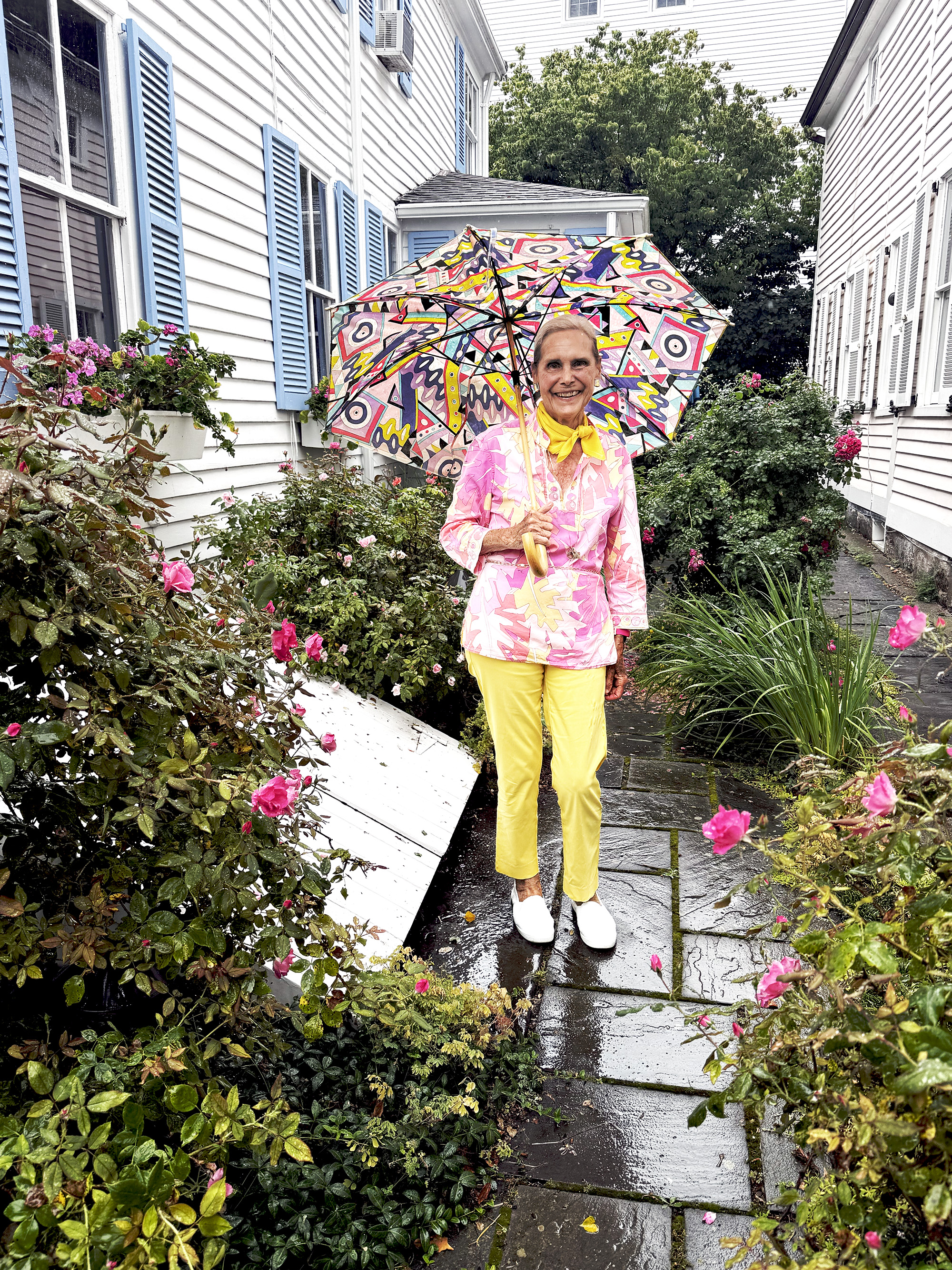
Photo by Elissa
My garden is loving the rain!
Oklahoma!
The Granite Theatre in Westerly is another one of our local treasures. You might remember my telling you about being moved by seeing Our Town there and ending up being inspired to see it on Broadway.
Elissa’s husband enjoys the magic of live theater but would have had to be dragged to this musical at gunpoint. When she called me to invite me, we set our July date. At 16, Elissa was in her high school production of Oklahoma! I went with my family to see it on Broadway when I was a teenager. It was one of my first musicals. I also went to a performance at Trinity Repertory Company in Providence in 2016. I was enthralled then and was surprised to attend such a quality community theatre production this summer. All 19 actors are excellent singers.
In the opening act, Curly walked down the aisle singing “Oh, What a Beautiful Mornin’.” “The corn is as high as a elephant's eye. And it looks like it's climbing clear up to the sky.” The set was well done to give us a feeling of spaciousness on a small stage. The orchestra, off to one side, complemented the singing with a keyboard, percussion, clarinet and violin.
The artistic director, Addison Roush, wrote a note in the program admitting that he hated the three productions of Oklahoma! he’d seen. This quintessentially classic musical is the first that Rodgers and Hammerstein had ever collaborated on. The interim president of the Board of Directors, Laura Thompson, wrote that this love story “helped pioneer the format of the musical as we know it and touches on the themes of community, class struggles, and the promise of progress and a shining future.”

Photo by Elissa
A seagull by the ocean, spotted by Elissa in Westerly.
Addison learned he had to create his vision of the play. “Lightning-fast pace, heightened acting on the verge of cartoonish, outlandish characterization, leaning into romance.… I scrubbed the show clean of everything I didn’t like about previous versions of the shows I’d seen and made it something I can safely say I am in love with.”
Another first: This is the first musical Addison ever directed! And the actor who played Curly, Daniel Cloud, is his husband. Congratulations to the entire creative team. In the finale, this version of Oklahoma! was most joyous. The lighting, the amazing women’s period costumes, the ballet and tap, the humor and irony all came vividly to life. We felt we knew each spirited character. We also loved them. We all have favorite songs from Rodgers and Hammerstein’s other classic musicals, Carousel, South Pacific, Show Boat, The Last Time I Saw Paris. Some of my favorites from Oklahoma! are:
- “Kansas City” — “Ev'rythin's up to date in Kansas City. They've gone about as fur as they c'n go.”
- “Oh What a Beautiful Mornin’”
- “I Can’t Say No”
- “People Will Say We’re in Love”
- “Out of My Dreams”
- “Oklahoma!”
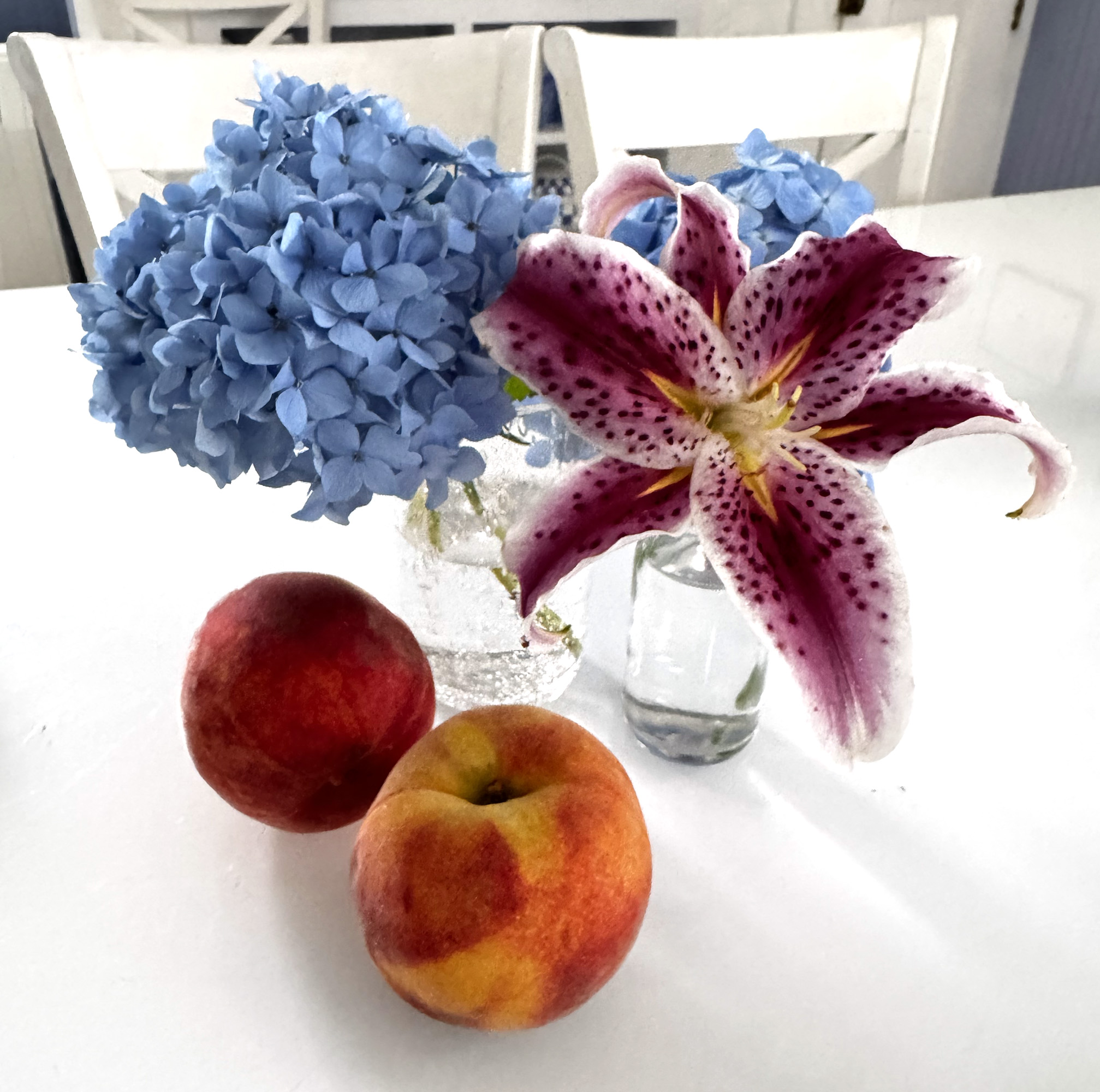
Photo by Elissa
Peaches from the farm stand, flowers from my garden.
National Ice Cream Day!
In 1984, President Ronald Regan created an ice cream celebration on the third Sunday in July. If you’re an ice cream lover, in warm summer days, the whole month of July is yours to indulge in this happy treat. My friend Carolyn and I spent a magical day celebrating. After a most delicious vegetarian quiche, Carolyn wanted to go to the famous Buttonwood Farm ice cream stand on rolling acres of farmland.
July’s national ice cream weekend coincided with the sale of sunflowers customers can pick in the fields. The half-hour ride from Mystic to Griswold is bucolically pastoral in its charming simplicity and serene beauty. We’d had heavy rain the afternoon and evening beforehand and the air was deliciously, delectably refreshing. For several days the air quality had been dangerously bad because of the wildfires in Canada causing toxic smoke.
For one week in the summer, Buttonwood makes sunflower ice cream — a once-a-year treat Carolyn savored while I enjoyed the coffee mocha flavor. Buttonwood Farms sponsors a fundraiser during this time to raise money for the Make-a-Wish Foundation. All the proceeds from the sale of the sunflowers go to this most worthy organization. I’ve mentioned this pilgrimage to this farm’s ice cream event in years past. This year, Carolyn and I experienced a glamorously perfect summer’s day.
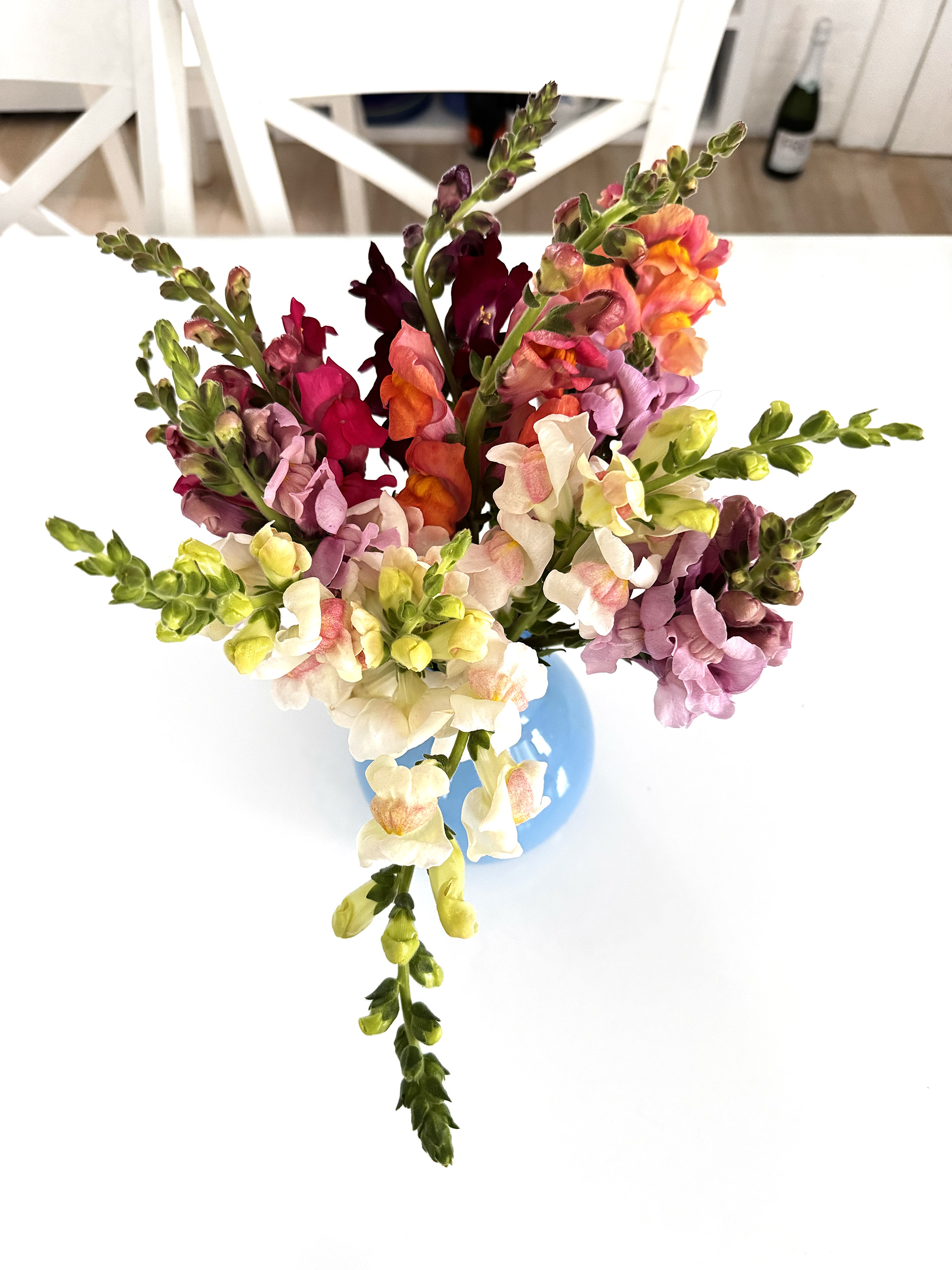
Photo by Elissa
A rainbow of snapdragons from the farm stand.
‘Crazy for You’
Goodspeed Musicals never fail to leave the audience on a heavenly cloud. The tap-dancing musical comedy Crazy for You, with music and lyrics by George and Ira Gershwin, was over the top. Pure joy.
The theater is in a 150-year-old opera house in East Haddam, Connecticut. Because the setting is so unique and picturesque, the authentic country atmosphere adds an element of anticipatory appreciation for this musical theater experience. As wonderful as Broadway’s shows are, none of them can top the quaint charm of Goodspeed’s environment. George Gershwin believed that “true music… must repeat the thought and inspirations of the people and the time. My people are Americans. My time is today.”
Sadly, at the height of his career, while working on a score, George collapsed and died of a brain tumor in 1937, shortly before his 39th birthday. We can all be grateful he collaborated with his older brother Ira, who had the same attitude of today being “my time.”
We are familiar with the numerous Gershwin hits. I’ll recall several, but there are so many great ones: “Swanee,” “Lady, Be Good,” “Girl Crazy,” “Rhapsody in Blue,” “An American in Paris,” “I Got Rhythm.”
I got rhythm
I got music
I got my man
Who could ask
For anything more?
—George & Ira Gershwin

Photo by Elissa
A sugar snap pea shoot with lovely white blossoms in Elissa's garden.
In addition to the songwriters’ music, we were treated to the entire cast tap-dancing in unison. The sound creates vibrational energy that is not only seen but literally felt. The tap dancers are infusing us with their vigorous, powerful energy that touched everyone in the audience. The tap dancers’ kinetic energy was literally energizing a packed audience of mostly senior citizens. The electricity of the dancers and singers was channeled into the core of our being. The tap-dancing invigorated the poignancy of the lyricists’ rhapsodic words. Even if these elated feelings are temporary, they are transporting, transcendental and exalted.
Whenever we are fully alive and completely focused in real time, these few hours of pure joy will have a beautiful space in the real estate of your soul’s long-term memory. Some of the most memorable songs in Crazy for You are “K-ra-zy for You,” “Shall We Dance,” “Someone to Watch Over Me,” “Tonight’s the Night,” and the classic that makes us melt, “They Can’t Take That Away From Me.”
The collective excitement, exuberance and joyful energy at the finale brought us to our feet, clapping our hands to the rhythm of the music. The full-blown elation of a packed audience added to the thrill of being moved, leading us to ask ourselves, “Who could ask for anything more?”
In closing I want to wish you a most happy, fulfilling August. Let’s all remember Thoreau’s warning that “there is no value in life except what you choose to place upon it and no happiness in any place except what you bring to it yourself.”
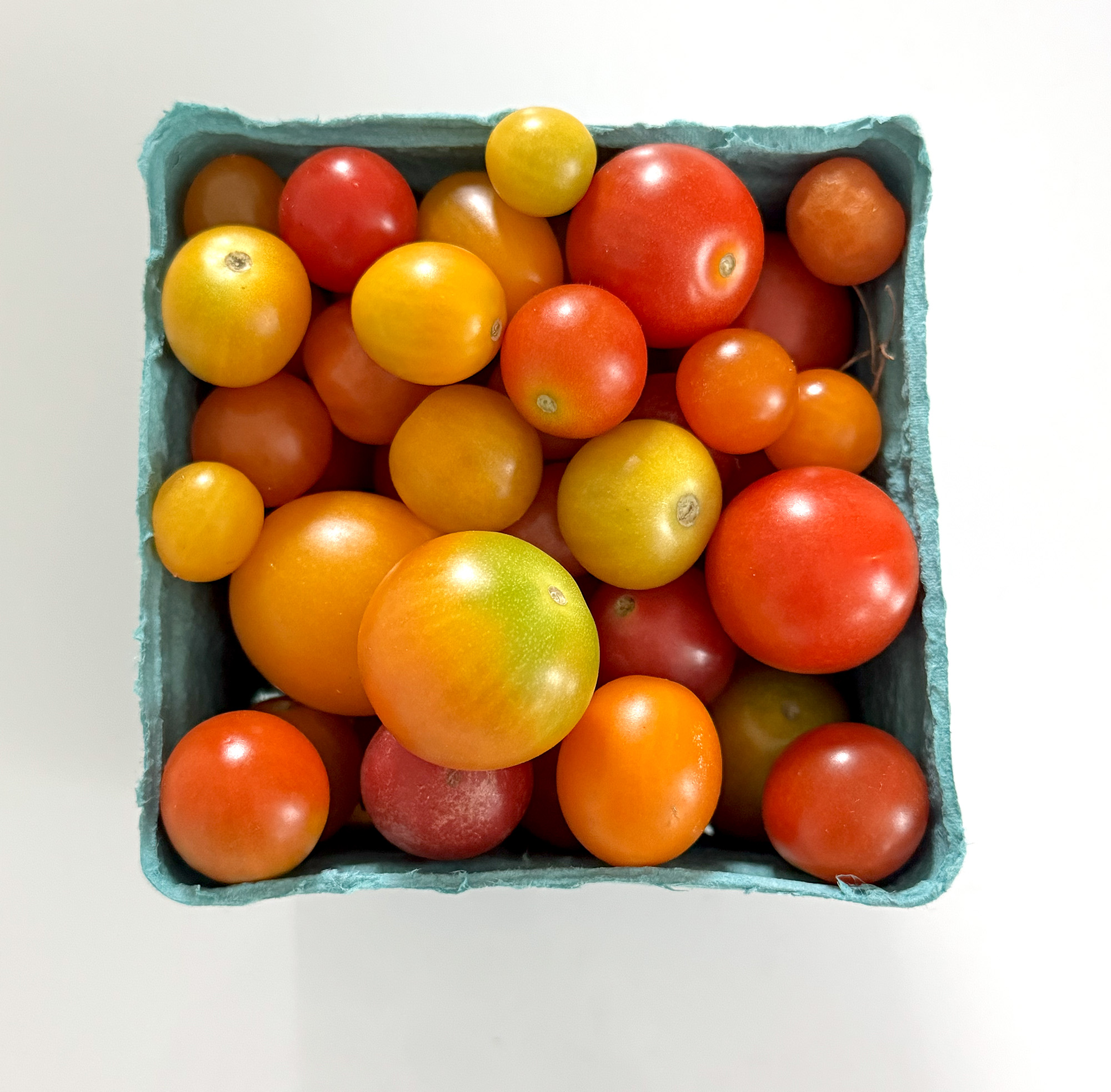
Photo by Elissa
There’s nothing like a perfect, freshly picked tomato.
I’m mindfully paying close attention to the pure pleasure of relaxed, unhurried days. Thoreau, as you know, accused us of preparing to live but not living. I’m also aiming at living deliberately, in a slow, reflective pace, listening in silent solitary moments to the universe’s guidance. We know that living a good life can’t be put off for a time when we’re not so busy. We’re alive right now. Goethe, the 19th century German philosopher, urges us to “Remember to live.”
I’m enjoying an analog summer. Getting my hands dirty in the garden, my toes in the sand at the beach. Splurging on local corn and tomatoes. To welcome in August 1, Stonington has its annual fair on the library green.
Thank you for all your meaningful communication. Together we’re spreading powerful, meaningful energy when we open our hearts in loving-kindness.
Love & Live Happy,

“All intellectual improvement arises from leisure.” —Samuel Johnson
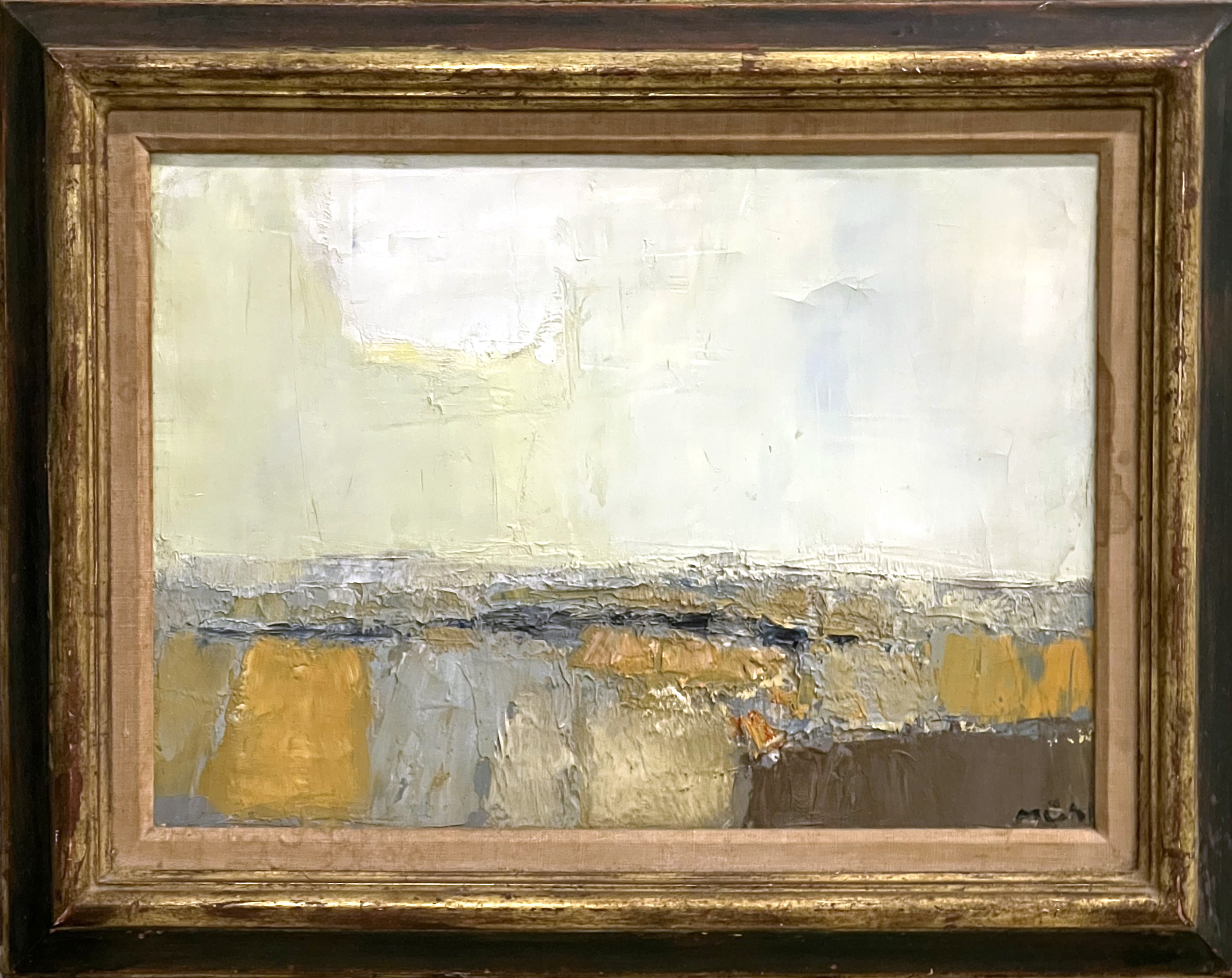
This month, I'm letting go of an original oil painting by Roger Mühl if anyone is interested in adding it to their art collection. Please contact Pauline at Artioli Findlay (pf@artiolifindlay.com) for more information.
Roger Mühl (French, 1929 - 2008)
Ciel et terre
Oil on canvas
Canvas size: 13 ¾ x 18 in
Framed size: 18 ¾ x 23 in
Signed lower right, "Mühl"
Painted 1963
*Roger Mühl's Ciel et terre transforms the landscape into a meditation on light and space.